
JAMMU — The High Court of Jammu and Kashmir and Ladakh has impleaded the Central Bureau of Investigation (CBI) as a party respondent in the infamous arms license scam case.

A Division Bench comprising Chief Justice (Acting) Tashi Rabstan and Justice Puneet Gupta issued a notice to the CBI through its Director in New Delhi and Superintendent of Police in Chandigarh, returnable by October 15, 2024.

The court's decision, as per the news agency KNT, came after Advocate Sheikh Shakeel Ahmed, representing the petitioners, submitted that despite previous opportunities, the Union of India and UT Administration of J&K had failed to respond to the application seeking CBI's impleadment.

The CBI has registered two FIRs in the case, which involves several IAS and JKAS officers and is currently investigating.

The court also directed the Registry to scan the latest Status Affidavit filed by the Union of India, which references three IAS officers allegedly involved in the scam.

Additionally, the court granted further time to the GAD to file an updated Status Report regarding prosecution sanction in respect of two IAS officers.

It is pertinent to mention here that the case has been renotified for October 15, 2024.

This post first appeared on The Kashmir Pulse

SRINAGAR — The Election Commission of India on Wednesday approved the appointment of senior IPS officer Nalin Prabhat as Director General (Operations and Security) till September 30 and shifting of four district police chiefs.

Sources quoted by the news agency KNO said that the poll-body today approved the appointment of Nalin Prabhat (IPS) as DG (Operations & Security), J&K Police till September 30.

Prabhat, who was recently brought to AGMUT cadre, would take over as police chief of J&K on September 30 when RR Swain would complete his innings.

They disclosed that the poll-body has also approved extension of inter-cadre deputation tenure of Syeed Fakhrudin Hamid, DC Anantnag, for two years.

The Commission has also approved the proposal of relieving of Ashish Mishra, SSP Srinagar and transfer of SSP Baramulla Gurinderpal Singh, SP Handwara Dawood Ayoub and SSP Kupwara Shobhit Saxena.

The Commission has directed J&K administration to provide a panel of IPS officers for the post of SP/SSP Srinagar, Baramulla, Handwara and Kupwara by 5 pm tomorrow.

This post first appeared on The Kashmir Pulse

SRINAGAR — The Jammu and Kashmir Government on Friday declared public holidays on poll dates for three phases of the upcoming Assembly elections 2024 in all 90 Assembly constituencies.

As per a government order, issued by the GAD, the government has notified three days as holidays under section 135-B of the Representation of the People Act 1951.

According to the GAD order, the paid holidays shall be observed as per the election dates in all Assembly constituencies across Jammu and Kashmir.

In the first phase, to be held on September 18, 2024 (Wednesday), the paid holiday shall be observed in 24 Assembly segments. In the second phase of elections, the paid holiday shall be observed in 26 Assembly constituencies on September 25, 2024 (Wednesday). Similarly, in the last phase of the Assembly elections scheduled on October 01, 2024 (Tuesday), a paid holiday would be observed in 40 Assembly segments.

The order also declared the poll day as a paid holiday for every eligible voter in his/her respective Assembly constituency employed in any business, trade, industrial undertakings or any other establishment.

The order further stated that no deduction or abatement of the wages of any such person shall be made on account of a holiday having been granted in accordance with sub-section (1) and if such person is employed on the basis that she/he would not ordinarily receive wages for such a day, she/he shall nonetheless be paid for such day the wages she/he would have drawn had not a holiday been granted to her/him on that day.

The order read that if an employer contravenes the provisions of sub-section (1) or sub-section (2), then such employer shall be punishable with a fine, which may extend to five hundred rupees. “This section shall not apply to any elector whose absence may cause danger or substantial loss in respect of the employment in which he is engaged,” it added.

The order further said that the daily wage and casual workers shall also be entitled to the holiday and wages on the poll day.

It further ordered that the above paid holidays shall also be observed in terms of explanation to Section 25 of the Negotiable Instruments Act, 1881.

This post first appeared on The Kashmir Pulse

SRINAGAR — The Meteorological Department in Srinagar has issued a weather advisory for Jammu and Kashmir, warning of potential flash floods, landslides, and mudslides in vulnerable areas due to intense rainfall over the next two days.

According to the forecast, light to moderate rain and thundershowers are expected across many parts of the region late at night and early morning on August 19 and 20. A brief spell of showers is also anticipated at a few locations later in the afternoon.

The advisory specifically highlights the risk in the Jammu Division, where heavy rainfall could trigger flash floods, landslides, and shooting stones. People in vulnerable areas are urged to remain vigilant and take necessary precautions.

From August 21 to 22, the region will likely experience brief spells of rain and thundershowers during the day, with more widespread precipitation occurring late at night and early morning.

Kashmir Division is expected to see mostly calm weather with only occasional brief showers from August 23 to 31. However, light to moderate rain and thundershowers may continue in the Jammu Division during this period.

Additionally, the MeT Department forecasts a rise in daytime temperatures across the region from August 23 onwards, marking a transition to warmer conditions.

This post first appeared on The Kashmir Pulse

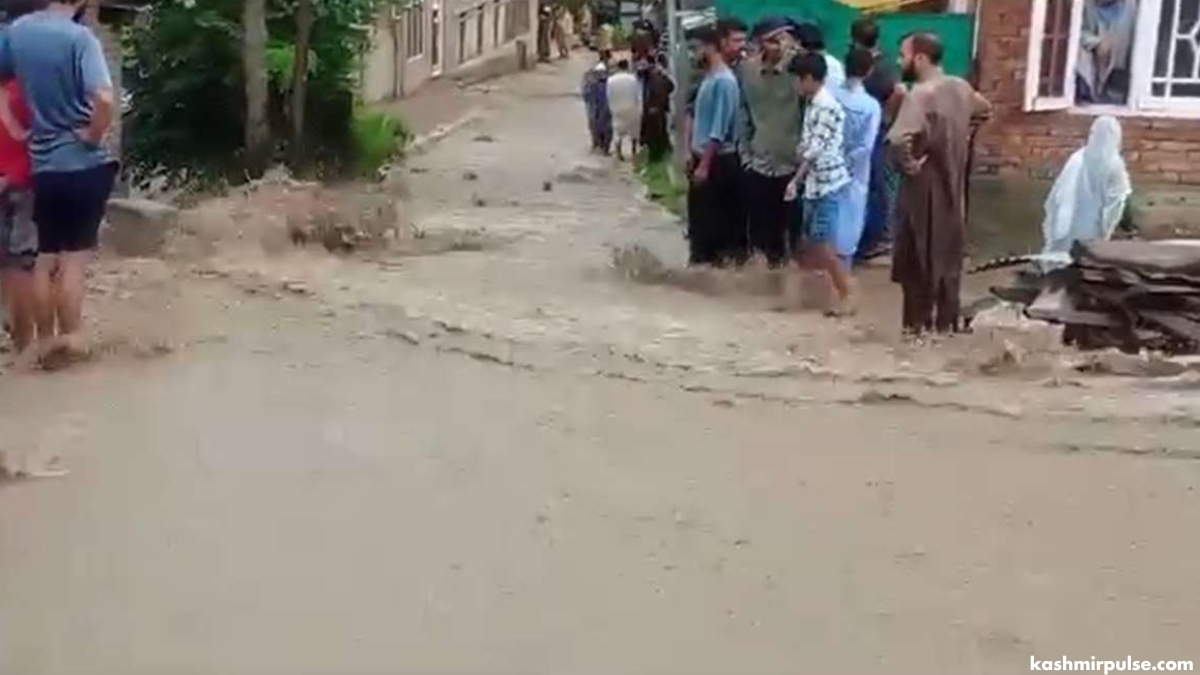
SRINAGAR — A flood-like situation was witnessed in Keller area of southern Kashmir’s Pulwama district on Saturday after the cloudburst occurred at Chowgam Kellar area while the rains lashed most parts of Jammu and Kashmir, bringing down the mercury across the Union Territory.

As per the details available with the news agency KNO, the cloudburst at Chowgam Kellar led to a flood-like situation today as the muddy water entered several residential houses. Although no damage occurred due to the incident, the muddy water has entered the residential houses in the hamlet today, the locals informed.

Flash floods also hit Achgoza village in the Valley's southern district of Pulwama. The village in Rajpora Tehsil of the district experienced severe disruption last night due to flash floods triggered by a cloudburst in the nearby forest area.

Independent weather forecaster Faizan Arif Keng said the sudden cloudburst resulted in the rapid accumulation of water, submerging the village and several residential properties.

A local resident described the situation, saying the water rose so quickly that they had no time to react. "Within minutes, our homes were submerged, and we had to evacuate hastily."

Another resident expressed relief that the water levels are now receding. Currently, water levels are decreasing, allowing villagers to begin assessing the damage and cleaning up.

DC Pulwama, Basharat Qayoom said the situation is being closely monitored and efforts are underway to provide necessary assistance to the affected families.

Meanwhile, below normal temperature was recorded at all the stations across Jammu and Kashmir as the rainfall continued from the wee hours of this morning till the afternoon.

As per the details, Srinagar, the summer capital of Jammu and Kashmir has recorded a rainfall of 8.8mm from 8:30 this morning to 5:30 in the evening.

Qazigund, a gateway of Kashmir, has recorded a precipitation of just 1.2mm while Pahalgam recorded 6.2mm during the period. Kupwara, Kokernag and Gulmarg recorded precipitation of 1.3mm, 1.4mm and 2.2mm respectively.

According to the details, Jammu’s Batote has recorded the highest precipitation with 24.9mm in the last 24 hours till 8:30 am followed by 4.8mm in Banihal.

Meanwhile, the weatherman has predicted the possibility of a brief spell of rain and thundershower at a few places during daytime and light to moderate rain and thundershower at many places of J&K towards late night or early morning during the next three days till August 20.

Director Meteorological Department (MeT), Dr Mukhtar Ahmad said that there is a possibility of a brief spell of rain and thundershower at a few places during daytime and light to moderate rain and thundershower at isolated places of J&K towards late night or early morning from August 21 to August 23.

The MeT has also predicted the possibility of intense showers for brief periods and heavy rainfall in Jammu division that may lead to flash floods, landslides, mudslides and shooting stones over vulnerable places of J&K during the next three days.

This post first appeared on The Kashmir Pulse

SRINAGAR — In a series of landmark decisions aimed at bolstering Jammu and Kashmir’s administrative, cultural, and economic frameworks, the Administrative Council (AC), chaired by Lieutenant Governor Manoj Sinha, approved a range of measures designed to improve governance, enhance cultural heritage, and promote entrepreneurship.

Strengthening the administrative framework

The AC approved the creation of 83 new posts across different ranks in the Prosecution Department, ensuring that each of the Union Territory’s 20 districts will now have an independent Deputy Director. This move, in line with the Bhartiya Nagarik Suraksha Sanhita (BNSS) 2023, is expected to significantly improve the management of legal prosecutions and expedite the delivery of justice.

Additionally, 772 posts were sanctioned for the Government Railway Police (GRP) to bolster security along the Katra-Banihal railway segment, following recommendations from a Multi-Disciplinary Committee. The creation of these posts spans from the Superintendent of Police down to lower non-gazetted positions, ensuring a robust security presence on this critical route.

In a bid to streamline the functioning of the State Election Commission, 30 new posts were created. This decision will support the smooth operation of the commission, which has been functioning with ad-hoc staff since its inception in 2020.

Cultural revival and support for local artists

In a significant boost to the region’s cultural heritage, the AC approved revised schemes for the J&K Academy of Art, Culture & Languages (JKAACL). These initiatives include the expansion of the Sheeraza publication to include additional languages such as Shina, Balti, and Bhadarwahi, along with the revival of traditional art forms and the promotion of Sufiana and Indian classical music.

The council also introduced new schemes like the Guru Shishya Parampara Scheme, aimed at preserving the mentor-disciple tradition, and the Documentation of Intangible Cultural Heritage initiative, which will systematically archive the region’s rich oral and performing arts traditions. A modern Archival Studio will be established to digitally preserve these cultural expressions.

Furthermore, Rs 50 lakhs have been allocated to establish an Artists and Writers’ Welfare Fund, demonstrating the government’s commitment to supporting the artistic community. The overall financial outlay for these cultural initiatives is Rs 5.76 crores.

Economic development through entrepreneurship

The AC also approved operational guidelines for the Jammu and Kashmir Startup Policy, 2024-27, which aims to nurture and inspire entrepreneurial talent in the region. This policy will provide comprehensive support to startups through seed funding, incubation, and market access, with the Jammu and Kashmir Entrepreneurship Development Institute (JKEDI) as the nodal agency.

Complementing this is the approval of Project YUVA (Yuva Udyami Vikas Abhiyan), a groundbreaking initiative designed to accelerate employment opportunities through entrepreneurship. The project aims to create 1.37 lakh enterprises over the next five years, generating employment for 4.25 lakh youth. With a budgetary support of Rs 1,830 crores and additional funding expected from financial institutions, this initiative is poised to transform the employment landscape of Jammu & Kashmir.

Land transfers for industrial and security infrastructure

The AC also approved the transfer of over 2,292 kanals of land for various developmental projects. This includes land in Kathua and Samba districts for the establishment of industrial estates, which are expected to generate significant employment opportunities.

Additionally, land in Ganderbal district was allocated for the construction of police stations and posts, ensuring better security infrastructure in these areas.

This post first appeared on The Kashmir Pulse
SRINAGAR — Labour Commissioner, S. Charandeep Singh has once again urged all those e-Shram registrants who do not have a ration card or are not included in their entitled household to come forward and get in touch with the nearest Tehsil Supply Offices (TSO), or the office of Assistant Director, Food, Civil Supplies & Consumer Affairs or the office of Assistant Labour Commissioners in their respective districts so that ration cards in their favour are issued on priority.

Pertinently in compliance to Supreme Court of India directions in the case titled “In Re-Problems and Miseries of Migrant Labourers”, the Department of Food, Civil Supplies & Consumer Affairs (FCS&CA) in coordination with the Labour Department and District Administration organized Special Camps on February 2 and 3, 2024 and June 23 and 24, 2024 across all the districts of J&K for providing ration cards to the left-out e-Shram registrants or their inclusion in ration cards, as the case may be.

The Labour Department and the Department of Food, Civil Supplies & Consumer Affairs have over the past several months launched extensive outreach efforts across J&K to ensure the issuance of ration cards in favour of left out e-Shram registrants, however, some of the e-Shram registrants have not yet approached the respective offices or authorities in the districts for ration cards.

Also, the Labour Department has time and again through the medium of press releases, social media and public notices urged the left-out e-Shram registrants to come forward. Helpdesks have also been set up in the offices of Assistant Labour Commissioners for the purpose. Moreover, camps on a regular basis in labour-concentrated areas, labour colonies etc across each district are being organized so as to facilitate the left-out e-Shram registrants in getting ration cards.

The left out e-Shram registrants have been requested to bring the requisite documents viz Aadhaar card, Domicile certificate, Income proof and e-Shram card along with them for on the spot issuance of ration cards in their favour by the Department of Food, Civil Supplies & Consumer Affairs. Furthermore, all the e-Shram registrants who have not completed their eKYC with the Department have also been requested to complete the same on urgent basis.

This post first appeared on The Kashmir Pulse

SRINAGAR — The Administrative Council (AC) of Jammu & Kashmir, chaired by Lieutenant Governor Manoj Sinha on Sunday, has approved notable initiatives to enhance the UT’s infrastructure and educational framework.

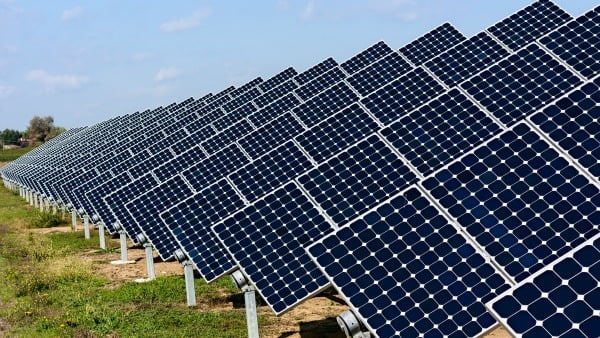
In a crucial decision, the AC greenlit the solarization of all government buildings in Jammu & Kashmir, targeting an aggregate capacity of 270 MW. The project, estimated to cost Rs 400 crore, will be executed in both Capex and RESCO modes.

Managed by the Jammu & Kashmir Energy Development Agency (JKEDA), the initiative aims to leverage the vast rooftop spaces of government establishments for solar energy generation.

The plan includes installing Grid-Tied Rooftop solar power systems with bi-directional smart meters and Virtual Net Metering (VNM) benefits, enabling efficient energy adjustment across various government buildings.

The project, expected to be completed by December 2025, is projected to create over 10,800 jobs across highly skilled, skilled, and unskilled sectors. Additionally, the installation of 270 MW solar power plants is anticipated to reduce carbon emissions by approximately 8.3 million tons over 25 years.

The AC meeting, attended by Advisor to LG Rajeev Rai Bhatnagar, Chief Secretary Atal Dulloo, and Principal Secretary to LG Mandeep K Bhandari, stressed accelerating the deployment of rooftop solar projects across all government-owned buildings in the UT.

In another key decision, the AC approved the continued affiliation of government polytechnics and Industrial Training Institutes (ITIs) in Leh and Kargil with the J&K Board of Technical Education.

This decision, requested by the Union Territory of Ladakh, aims to benefit the students of the region by ensuring a smooth admission process and timely conduct of examinations. The affiliation will extend until the end of the academic session 2025-26 or until Ladakh establishes its own Board of Technical Education.

This post first appeared on The Kashmir Pulse
SRINAGAR — Kashmir is reeling from a record-breaking heatwave that has pushed temperatures to unprecedented levels, according to independent weather forecaster Kashmir Weather.

On July 28, Srinagar recorded a maximum temperature of 36.2°C, marking the sixth-highest July temperature since records began in 1893. Historical data reveals that the previous records were 38.3°C on July 10, 1946; 37.7°C on July 5, 1953; 37.0°C on July 9, 1999; 36.6°C on July 19, 1997; and 36.4°C on July 24, 1967.

Qazigund shattered its all-time highest temperature record, reaching 35.6°C, surpassing the previous record of 34.5°C set on July 11, 1988. Similarly, Kokernag experienced its highest-ever temperature of 34.1°C, breaking its prior record of 33.5°C set just earlier this month on July 22, 2024.

The extreme heat wave brought more startling figures, with Srinagar's real feel temperature soaring to 39.5°C. Qazigund's record-breaking temperature was 1.1°C higher than its previous peak, and Kokernag's temperature exceeded its record by 0.6°C.

The temperature departures from normal were significant, with Qazigund at 7.7°C above average and Kokernag at an extraordinary 8.7°C above normal.

In the Kashmir region, Srinagar recorded 36.2°C, Qazigund 35.6°C, Pahalgam 30.1°C, Kupwara 35.8°C, Kokernag 34.1°C, Gulmarg 25.6°C, Anantnag 35.4°C, Bandipora 34.3°C, Baramulla 34.4°C, Sonamarg 29.8°C, Budgam 35.0°C, Pulwama 33.5°C, Shopian 34.4°C. Ganderbal and Kulgam had faulty readings.

In the Jammu region, Jammu recorded 32.0°C, Banihal 34.0°C, Batote 29.8°C, Bhaderwah 33.2°C, Katra 31.0°C, Udhampur 33.8°C, Kathua 38.4°C, Kishtwar 35.0°C, Samba 37.6°C, and Reasi 34.3°C. Ramban, Poonch, and Rajouri had faulty readings.

In Ladakh, Leh recorded 33.5°C, Kargil 37.5°C, and Drass 30.1°C.

This post first appeared on The Kashmir Pulse

SRINAGAR — The Jammu and Kashmir Government has approved significant subsidies and policies to enhance the implementation of the PM Surya Ghar Scheme and to foster planned urban development in the region.

The Administrative Council, chaired by Lieutenant Governor Manoj Sinha, sanctioned an additional subsidy from the UT budget for the PM Surya Ghar: Muft Bijli Yojana, aiming to make solar energy more accessible to households. The meeting also saw attendance from Advisor R.R. Bhatnagar, Chief Secretary Atal Dulloo, and Principal Secretary to LG Mandeep Bhandari.

Launched by Prime Minister Narendra Modi in February 2024, the PM Surya Ghar: Muft Bijli Yojana seeks to install rooftop solar plants in one crore households across India by March 31, 2027, providing up to 300 units of free electricity per month.

With the newly approved subsidies, beneficiaries in J&K can expect substantial financial relief. For a 1 kW system costing Rs. 55,000, the subsidy has increased to Rs. 36,000. Similarly, subsidies for 2 kW and 3 kW systems have been raised to Rs. 72,000 and Rs. 94,800, respectively.

This enhanced financial support, coupled with a loan facility from SBI at a 7% interest rate, aims to make solar power adoption more appealing, particularly for poor and lower-middle-class households.

J&K Bank will also be onboarded to provide easier access to loans. The scheme's success is expected to grow with the completion of smart metering in rural areas, motivating consumers to install solar rooftop systems to reduce electricity costs.

Additionally, the Administrative Council approved the Land Pooling Policy and Transferable Development Rights (TDR) Policy, which are designed to stimulate the real estate sector in J&K. These policies will allow developers and private landowners to pool their land for development, ensuring ample space for infrastructure, parks, and other amenities. The benefits include increased land value for owners and better infrastructure development.

In a related development, the National Building Construction Corporation (NBCC) has been engaged to expedite the construction of the Srinagar Satellite Township at Rakh Gund Aksha Bemina. The township will span 3,290 kanals and include residential plots, group housing apartments, and 3,200 affordable housing flats.

Additional amenities will include commercial spaces, government offices, green spaces, sports facilities, and a 200-key five-star hotel. The project, to be completed in phases over five years, will also house a High Court complex and Medicity.

This post first appeared on The Kashmir Pulse
SRINAGAR — The Jammu and Kashmir Government has initiated multiple projects to install rooftop solar power plants in over 40,000 buildings in the Union territory, both government and residential, by the end of 2025, officials told the news agency KNO.

The new initiative has the potential to generate an additional 270 MW of solar energy in the Union territory by December 2025. It would cover 20,000 households and at least 22,494 government structures.

Currently, 3,800 residential and 3,825 government buildings in J&K have been solarised, with a total capacity of 60 MW. The Jammu and Kashmir Energy Development Agency (JAKEDA) is the primary executing department.

Notably, as part of the clean energy goal, the Ministry of New and Renewable Energy (MNRE) has set a target for the J&K Government to generate 500 MW of solar energy in the area by 2030. Furthermore, the UT must generate 1500 MW of solar energy by 2047.

In the budget released earlier this week, the Centre proposed Rs 150 crore for the installation of solar rooftops and solar pumps in Union territory. It also proposed to replace 4,000 AC agriculture pumps with solar pumps under the PM-KUSUM scheme.

“Around 4 MW rooftop solar power plants to be installed on the government buildings. Nearly 22,494 government buildings will be 100% solarised in a phased manner,” as per the Union budget.

In addition to the solar power plants, 5,000 improved biomass cookstoves will be provided in the tribal areas to reduce indoor air pollution and fuel use. Besides, solarization of all routes and camps of Shri Amarnath Ji Yatra would be achieved.

This post first appeared on The Kashmir Pulse

SRINAGAR — The Administrative Council, under the chairmanship of Lieutenant Governor Manoj Sinha, has approved several major development projects across Jammu and Kashmir, signalling a significant boost in infrastructure and economic growth for the region.

In a recent meeting, the Council sanctioned the construction of multiple facilities for the Indira Gandhi Government Dental Hospital (IGGDH) in Amphala, Jammu. The project, estimated at Rs 42.50 crores, includes the development of hostels for both undergraduate and postgraduate students, married student accommodations, teaching and non-teaching staff quarters, a guest house, parking, an indoor sports hall, and essential infrastructure works. These enhancements are expected to bring the dental institute on par with national standards by providing adequate facilities for both faculty and students.

Simultaneously, the Council approved revised construction plans for Government Medical Colleges (GMCs) in Kathua, Doda, Anantnag, and Baramulla. The updated proposals address various logistical and infrastructural constraints, ensuring the colleges can provide tertiary healthcare services to the public in these districts. The revisions include improvements in road connectivity, water supply, power, HVAC systems, and accommodations for residents and interns, facilitating the smooth operation of the medical institutions.

In a move to boost industrial growth, the Council also amended the Jammu and Kashmir Industrial Land Allotment Policy 2021-30. The changes, based on stakeholder feedback, aim to enhance transparency and efficiency in land allotments. Key amendments include periodic revisions of lease premiums, competitive merit-based land allotments, detailed evaluations of applicants, and specific criteria for different industrial sectors. Notably, the policy now allows for preferential land allotment to mega projects with a minimum capital investment of Rs 4000 crores, aimed at attracting large-scale investments and generating employment.

Furthermore, the Council approved the transfer of 3188 kanals and 8 marlas of land to the Industries and Commerce Department for the development of industrial estates across various districts, including Kupwara, Bandipora, Anantnag, Pulwama, Baramulla, and Budgam. This land transfer is part of a broader strategy to develop industrial infrastructure, accelerate economic activity, and create employment opportunities post-2019.

This post first appeared on The Kashmir Pulse
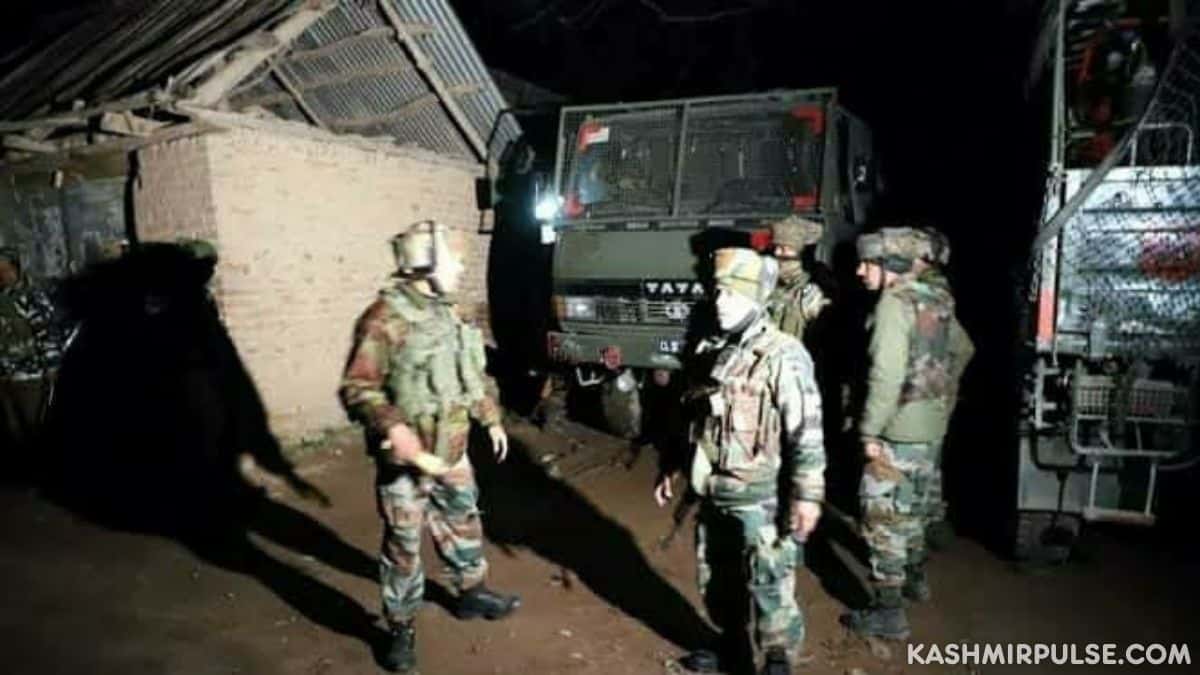
SRINAGAR — Twenty-five casualties have been reported in the ongoing month of July in eight gunfights and five militant attacks in Jammu and Kashmir.

Eleven soldiers and a civilian also sustained injuries in militancy-related incidents this month.

The data available with the news agency KNT reveals that this month, 12 militants including 6 infiltrators and 13 soldiers were killed in Jammu and Kashmir. 10 soldiers were killed in the Jammu region while 3 soldiers died in three encounters in Kashmir Valley.

Joint teams of security forces neutralized six infiltrators this month while six local militants were killed in twin encounters in Chinnibal and Modergam villages of southern Kashmir’s Kulgam district.

Out of eight gunfights, five raged in Kashmir Valley. Two encounters raged in Kulgam and three in the frontier district of Kupwara. Two encounters broke out in Doda and one in Poonch district of Jammu region.

Militants carried out five attacks in the Jammu region including Doda, Udhampur, Rajouri, and Kathua.

This month witnessed the maximum number of militancy-related incidents in Jammu and Kashmir.

This post first appeared on The Kashmir Pulse

SRINAGAR — Union Railway Minister Ashwini Vaishnaw on Wednesday said Rs 3,694 crore has been allocated this year for the ongoing railway projects in Jammu and Kashmir, while the “dream project” Udhampur-Srinagar-Baramulla Rail Link (USBRL) is nearing completion and will be inaugurated soon.

Addressing media in Delhi, the minister, as per the news agency KNO said that new projects are also being taken up and detailed project reports (DPRs) are being prepared.

He said work on the Baramulla-Uri railway line, two other lines, developing four terminals from Budgam to Baramulla section, and four new stations, including Budgam, Jammu Tawi, Mata Vaishno Devi Katra and Udhampur station is underway.

Regarding USBRL, he said the project is almost complete with only a 17 km section (Tunnel T1) between Katra and Reasi under construction. The minister said that the Chenab bridge and railway line up to the Sangaldan section have already been made operational.

"Sangaldan to Reasi section has also been completed, and the commission of the Railway safety certificate has also been received. The project is a dream come true and will be inaugurated by Prime Minister Narendra Modi very soon,” he said.

This post first appeared on The Kashmir Pulse
SRINAGAR — Jammu and Kashmir is bracing for a severe heatwave over the next four days, with temperatures hitting record highs and impacting both daily life and the region's delicate ecosystems.

Srinagar, the summer capital, recorded its second-highest July temperature in a decade at 35.6°C, matching Jammu City’s temperature. Qazigund registered its third all-time highest temperature at 34.2°C.

Other parts of Kashmir, including Pahalgam and Kupwara, also experienced significant temperature increases, with the mercury rising to 29.3°C and 35.0°C, respectively. This heatwave is expected to continue, with weather models forecasting dry conditions and potential record-breaking temperatures.

The ongoing heatwave has exacerbated water scarcity issues, leading to public protests in Baramulla district. Residents, particularly within Pattan jurisdiction, have voiced their concerns over severe water shortages, prompting police to urge people not to block highways.

A recent violent demonstration at Chainabal saw the Srinagar-Baramulla National Highway blocked in protest. In response, Sub Divisional Magistrate (SDM) Pattan, Dr Gulzar Ahmed, assured residents that their grievances would be addressed promptly, with water tankers deployed on a roaster basis to mitigate the crisis.

The rising temperatures are also threatening Kashmir’s aquatic life. Experts warn that the heat wave is disrupting the region’s aquatic ecosystems, leading to potential mass fish mortality.

Fish are highly sensitive to changes in water temperature, and the heatwave is causing water levels to drop and oxygen levels to decrease. This hostile environment has already led to incidents of mass fish deaths, with the most recent occurring in the Tsoont Koel stream near Barbar Shah, Srinagar.

Research highlights the deteriorating water quality in lakes such as Dal Lake, where dissolved oxygen levels have fallen drastically due to untreated sewage, agricultural runoff, and industrial waste. The increased biological oxygen demand from pollution, combined with rising temperatures, creates a deadly combination for aquatic life.

Dr. Mehraj Bashir, an ichthyologist, noted that while some fish species can tolerate higher temperatures and pollution levels, the native Schizothorax species is particularly vulnerable and has seen declining numbers.

Meanwhile, despite the severe heatwave, the Education Department in Doda and Kishtwar districts has yet to change school timings, unlike in other parts of Jammu and Kashmir. Chief Education Officer (CEO) Doda, Prakash Lal Thapa, stated that no representations from parents or heads of institutions have been received to prompt a change in school hours, leaving students to endure the harsh conditions.

As the heatwave continues to grip the region, authorities and experts alike are calling for vigilance and immediate measures to mitigate its impact on both human and aquatic life. Relief is expected after July 28, with a forecasted decline in temperatures.

This post first appeared on The Kashmir Pulse

SRINAGAR — In a major relief for power consumers, the Jammu & Kashmir Power Development Department (JKPDD) announced today that the J&K Government will absorb any increase in electricity tariffs for the financial year 2024-25 by continuing its subsidy on electricity bills.

This decision effectively offsets projected tariff hikes by the Distribution Companies (discoms)—JPDCL for the Jammu region and KPDCL for the Kashmir region—meant to cover rising power purchase costs, inflation, and other factors. The government’s move, it said, will bridge the revenue gap without passing the additional costs to consumers.

A PDD spokesperson highlighted that a major portion of discoms' expenditure comprises power purchase costs, which are escalating due to rising coal prices. Other significant expenditures include operation and maintenance costs for expanding infrastructure. Without government intervention, these costs would have been passed on to consumers.

The discoms have submitted a proposal for a tariff increase for FY 2024-25 to the Joint Electricity Regulatory Commission (JERC) for approval. However, the government’s decision ensures no tariff increase for consumers, with the estimated loss covered by the government.

Currently, Jammu & Kashmir's electricity tariff is among the lowest in the country. After a six-year hiatus, there was a 17% tariff increase in October 2022. For FY 2023-24, metered consumers faced a 15% hike, balanced by the removal of a 15% Electricity Duty on energy charges, resulting in no net rise in bills. This trend continues for FY 2024-25 with no tariff increase.

In addition to easing financial burdens, the department is implementing reforms under the Revamped Distribution Sector Scheme (RDSS) to ensure better quality and reliable power supply. These reforms include the rapid implementation of smart meters to eliminate unmetered consumers, who contribute significantly to high AT&C losses. J&K, which had a metering percentage of 50% in 2019, now ranks among the top seven states for smart metering, surpassing the six lakh mark.

To address losses in unmetered areas, particularly in Kashmir, discoms are conducting calibrated load rationalization based on actual usage and connected loads, adhering to Electricity Supply Code regulations. Other reforms include 100% segregation of agricultural feeders, High Voltage Distribution Systems (HVDS), and state-of-the-art SCADA and RT-DAS systems, aiming to automate the system and meet modern consumer expectations.

Discoms have been directed to adopt best practices in accordance with the Electricity (Rights of Consumers) Rules, 2020, ensuring reliable and high-quality electricity services. With a Rs. 5,600 crore investment under RDSS over the next two years, the UT aims for a complete turnaround in the power sector, with the goal of providing 24x7 uninterrupted and affordable power supply for all consumers.

This post first appeared on The Kashmir Pulse
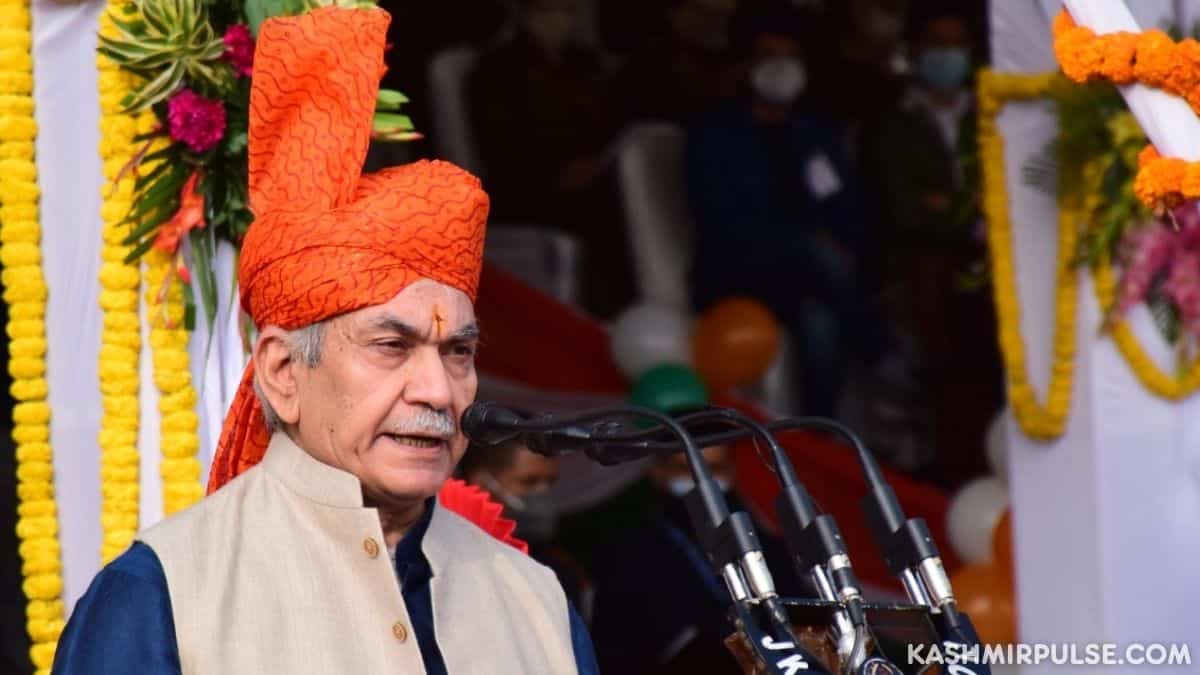
SRINAGAR — Lieutenant Governor Manoj Sinha expressed gratitude to the Prime Minister's Office and the Ministry of Finance, Government of India, for unveiling what he hailed as a landmark budget during the Parliament session.

In his interaction with reporters here in Srinagar, LG Manoj Sinha articulated optimism that the budget would pave the way for a "Viksit Bharat" (developed India) and foster development in Jammu and Kashmir.

He emphasized the budget's prioritization of farmers, youth, women, and the underprivileged, saying it shows the Central government's commitment to these pivotal sectors of society.

Sinha also expressed confidence of the normalization of the situation in Jammu and Kashmir, anticipating enhanced development prospects and overall stability in the region.

"This budget, with its emphasis on employment, skill development, MSMEs, and the middle class, aims to realize the vision of empowering every stratum of society," the Lt Governor remarked.

He further highlighted key priorities outlined in the budget aimed at creating ample opportunities for all, ensuring rapid progress and social equity.

"The Budget 2024 reinforces a robust and compassionate grassroots system, ensuring that every individual enjoys the benefits of social justice," added the LG.

This post first appeared on The Kashmir Pulse

SRINAGAR — In a significant development, the Union government has taken over the budget of Jammu & Kashmir Police from the Union Territory of Jammu & Kashmir.

As per the news agency KNO, in her J&K’s budget speech, Finance Minister Nirmala Sitharaman announced that the Union government has agreed to take the entire budget of the police from the Union Territory of J&K.

"It is observed that around 11% of the budget of Jammu and Kashmir is used for police. Such expenses on policing being unavoidable, leave limited space for spending on development and welfare projects. I am happy to inform this august House that the Union government has agreed to take the entire burden of the budget of police from the Union Territory of Jammu and Kashmir,” she said.

With this announcement, J&K Police’s budget would no longer be part of J&K’s budget and would be part of the Union budget.

She said that the Central government will now provide for the salary, pension and other costs of Jammu and Kashmir Police for which an allocation of Rs 12,000 crore has been made in the annual budget.

This is for the first time after the reorganization of J&K that J&K Police’s budget has become part of the Union government’s budget.

Under the Jammu & Kashmir Reorganisation Act 2019, police would be under direct control of the Central government as the J&K Legislative Assembly has no powers to make laws on “police” and “public order”.

This post first appeared on The Kashmir Pulse

SRINAGAR — The Union Finance Ministry has proposed to allocate Rs 42277.74 crore for Jammu & Kashmir in the Union budget 2024-25, which was presented by Finance Minister Nirmala Sitharaman in the Parliament on Tuesday.

Of Rs 42277.74 crore proposed for J&K, Rs 40619.30 crore have been kept for bridging the resource gap of the Union Territory.

As per budget documents available with the news agency KNO, the Central assistance of Rs 40619. 30 crore also includes a sum of Rs 7900 crore, sanctioned as advance from the Contingency Fund of India which stands recouped to Contingency Fund of India after demands for grants 2024 are passed by Parliament and the connected Appropriated Act is assented by the President of India.

In the Union budget, Rs 279 crore has been kept as a grant for contribution towards J&K’s Union Territory Disaster Response Fund. The UT Disaster Response Fund would meet the expenditure on account of the mitigation of disasters caused due to natural calamities.

The Union Finance Ministry has also proposed to allocate grants towards equity contribution of 624 Megawatt Kiru power project, 800-MW Rattle power project, 540-MW Kwar project and Jhelum-Tawi Flood Recovery Project (JTFRP).

As per budget documents, Rs 130 crore, Rs 476.44 crore, Rs 171.23 crore and Rs 500 crore grants have been respectively earmarked for equity contribution towards these projects.

Moreover, Rs 101. 77 crore have been proposed to bridge the resource gap in funding for infrastructure projects.

This post first appeared on The Kashmir Pulse
SRINAGAR — Union Finance Minister Nirmala Sitharaman on Tuesday unveiled Rs 1,18,390 crore budget for Jammu & Kashmir for the fiscal year 2024-25.

Budget estimates

As per budget documents accessed by the news agency KNO, total budget estimates for 2024-25 are Rs 1,18, 390 crore. “The total gross receipts are estimated at Rs 1,51,526 crore, including the provision for ways and means advances and over-draft of Rs 33,136 crore. Given these receipts, total gross expenditure is estimated to be Rs 1,51,526 crore,” read the documents.

Of which the revenue expenditure is estimated to be Rs 81,486 crore and capital expenditure to be Rs 36904 crore. As per documents, the total expected revenue receipts are Rs 98,719 crore and capital receipts are Rs 19,671 crore.

This was the sixth consecutive budget to be presented in the Parliament for J&K after the imposition of the Governor’s rule in June 2018 following the withdrawal of BJP’s support to Mehbooba Mufti-led coalition government.

After the imposition of the Governor’s rule, the budget for 2019-20 was approved by the then J&K Governor as head of the State Administrative Council. After downgrading J&K into a UT in August 2019, all budgets of the UT were presented in the Parliament.

On February 5 this year, J&K’s interim budget for 2024-25 was also presented in the Parliament.

Budget speech

In her budget speech, Union Finance Minister Nirmala Sitharaman announced that Rs 17,000 crore special assistance has been worked out to correct complex financial issues of J&K.

“This year, the Government of India decided to correct this historical aberration by providing adequate financial support to Jammu and Kashmir coupled with reforms to come out of the perpetual fiscal stress. I am happy to mention here that to correct the complex fiscal issues of Jammu and Kashmir, a special Central assistance of Rs 17,000 crore has been worked out,” she said.

She said the unprecedented assistance would lead to complete improvement in the fiscal position, enabling the Government of Jammu and Kashmir to correct the legacy of financial challenges and work towards fulfilling the developmental needs and aspirations of the people, while maintaining stable fiscal health.

“As a result of this Rs 17,000 crore Central assistance, the fiscal deficit to GDP ratio will be 3.0% in 2024-25 well within the target,” she said.

She announced that apart from this, a lump sum special grant of Rs 5,000 crore as additional Central assistance is being provided in the current financial year. She added that due to historical challenges in financial management, J&K has a legacy of very high fiscal stress.

“Mr. Speaker Sir, while analysing the fiscal situation of Jammu and Kashmir, we observed that due to historical challenges in financial management, it has a legacy of very high fiscal stress. This is aggravated by the committed nature of the major expenditures not supported by proportionate increase in its revenues. Its dependence on Central grants is to the tune of around 70% of its total expenditure. The perpetual fiscal stress leads to frequent use of ways and means advances and overdraft,” she said.

This post first appeared on The Kashmir Pulse
Powered by Blogger.