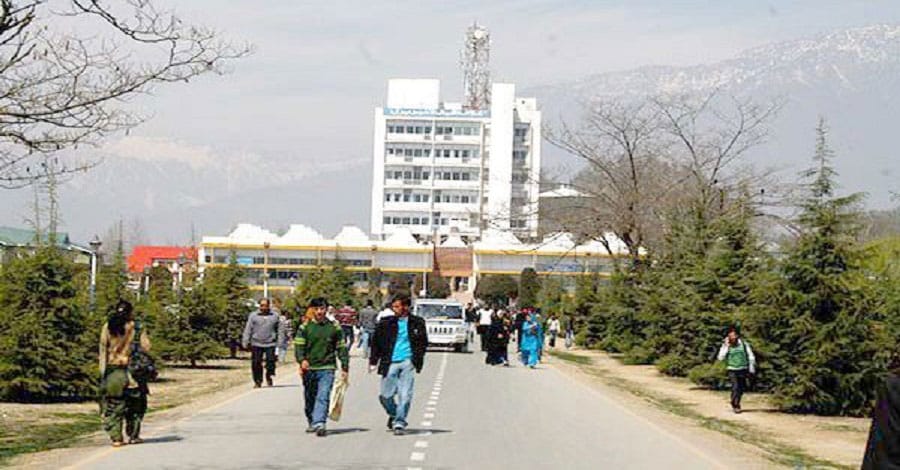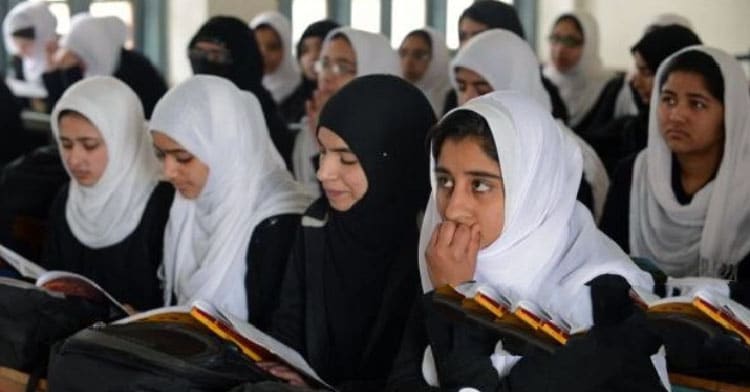
JAMMU — Authorities have announced summer vacations in colleges of Jammu division of the UT from June 14.

As per the order of Principal Secretary Alok Kumar, summer vacation in colleges of the Jammu zone will be from June 14 to July 28.

"It is hereby ordered that Government Degree Colleges of the UT of J&K falling under Summer Zone (Jammu Division) shall observe summer vacations w.e.f. 14 06-2024 to 28-07-2024," reads the order issued in this connection.

This post first appeared on The Kashmir Pulse

JAMMU — The Government of India (GoI) has asked all the educational institutions across the country not to tamper with the map of India and publish it in conformity with the Survey of India.

The government has termed tempering the map as a punishable offence and whoever does it, will be punished with imprisonment which will extend up to six months or with a fine, or both.

In an order issued by the Ministry of Education, GoI, it has been ordered, “Whosoever publishes a map of India, which is not in conformity with the maps of India as published by Survey of India (SoI), shall be punishable with imprisonment which may extend to six months, or with fine, or with both.”

“The Higher Educational institutions are requested to ensure compliance with the aforementioned law,” the order reads.

The Survey of India publishes the map of India as per the guidelines issued by the GoI. All up-to-date information on SoI maps shall be available at the various offices, map sales counters and Geospatial Data Centres (GDC) under the SoI.

The information provided by SoI among other things includes all relevant details of maps such as scale, information content, date of data capture, price, mode of data dissemination, whether Ministry of Defence clearance is available for issue as Open Series Map (OSM) etc.

At present, India has 28 states and eight union territories and each of them has its own identity, history and administrative setup. According to the GoI, both Pakistani-occupied Kashmir (POK) and Aksai Chin are part of India and they are under illegal occupation by Pakistan and China, respectively.

As per the recent order, the higher education institutions have been asked to ensure compliance with this law.

This post first appeared on The Kashmir Pulse

SRINAGAR — Academic arrangement, contractual lecturers on Tuesday staged a protest in the premises of Amar Singh College in Srinagar against a “government order”, transitioning them to guest faculty roles.

The aggrieved lecturers, while speaking to the media as per the news agency KNO, said that the order entails a drastic reduction in their salaries, slashing their monthly earnings from Rs 28,000 to a meagre Rs 13,000 or Rs 14,000.

The protesting lecturers highlighted that the decision was an injustice and disparity between the treatment of lecturers in Jammu and Kashmir when compared to other states. “The UGC guidelines mandate fair treatment even under contractual arrangements and Kashmir stands as the sole exception," said a lecturer.

They lamented the lack of recognition for their experience and added that their plight stands further aggravated by the lack of recognition for their experience as the certificates issued to them hold no value beyond the current arrangement.

According to protesting lecturers, over 2,000 lecturers are serving in various colleges across Kashmir on these precarious terms.

Expressing their grievances, a lecturer Aftab Ahmad, while sharing the personal struggle of sustaining a family, highlighted the distressing reality faced by many in similar circumstances on “meagre earnings.”

“I have to pay a room rent of Rs 10,000 every month. I have family and kids with me. The discrepancy in pay scales between different regions further compounds the frustration," he said.

The protesting lecturers said that their demands were not merely for personal gain but for the betterment of higher education in Kashmir. They urged the need for transparency in the recruitment process and the immediate filling of the thousands of vacant positions across colleges in the region.

The lecturers warned of hunger strikes if their grievances were not addressed promptly, underscoring the urgent need for the government to address their demands, including reinstatement with proper designation and commensurate pay aligned with UGC guidelines.

They urged the authorities to heed their plea for fair treatment and dignified living conditions, stressing that failure to do so would only deepen the sense of disillusionment among the educated youth of Kashmir.

This post first appeared on The Kashmir Pulse

In many ways, education is like a building, requiring various elements to stand tall. To erect any structure on the ground, the most crucial element is its foundation. If the foundation is weak, the entire edifice loses its significance. While the initial sight of a building may captivate observers for a while, the truth becomes evident over time. Observers eventually realize the weak foundation and other flaws that render the building a wasted investment.

The acquisition of education follows a similar pattern. If students are not acquainted with the fundamental principles from the very beginning, it can lead to their downfall in the future. The solid foundation of a well-built structure is a testament to the fact that it was a magnificent building, but a weak foundation inevitably leads to its failure.

Unlike a structure, which can be rebuilt using valuable and original materials, what happens to students whose basic years are marked by neglect? Childhood, the first 10 crucial years of a person's life, plays a pivotal role in determining the trajectory of their entire existence. If these valuable years are wasted in vain pursuits, the consequences could be detrimental. We have invested time in adorning grand structures, bringing in new technologies, and beautifying the surroundings, but the education system lacks a solid foundation.

An assessment reveals several reasons behind this situation. The first is a lack of emphasis on critical thinking. We seem to have forgotten the essence of practical knowledge and basic concepts. Our education system often promotes rote learning rather than instilling the value of understanding.

Secondly, education has become a mere means of earning wealth. The pursuit of knowledge has been limited to accumulating wealth, blurring the lines between good and bad. When education revolves solely around financial gains, it loses its true essence.

Thirdly, our educational system is outdated. It imparts knowledge but lacks the depth needed for students to comprehend and apply it in real life. While information accumulates, fundamental concepts are overlooked, leading to a hollow and bitter result.

Lastly, there is a distance from faith. Islam places a strong emphasis on genuine knowledge, the kind that opens the eyes of the heart, encourages introspection, and promotes the elevation of understanding beyond materialistic pursuits.

To navigate through this situation, it is essential to work at every level. The country's top priority should be a focus on the educational sector. The first step is to concentrate on the educational field, and from there, the ornamentation of other fields will naturally follow. It is not wrong to say that other fields are also dependent on education.

Educational institutions need to be made active according to current times. Emphasize education that prepares students for real-life challenges, understands their needs, and assists them in self-discovery. Create an environment where the fruits of education reach every individual in society. The government plays a crucial role in this regard. If needed, it should collaborate with conscientious individuals to establish the best educational system that prepares students with essential knowledge. Let us hope for the swift implementation of such a system, ensuring that students become familiar with fundamental principles.

This post first appeared on The Kashmir Pulse

SRINAGAR — In a significant move, the Government of Jammu and Kashmir announced on Tuesday the renaming of 33 educational institutions, including schools and colleges, as well as roads, to honour the memory of 'martyrs and eminent personalities' associated with the region.

As outlined in Government Order No. 515-JK(GAD) of 2024; Dated: 30-01-2024, the renamed infrastructure and assets include institutions in various districts such as Anantnag, Srinagar, Jammu, Udhampur, Poonch, Kishtwar, and Ramban.

Notable figures like Late Himayun Muzamil Bhat, Late Masroor Ali Wani, Late Rachhpal Singh, Late Krishan Singh, and others have been commemorated with educational institutions and roads bearing their names.

The order emphasizes the need for concerned Administrative Secretaries to promptly take necessary measures, including record amendments, to implement these changes. Additionally, the Divisional Commissioner, Kashmir/Jammu, is tasked with overseeing the renaming process in their respective divisions.

Furthermore, the order directs Deputy Commissioners to organize appropriate events in connection with the naming of the infrastructure and assets.

This post first appeared on The Kashmir Pulse

SRINAGAR — Authorities in Jammu and Kashmir have framed a ‘draft policy’ wherein it has suggested upgradation of curriculum for school, higher and technical education in line with emerging technologies and current requirements.

The ‘draft policy’ accessed by the news agency KNO reads, “School, Higher and Technical Education Institutions will be advised to update the course curriculum to be in line with the emerging technologies and current requirements of the industry.”

It also said that new courses will be introduced for entrepreneurship development. “Efforts will be made to engage industry experts to teach specialized elective courses at Higher and Technical Education Institutions as part of the degree courses being offered by the respective institutions.”

The policy further says that the School, Higher and Technical Education Institutions will be asked to adopt new pedagogic interventions and technology-based course delivery tools to bring the educational ecosystem of Jammu and Kashmir at par with the global standards.

About the infrastructure upgradation, the policy states that the authorities have suggested that a special scheme of facility upgradation shall be introduced.

“The government would support enhancing infrastructure at existing schools, colleges, technical education institutions and universities to deliver the curriculum and conduct the activities as per global best practices in pedagogy,” it reads.

Similarly, about the faculty support, the documents said that in order to encourage commercialization of research taking place in academic labs and support the faculty in their entrepreneurial journey, a two-year startup sabbatical for faculty of colleges, technical education institutions and universities shall be introduced.

“The faculty will also be encouraged to get involved with and encourage startups in the form of mentoring, guidance or consultancy in lieu of minority stake of not more than 2 percent or executive membership in the advisory board of the startup,” it reads.

This post first appeared on The Kashmir Pulse

SRINAGAR — The administration of Jammu and Kashmir has formally released the winter break schedule for colleges across different divisions in the region.

As per the official order, Government Degree Colleges (GDCs) situated in the Kashmir Division and the Winter Zone of Jammu Division are set to observe winter vacations starting from December 27, 2023, and continuing until February 14, 2024.

Simultaneously, GDCs located in the Jammu Division, falling under the Summer Zone, have been allocated a winter break period spanning from January 1, 2024, to January 10, 2024.

This post first appeared on The Kashmir Pulse

SRINAGAR — The Jammu and Kashmir Higher Education Department on Thursday announced summer vacation for all government degree colleges of Kashmir Division and Winter Zone areas of Jammu Division from July 15.

According to the news agency KNO, Principal Secretary of Higher Education Department, Alok Kumar said, “All the government degree colleges in the Kashmir Division and Winter Zone of Jammu Division shall observe summer vacation from 15-07-2023 to 24-07-2023.”

This post first appeared on The Kashmir Pulse

SRINAGAR — Controversy has erupted as Vishwa Bharti Girls School, where boys virtually outnumber female students, allegedly imposed a ban on the use of Abaya (a loose cloak worn by Muslim ladies).

The decision sparked a stir with netizens and political leaders lambasting the school authorities which however clarified that no such ban has been imposed and girl students are free to done Abaya if they want.

Female students from Vishwa Bharti Girls School, located in Rainawari Srinagar, staged a protest, alleging that the college authorities have double standards. “College staff warns us of consequence in closed-door meetings if we wear the Abaya and in open or to media, it is claiming that no ban on the use of Abaya has been imposed,” they said.

Many argued that this ban infringes upon religious freedom and unfairly targets Muslim students.

Chairperson Wakf Board, Darakshan Andrabi virtually supported the alleged ban, saying that uniform is a must for students, and if there is no dress code, it affects educational institutions.

BJP General Secretary for Jammu and Kashmir, Ashok Koul said that his party was not in favour of imposing dress codes. "It's a religious issue. We are neither against it nor in its favour. Every person is free to wear clothes of their choice," Koul said.

Some staff from the college were seen arguing with protesting students. “Their behavior is rude. They force us to shun the use of Abaya in the college where boys have taken admissions in large numbers. It’s a college for girls by name only,” some students told the news agency KNT.

The PDP President Mehbooba Mufti called it an attack on religious freedom guaranteed by the constitution. “After Karnataka, now they want to experiment with it in Kashmir. Kashmir has become a laboratory for the BJP’s plans of changing Gandhi's India into Godse's India. All experiments begin from Valley,” she said, adding that the school’s action is unacceptable and it will have serious repercussions.

Students alleged that college authorities are forcing them to take their Abayas off within the school premises. They said they can’t remove their Abayas at a place where boys are studying in large numbers.

"Clothes don't define us, our actions do. Let's focus on creating a positive school culture instead of policing students,” said a couple of parents.

Principal Memroz Shafi said the students had been told that they can wear Abaya from home to school, but they should take it off inside the school premises. “We have not imposed any ban on the use of Abaya. We only want to ensure that students who wish to wear the Abaya should be of the same color and pattern,” she said.

Grand Mufti Nasir-ul-Islam said, "A rebuttal has been issued by the educational institution that they have not issued any order banning the Abaya. The school, which was earlier for girls only, has now become a co-educational school. Hence, the girls have all the right to wear a Burqa to maintain their modesty," Islam said.

This post first appeared on The Kashmir Pulse


SRINAGAR — In line with the UGC guidelines and implementation of National Education Policy 2020, the University of Kashmir (KU) will be admitting students to Undergraduate programmes in its affiliated colleges on the basis of a Common University Entrance Test (CUET) from the current academic session (2023).


After taking a review of the impending admission process through CUET, Vice-Chancellor KU Prof Nilofer Khan said the detailed admission notification for various UG programmes will be available on the Kashmir University website from March 6, 2023.


She said the CUET is being held by the National Testing Agency (NTA) to provide a single-window opportunity for students to seek admission to any of the universities across the country.


The admissions will be made on the basis of score/merit obtained in the CUET and the students desirous of seeking admission in the varsity’s affiliated colleges have been advised to register themselves with the NTA as per the instructions available on the NTA website.


Candidates having passed the qualifying examination (10+2) with required eligibility as shown against each programme are eligible to apply. Also, the candidates whose 10+2 examination is scheduled during March-April 2023 are also eligible to apply with the rider that they shall be granted admission only after acquiring the requisite eligibility.


As per the NTA notification, the CUET will be a Computer Based Test (CBT).


The last date for online submission of application forms is March 12, 2023 (till 9 PM), while the last date for successful transaction of fee through Credit/Debit/NET-Banking/UPI is also March 12, 2023 (till 11:50 PM).


The correction in particulars can be made from March 15, 2023 to March 18, 2023 (till 11:50 PM) and the announcement date for the City of Examination is April 30, 2023.


The admit cards can be downloaded from the NTA website in the second week of May 2023 and the date of examination is May 21, 2023 onwards.


This post first appeared on The Kashmir Pulse


SRINAGAR — Following 50 days of winter vacations, colleges in winter zones in Jammu and Kashmir resumed academics on Wednesday.


In December 2022, the Jammu and Kashmir Higher Education Department announced winter vacations for all government degree colleges of Jammu and Kashmir.


According to the news agency KNO, the Higher Education Department in an order had said that the degree colleges falling in Kashmir and the winter zones of the Jammu division will observe winter vacation from December 27 to February 14, 2023.


It had also said that the degree colleges falling in the summer zone of the Jammu division shall observe the vacation from January 1 to January 10, 2023.


This post first appeared on The Kashmir Pulse

SRINAGAR — The Higher Education Department (HED) on Thursday announced winter vacation for all Government Degree Colleges across J&K from December 27.

A notification issued by Principal Secretary, HED, Alok Kumar states that it is hereby ordered that all Government Degree Colleges of the Union Territory of J&K shall observe winter vacation as per the given schedule.

As per the schedule, all Government Degree Colleges of Kashmir division and Jammu division falling under the Winter Zone shall observe winter vacation from December 27 to February 14.

It also states that the all Government Degree Colleges of Jammu division falling under the Summer Zone shall observe winter vacation from January 1 to January 10.

This post first appeared on The Kashmir Pulse

BANDIPORA — Taking cognizance of a complaint from a female employee about sexual harassment, police have registered a case against a Principal of a Degree College in north Kashmir’s Bandipora district.

The Principal in question is from Degree College Gurez / Tulail. The female complainant has claimed that she earlier had approached the ‘Committee for Sexual Harassment at Work Place’ but that failed to take any action against the Principal.

Police after receiving the complaint have registered a case vide FIR number 13/2022 under section 354-A, 506 IPC in this regard.

The complainant has, in her written complaint, alleged that she was repeatedly being harassed by the College Principal, sometimes touching her inappropriately, and passing off lewd remarks.

After filing the case, police have started an investigation into the case.

This post first appeared on The Kashmir Pulse

SRINAGAR — Authorities on Friday announced summer vacations for all government degree colleges of Kashmir division and winter zones of Jammu division from July 9.

As per the news agency Kashmir News Observer, the vacations are scheduled from July 9 to July 17.

Principal Secretary, Higher Education Department, Rohit Kansal in order said, “All government degree colleges of Kashmir division and winter zone government degree colleges of Jammu division shall observe summer vacations with effect from July 9 to July 17.”

This post first appeared on The Kashmir Pulse

SRINAGAR — All Jammu and Kashmir College Contractual Teachers Association (JKCCTA) on Wednesday held a protest here in Srinagar demanding implementation of the Supreme Court (SC) directions regarding the resumption of the services of the academic arrangement faculty.

Scores of contractual college teachers from various districts of Kashmir assembled here in the Press Enclave, holding placards and banners in their hands which read, “Fulfill our demands”, “Justice delayed is justice denied”, ”Save youth, save Kashmir,” “We want justice” and “Implement Supreme Court orders”.

According to the news agency CNS, the spokesperson of JKCCTA, Dr Iqbal expressed dismay over the non-implementation of recent Supreme Court orders (Civil Appeal No. 103 of 2021) by the Department of Higher Education J&K UT regarding the resumption of services of those academic arrangement faculty members whose status is protected by the orders of High Court of J&K and CAT Jammu/Srinagar Benches.

He informed that this petition was filed by the Administrative Department of Higher Education against the verdict of the CAT Jammu Bench in the Supreme Court of India. “But keeping in view the merits of the basic petitions filed by the academic arrangement faculty in High Court and CAT, Supreme Court of India dismissed the appeal of the Higher Education Department and upheld the directions of High Court and CAT passed from time to time,” he said, adding that the apex court also directed the department to resume the services of the faculty with immediate effect.

"Even as the Administrative Department issued an order (HED-LEG/104/2022-04) in context of the above mentioned Supreme Court direction for the resumption of the duties of the academic arrangement faculty working on court directions in different Degree Colleges of Jammu and Kashmir UT, Nodal Principals circulated the vague resumption order (GGM/SC/ COLL/1293-95) which is in total violation of the Supreme Court," Mr Iqbal said.

The protesting teachers castigated the delaying tactics and manipulation of the Supreme Court directions as the orders have been implemented in Jammu province only which is, in turn, harassing the already suffering faculty in Kashmir.

Meanwhile, the protesting college teachers urged Lieutenant Governor Manoj Sinha to personally intervene in the matter and issue necessary directions to uphold the orders of the judiciary in the UT.

This post first appeared on The Kashmir Pulse

SRINAGAR — The Government of Jammu and Kashmir on Wednesday accorded sanction to grant permission in favour of the associate, assistant professors and PTI to pursue PhD program on a part-time basis.

According to an order, a copy of which lies with Kashmir News Service (KNS), the sanction is accorded to grant permission in favour of the Associate/Assistant Professors/PTI to pursue PhD program on part-time basis in terms of Government Order No. 416-JK(HE) of 2020; Dated: 08-12-2020.

The order stated that the permission is for the pursuit of a PhD on a part-time basis. “The activity shall be carried out without any detriment to routine academic responsibilities and no concessions in performance of normal duties shall be sought/given on the grounds that the faculty are pursuing PhD.”

It stated that the selected universities should be approved and have not been blacklisted or debarred by any State, Central or other regulatory agency. “The respective Principal(s) will ensure and certify the same before any further action is taken.”

The order further stated that the selected faculty members shall carry on the research work only beyond the working hours of the college, on holidays or during vacations, for which they shall have to submit an undertaking on an affidavit, so that teaching work of the college does not suffer.

“Any residency requirements shall be met by taking leave as due and after getting the same duly sanctioned. The selected faculty members shall undertake, through a legally binding undertaking, that they shall serve the department for at least five years after completion of the PhD program,” it said.

It stated that the pursuit of PhD shall not be considered as a ground for retention of faculty in a particular location/college.

“The order shall become operational only after the fulfilment of the conditions imposed,” it stated.

This post first appeared on The Kashmir Pulse

SRINAGAR — The Supreme Court (SC) has strongly reprimanded the Jammu and Kashmir Department of Higher Education for ignoring the legitimate demands of contractual college lecturers. In addition to the paid salaries, it has also issued orders to take immediate steps to ensure their immediate placement in the colleges as per the law.

A law has been passed in favour of the employees and the decision to make them permanent after a continuous period of seven years has been made mandatory.

The winning 700 contractual lecturers are performing their duties with a smile on their faces. Unfortunately, several temporary lecturers working in various colleges of Jammu and Kashmir for years have not been brought under the purview of the 2010 Act.

Governments have played with the legitimate demands of hundreds of temporary lecturers, which they are deeply sorry about.

The Department of Higher Education has not given up and has forced hundreds of temporary college lecturers, who have been enlightening the nation for the past two years, to suffer and challenge their demands in the Supreme Court.

It is worth mentioning that the Supreme Court in an order strongly condemned the policy adopted by the Higher Education Department besides the UT Government towards temporary college contractual lecturers.

Wages are remitted on an emergency basis. In addition, about 700 temporary lecturers stationed in Jammu and Kashmir have been waging a war of permanence for the last decade, during which they have fought dozens of times outside the Jammu Secretariat in addition to Srinagar's Press Colony.

This post first appeared on The Kashmir Pulse

SRINAGAR — In a major step toward streamlining the academic and examination calendar and bringing the COVID-ravaged academic system back on track, the University of Kashmir has decided to issue advance date sheets henceforth for various undergraduate programmes being offered at the University's affiliated colleges.

This new initiative has been conceived to bring the examination calendar back on track in the minimum possible time, and ensure timely completion of UG programmes and consequent award of degrees to the students without any delays.

The Controller of Examinations, University of Kashmir issued Circular instructions to this effect. The advance preparation of the calendar would enable the holding of the respective examinations within the time frames prescribed and the timely completion of various courses.

It may be recalled that the delay in holding examinations in the past often led to courses being stretched beyond the prescribed timelines, leading to the loss of valuable academic time.

The present move comes days after the government decided to fully implement the National Education Policy (NEP)-2020 from the current academic session and shift to a uniform academic calendar which will be synchronised with the national academic calendar.

The Higher Education Department (HED) has already constituted a committee comprising Director Colleges, Dean Academic Affairs (DAA) of Jammu University, Kashmir University and Cluster University of Srinagar and Jammu to prepare a uniform calendar for J&K. The recommendations of the committee are expected this week.

The new academic calendar would ensure that no student is at disadvantage and is able to apply to any college across the country or overseas for graduate and post-graduate studies seamlessly.

It may also be recalled that the University Grants Commission (UGC) has already issued draft guidelines for the introduction of the Four-Year Undergraduate Programme (FYUGP) in accordance with NEP 2020 guidelines from the current academic session onwards. The final guidelines are expected within two weeks.

This post first appeared on The Kashmir Pulse

SRINAGAR — With an aim to reform the educational ecosystem and infrastructure in Jammu and Kashmir, the largest single addition of education capacity in 70 years was done with the addition of new 25000 seats in 50 new colleges in one year only.

The present administration under Lieutenant Governor, Manoj Sinha is creating one of the best infrastructures for higher education in the country. “Two colleges of architecture and one engineering college were also established. IIT and IIM were established in record time,” official documents said.

The government is bringing reforms for the transformation of the education ecosystem by bridging the gaps and openings up opportunities for the younger generation. The focus of the Government has been value-based education; creating an environment for individual growth apart from scientific and technological knowledge.

“We are working to create a perfect balance between students and teachers for shaping the young minds through a value-based knowledge system,” an official of the School Education Department said.

Speaking at a book launch of “Analysis of Accreditation Reports of Union Territories - Jammu Kashmir and Ladakh” by National Assessment and Accreditation Council (NAAC) during a function organised by NAAC in collaboration with the Central University of Kashmir (CUK), Lieutenant Governor (LG), Manoj Sinha said that the Universities and Colleges have immense power and a small shift in the curriculum can have a decisive impact on the socio-economic environment.

The Lieutenant Governor observed that the world is heading towards an era that will be dominated by the knowledge economy, our biggest asset would be the human capital, a combination of talent, skill, and creativity.

“Our biggest and strongest asset has to be the human capital, a combination of talent, skill, and creativity,” Manoj Sinha, said. “The UT government is consistently reforming the educational system with new tools to produce required skill sets.”

The education sector in UT is being reformed to meet the requirements of the rapidly transforming education system and the changing market dynamics. The shift in the curriculum at universities and colleges can have a decisive impact on the socio-economic environment of J&K.

An official said that efforts are continuing to improve the courses in universities and colleges to create a conducive environment for learning and innovation with the aim to empower every student with technical and social skills to develop entrepreneurial thinking.

Highlighting the need to introduce new reforms to meet the requirements of the rapidly transforming education system and the changing market dynamics, the Lieutenant Governor said, “The universities and colleges have immense power and a small shift in the curriculum can have a decisive impact on the socio-economic environment.”

With the implementation of the National Education Policy (NEP)-2020, more than 2500 kindergartens were established and another 2000 are being established under Capex Budget. 80,000 students are already enrolled in pre-pre-primary classes in 9000 government primary schools.

According to statistics of the Education department, 9643 government schools from 6th to 8th classes were mapped with adjoining high and higher secondary schools for providing basic skills on vocational courses taught in 803 vocational labs. Every teacher will mentor 10 students in primary classes under the Student-Teacher Mentorship initiative launched in J&K with a focus on Foundation and Numerical Literacy.

This post first appeared on The Kashmir Pulse

SRINAGAR — Jammu and Kashmir will fully implement the National Education Policy (NEP) from the current academic session. It will also move to a uniform academic calendar which in turn will be synchronized with the national academic calendar. In addition, the four-year undergraduate programme as per UGC guidelines would be introduced in colleges of J&K from the current academic session.

This was unanimously agreed to in a meeting chaired by Chief Secretary, Dr Arun Kumar Mehta, to review and discuss modalities for the implementation of National Education Policy (NEP) 2020 in Jammu and Kashmir. The meeting also decided that the centralized admission test CUET would be mandatory for all admissions in J&K from the next academic session. In addition, all higher education institutions would move towards progressively greater autonomy.

The meeting had a thorough exchange of ideas on steps to be taken for the implementation of this ambitious nationwide policy in J&K.

The meeting was attended by Principal Secretary, Higher Education, Rohit Kansal, Principal Secretary, School Education, Sh. B. K. Singh, Vice Chancellors of various universities of the UT and other senior officers of the Higher Education and School Education Department.

Dr Mehta said that the current year would be a transformational year with respect to the education system and important changes would be required in the process. He said that the UT will implement the NEP from April 1 and sought suggestions from VCs about the modalities to be adopted for making a smooth transition in its implementation.

The VCs unanimously suggested the need to synchronize the academic calendar with the national academic calendar and move to a single calendar. They said that the adoption of a uniform calendar system would not only enable the students from J-K to compete with students in the rest of the country for admissions to top institutions but also save valuable time.

The Chief Secretary advised the universities to ensure the implementation of the calendar in such a way so as not to lead to any disruptions or loss of time. He also advised them to start the admissions process as soon as possible and also offer foundational courses to the students in line with the NEP.

Asserting that universities have a great role to play in research and vocational development, the Chief Secretary said that universities should become a centre of innovation and students instead of chasing government jobs should become innovators and job creators. He said that the government will provide every kind of support to all universities in this regard.

He said that the focus of this year's financial budget will be to address the gaps in terms of academic infrastructure and teaching resources. He emphasized greater coordination among higher secondary schools, colleges and universities that only greater coordination and supervision could lead to academic excellence. He said that J&K universities should chase excellence in education and obtain the best possible rankings

He asked the VCs to develop a robust framework for getting feedback from the students as academic feedback is more strongly and consistently related to achievement and quality of higher education. He also stressed the need for a vibrant academic and cultural ecosystem, organizing more intra and inter University competitions and healthy campus life.

Principal Secretary Higher Education briefed the meeting regarding the various steps being taken for the implementation of the NEP. He informed the meeting that all degree colleges in J&K would apply for accreditation or provisional registration (PAC) under the NAAC framework this year. In addition, at least 10 Government Degree Colleges across Jammu and Kashmir would identify sister Colleges that would have collaboration with reputed International Institutions to boost faculty and student exchange programs.

From the academic Session 2022-23, 14 Centers of Innovation, Invention, Incubation and Training would be established under Hub and Spoke model. In addition, IIT and IIM Jammu would develop 10 Incubation Centers (each) in Degree Colleges under Hub and Spoke model.

Regarding Learning Management System (LMS), Principal Secretary informed that the J&K Higher education department has launched its own LMS that supports Online Learning for students. In the first phase, 22 GDCS have been connected while all GDCS will be connected with LMS in the next Phase.

It was also informed that J&K Higher Education department has directed all institutions to ensure equitable access to quality education, with a special emphasis on Socio-Economically Disadvantaged Groups (SEDGs).

This post first appeared on The Kashmir Pulse
Powered by Blogger.