
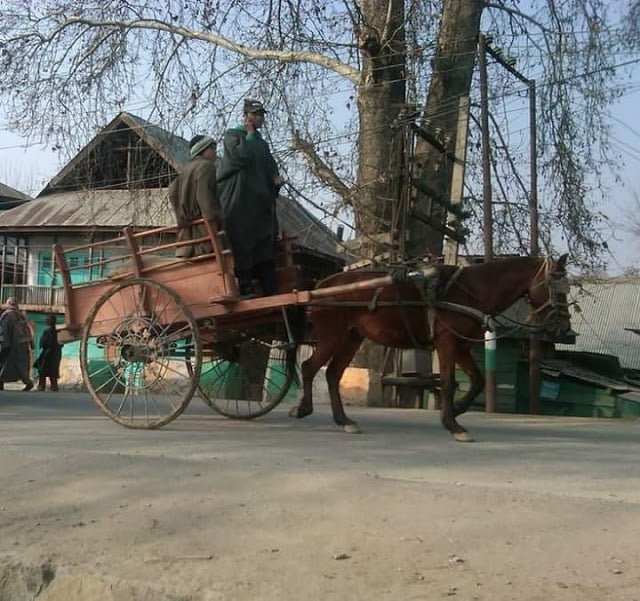
There are lands whose histories are written in the chronicles of kings, and there are lands whose histories survive in the grain of their wood, the folds of their shawls, the fragrance of their gardens, and the waters that have carried their reflections for centuries. Kashmir belongs to the latter. Its history resides not merely in the palaces of its rulers or the pages of its manuscripts, but in the quiet dignity of the things its people learnt to cherish. It lives in the chinar, whose vast branches have sheltered generations beneath the same generous shade; in Dal Lake, where the mountains descend from the heavens to rest upon the water; in the streams that wander through villages, the carved windows of ancestral houses, the intricate patterns of papier-mâché, and the delicate embroidery of a Kashmiri shawl. It lives in the patient hands of artisans who learnt to turn ordinary materials into extraordinary expressions of beauty.
Our ancestors understood something that we, in our haste to become modern, have gradually forgotten: beauty was not merely something to possess; it was something to honour. A wooden window was never simply an opening in a wall. A shawl was never merely a piece of fabric. A garden was never merely an arrangement of trees and flowers. Each carried something of the imagination, labour, and sensibility of the people who had brought it into being. What the land offered, its people transformed with their hands; what they created, they passed to their children; and what they inherited, they endeavoured to preserve.
Kashmir's distinction lay not only in the abundance of its natural gifts, but also in the ways its people learnt to live alongside them. Nature, craftsmanship, architecture, and memory belonged to a shared cultural imagination, each giving meaning to the others. What they left us, therefore, was never merely a collection of landscapes, objects, and traditions. It was a way of belonging to the world. The tragedy of our time is that we have inherited almost everything except the sensibility with which our inheritance was once regarded.
In Kashmir, autumn has never been merely a season. It is an inheritance of colour, a recurring spectacle in which the earth seems to reveal a secret it has been keeping since spring. The chinar stands at the heart of this transformation. Its leaves turn from green to gold, from gold to copper, and from copper to crimson, until the landscape appears to have caught fire without losing its tranquillity. The chinar needed no monument to establish its importance. Its age was its testimony, its shade its generosity, and its continued presence a blessing. Its worth could not be measured by the timber it contained or the space it occupied. It lay in the years it had witnessed and the lives it had quietly accompanied.
We have entered an age in which wider roads, taller buildings, and expanding settlements are too readily accepted as unquestionable signs of progress. The mature chinar, with its broad branches and need for space, can come to be regarded as an obstacle rather than an inheritance. Its removal may be justified in the language of development, while the loss of its shade, ecological value, and place in collective memory receives far less attention. We forget that a tree cannot be replaced simply by planting another in the same soil. A sapling may one day grow into a magnificent chinar, but it cannot immediately reproduce the canopy, habitat, or historical presence that made its predecessor irreplaceable. There is a difference between planting trees and preserving a heritage of trees. Our failure lies not in wishing to build a modern Kashmir, but in the occasions on which we have imagined that a modern Kashmir must be built at the expense of the older one.
Our ancestors understood something in that we have become too distracted to recognise. Water was not merely a resource to be consumed; it was the condition upon which life, cultivation, settlement, and countless daily routines depended. Kashmir's lakes, rivers, streams, springs, and wetlands were never isolated features of its geography. They were part of a living relationship between people and their surroundings. They sustained livelihoods, shaped settlements, nourished fields, and gathered communities around their shores.
Dal Lake occupies a particularly cherished place in this relationship. It is a source of livelihood and habitation, a landscape of gardens and shikaras, and a meeting place between the natural world and human life. Its waters belong as much to the everyday existence of those who depend upon them as to the imagination of poets and travellers. Yet Kashmir's water heritage extends far beyond Dal. The Jhelum has carried the life of Srinagar through changing centuries. Springs have supplied water to villages and become familiar gathering places. Streams descending from the mountains have nourished the land, while wetlands have quietly sustained an ecological balance whose importance is often recognised only when it begins to deteriorate. These waters are not decorative additions to the Kashmiri landscape. They are among the conditions that have made life here possible. And what have we done with them?
Dal Lake, celebrated across the world for its beauty, continues to face serious ecological pressures. Its condition cannot be explained by a single cause or blamed upon one generation alone. Urban growth, sewage, waste, encroachments, and the complex demands of human habitation all contribute to a challenge requiring sustained scientific, institutional, and community action. There is a painful contradiction in the way we speak of Dal. We call it the jewel of Kashmir, celebrate it in our poetry, place its image before the world, and take pride in the visitors who arrive to see it. Yet protecting the very waters that sustain its beauty too often becomes a responsibility postponed, delegated, or discussed only when the damage becomes difficult to ignore.
What meaning does our admiration possess if the water beneath the shikara must bear the consequences of our waste? What value does a photograph retain if the reality it captures is gradually being diminished? What does it mean to call a lake our heritage if we do not treat its survival as a collective responsibility?
The same questions must be asked of the Jhelum, of our springs and streams, and of the wetlands sustaining the wider ecological life of the Valley. We have inherited a geography in which water has shaped both the material and imaginative lives of its people. To damage that inheritance is to weaken the conditions under which future generations will inhabit this land. We may build along a river, settle beside a lake, and draw water from a spring. But our right to live alongside these gifts does not include the right to exhaust them. The waters of Kashmir have carried our reflections for centuries. It is time we looked into them honestly.
Walk through the older parts of Kashmir, and you encounter a form of beauty that does not announce itself through grandeur alone. It resides in the carved wood of a window, the proportions of an ancestral house, the patterns of a lattice, the slope of a roof, and the quiet intelligence with which a building seems to belong to the landscape around it. Traditional Kashmiri architecture emerged from a long engagement with climate, materials, craftsmanship, and the practical necessities of life. This architecture reflects the accumulated knowledge about how people could build and inhabit homes in a region shaped by cold winters and changing seasons.
A window could admit light while creating patterns upon the wall. A balcony could connect the private world of a household with the life unfolding outside. The house was not simply a structure to be completed and abandoned to time. It was something to be maintained, repaired, and passed forward. Such heritage cannot be reduced to nostalgia for old buildings. Yet many older structures now stand between two unsatisfactory futures: neglected because they are old, or demolished because they are considered inconvenient. Some are lost to deterioration; others give way to new construction without sufficient consideration of their historical or architectural value.
Of course, old houses cannot all be preserved exactly as they were. Buildings must remain safe, functional, and suited to the lives people actually lead. Conservation cannot mean forcing families to inhabit unsuitable structures in the name of heritage. But modernisation need not demand cultural amnesia. We can improve our towns without making every street resemble a place that could exist anywhere in the world. The question is not whether Kashmir should change. The question is whether, in changing it, we have considered what deserves to remain. A people who preserve only their oldest buildings risk turning their heritage into a museum. A people who preserve none of them risk becoming strangers in their own surroundings. Between these extremes lies the more difficult responsibility of continuity: allowing a place to evolve without severing its relationship with the past.
There is a particular kind of history that belongs to the hands that worked in quiet rooms, to the eyes that learnt to recognise the smallest difference between two shades, and to the fingers that repeated a pattern until it became instinct. It belongs to artisans whose names may never have travelled as far as the things they created. Kashmir's craft traditions carry this quieter history. A Kashmiri shawl, especially one shaped by the demanding traditions of fine weaving and intricate embroidery, is not simply an article of clothing. It is the outcome of skill, patience, knowledge, and time. Its beauty may be immediately visible, but the labour behind it often remains concealed within the delicacy of its patterns. The arrangement of colours, the movement of a design, and the balance of the finished work depend upon knowledge accumulated through practice and transmission.
The same devotion lives in papier-mâché, wood carving, carpet weaving, embroidery, and other crafts that have helped shape Kashmir's cultural identity. These traditions are not frozen relics. They have changed across generations, responding to new tastes, markets, materials, and circumstances. Their survival has always depended upon people willing to learn, practise, teach, and adapt them. And yet, in our admiration for the finished object, how often do we remember the person who made it? There is an irony in celebrating a craft while neglecting its craftspeople. A tradition cannot survive through admiration alone. It requires apprentices, fair opportunities, access to markets, recognition of genuine workmanship, and the willingness of younger generations to see skilled labour as a dignified future. The preservation of craft also demands honesty. The distinction between handmade work and imitations, between skilled labour and mass-produced substitutes, matters not merely to the buyer but to the cultural continuity of the tradition itself.
If we wish to preserve the beauty of a Kashmiri shawl, we must care about the future of the hands that make it. If we wish to preserve the intricate patterns of our papier-mâché, we must care about the knowledge that allows those patterns to be created. And if we wish to speak proudly of our artistic inheritance, we must recognise that heritage does not live in an object alone. It lives in the tradition that brought it into being. A civilisation does not lose its heritage only when its treasures are destroyed; it also loses it when the knowledge required to create them is no longer passed on.
We often speak of Kashmir's beauty as though it were an inexhaustible possession, something that will remain available to us regardless of how we treat it. We have allowed the word paradise to carry a reassuring permanence, as though nature had promised to preserve our landscape against our own actions. But no such promise exists. A lake requires protection from pollution. A tree requires room to grow. An old building requires maintenance. A craft requires practitioners. A language requires speakers. A tradition requires people who understand why it matters. Protecting Kashmir's heritage requires effective public policy, scientific understanding, responsible planning, adequate funding, institutional accountability, and meaningful community participation. Authorities must enforce environmental protections, support conservation, and ensure that development does not needlessly destroy what cannot easily be restored.
Citizens, too, must recognise their role in the life of the places they inhabit. We cannot ask institutions to protect the lake while treating its shores carelessly. We cannot demand the preservation of traditional crafts while refusing to recognise the value of skilled workmanship. We cannot mourn the loss of old architecture while treating every inherited structure as an inconvenience. The answer is neither to reject modernity nor to romanticise an imagined past in which everything was perfect.
When we speak of Kashmir, we speak of a place whose natural and cultural inheritance has endured through extraordinary changes. Its lakes and rivers, chinar trees and gardens, architecture and crafts have outlived many of the circumstances in which they first took shape. They have survived because people cared for them, used them, maintained them, and passed them forward. They will survive into the future only if we continue that work.
Let us leave our children something more enduring than photographs of a beautiful past. Let us leave them a living inheritance. For Kashmir was never ours merely to admire. It was ours to care for, ours to carry forward, and ours to leave alive.
About the Author: Asma Khurshid is from Srinagar, Jammu & Kashmir and can be emailed at mirasmaasma70@gmail.com.
The article first appeared on The Kashmir Pulse at https://kashmirpulse.com/opinion/the-inheritance-we-forgot-to-honour/117229.html
Post a Comment
Refrain from posting comments that are obscene, defamatory or inflammatory, and do not indulge in personal attacks, name calling or inciting hatred against any community. Let's work together to keep the conversation civil.