
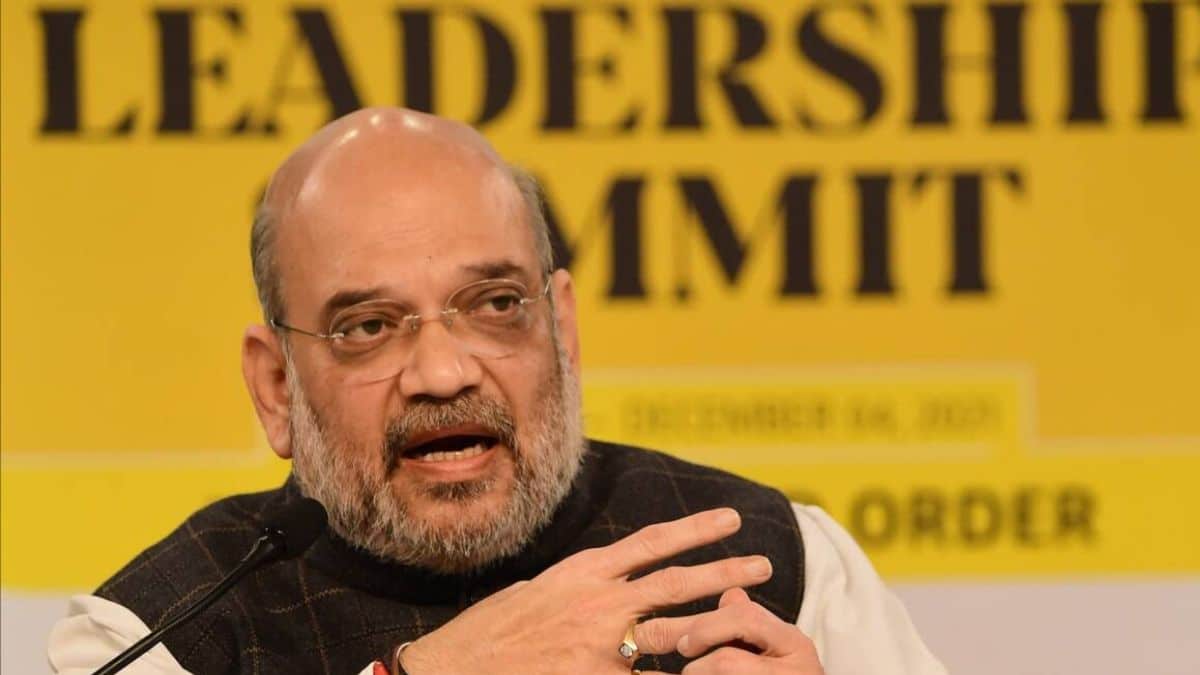
BHOPAL — Union Home Minister Amit Shah on Saturday said India’s criminal justice system was undergoing a major transformation with the implementation of the three new criminal laws, which he said were aimed at making justice faster, technology-driven and citizen-centric.
Addressing a conference of cattle rearers in Bhopal after inaugurating an exhibition on the new criminal laws, Shah said the new framework, once fully implemented, would enable cases to move from registration of an FIR to the Supreme Court within three years.
The three laws — the Bharatiya Nyaya Sanhita (BNS), Bharatiya Nagarik Suraksha Sanhita (BNSS) and Bharatiya Sakshya Adhiniyam (BSA) — came into force across India on July 1, 2024, replacing the Indian Penal Code, Code of Criminal Procedure and Indian Evidence Act.
Shah said the new system placed greater emphasis on technology, electronic evidence, online hearings, video conferencing and forensic science, besides provisions relating to women’s safety, missing children, terrorism and mob lynching.
He described “justice”, rather than “punishment”, as the core principle of the new criminal laws and said the framework was intended to protect the dignity, property and physical security of citizens.
According to Shah, the earlier criminal justice system was associated with prolonged litigation and repeated adjournments, which he described as the era of “tareekh pe tareekh”. He said the new laws were designed to introduce greater certainty and time-bound processes into criminal justice.
The Home Minister also spoke at length about the cooperative sector and dairy development, saying cooperatives could help livestock rearers secure better prices for milk and benefit from processing and value addition instead of depending heavily on intermediaries.
He highlighted what he termed “White Revolution 2.0”, under which the Centre has set a target of establishing 75,000 new dairy cooperatives and strengthening 46,000 existing ones.
Shah said India’s milk production had increased substantially over the past decade. The Union government’s account of his speech put production at about 14.60 crore tonnes in 2014-15 and around 24.80 crore tonnes at present, while per capita milk availability had risen from about 307 grams per day to 485 grams.
He also highlighted five technology-based models for the scientific collection and processing of cattle dung, saying they could help reduce methane emissions, recycle nutrients, generate clean energy and create additional rural economic opportunities.
The Home Minister said efforts were also being made to establish a mechanism under which cattle owners in Madhya Pradesh could receive fair prices for cow dung.
He further emphasised the role of modern technologies in improving cattle breeds, animal health and milk productivity, including the use of sex-sorted semen.
On narcotics, Shah said the Centre and Madhya Pradesh Government would prepare a detailed plan to make the state free from drugs and narcotics by December 31, 2029. The target was reiterated in reporting from the Bhopal event.
During the programme, Shah also criticised the Congress over the long-standing demand for a separate Ministry of Cooperation and credited the Narendra Modi government with establishing the ministry. His remarks were part of his wider political criticism of the opposition.
He said India should become a leading country across sectors by Aug. 15, 2047, and attributed the objective to the wider development agenda of the Modi government.
Several projects and initiatives were also announced or inaugurated during the programme.
Shah digitally laid the foundation stone for a ₹255-crore milk processing plant in Ujjain with a capacity of three lakh litres per day.
A 40,000-litre-per-day Product Dairy Plant and a state-level central laboratory were also inaugurated in Bhopal, while strengthening work on a mini dairy plant in Shivpuri was completed as another programme initiative.
An MoU between KRIBHCO and the Madhya Pradesh State Biodiversity Board for development of an urban forest in Bhopal under the Morvan Project was also exchanged in Shah’s presence.
The programme brought together discussions on criminal justice reform, dairy cooperatives, livestock development, anti-drug measures and environmental initiatives, with Shah stressing technology, cooperative institutions and greater economic participation in rural areas.
The article first appeared on The Kashmir Pulse at https://kashmirpulse.com/politics/new-criminal-laws-can-deliver-justice-within-3-years-says-amit-shah/116681.html
Post a Comment
Refrain from posting comments that are obscene, defamatory or inflammatory, and do not indulge in personal attacks, name calling or inciting hatred against any community. Let's work together to keep the conversation civil.