
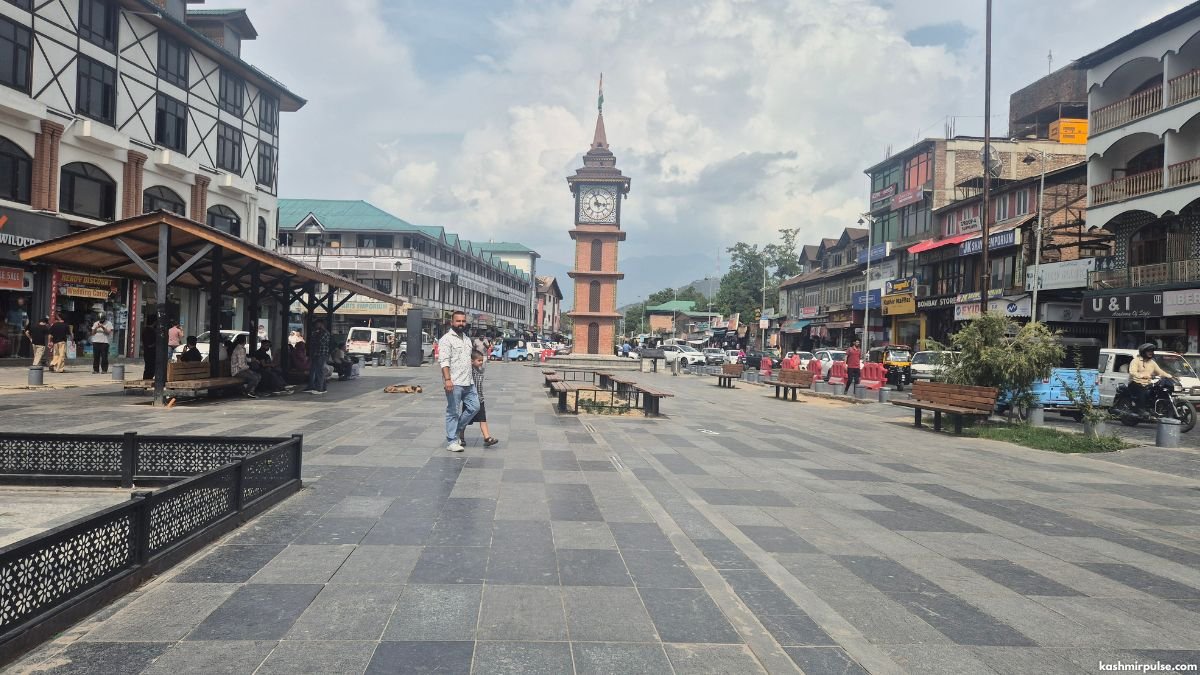
SRINAGAR — Traffic movement across parts of Downtown Srinagar has undergone significant changes over the past year following the introduction of one-way systems, junction modifications, enforcement measures and restrictions on certain categories of vehicles.
The changes have been particularly visible along congested stretches of Shehr-e-Khas, where narrow roads, heavy pedestrian movement, commercial activity and roadside obstructions have long contributed to traffic bottlenecks.
The traffic arrangements have been implemented under the supervision of SSP Traffic City Ajaz Ahmad Bhat, with DySP Traffic Mehboob-ul-Haq involved in their implementation and ground-level management.
The Rajouri Kadal-Gojwara stretch was placed under one-way movement for public transport, while traffic over the narrow Barbar Shah bridge was also regulated on a one-way basis.
Authorities have additionally introduced barricading and junction modifications at identified choke points, including Chhati Padshahi and Khanyar.
Restrictions on e-rickshaw movement along MA Road and Residency Road have also formed part of the traffic-management plan, aimed at reducing mixed traffic on already congested corridors.
Enforcement has been stepped up as well. Traffic records cited in the assessment show that challan disposal increased from 30% in 2024 to 56% in 2025, while efforts were intensified to remove road obstructions and prevent vehicles from occupying pedestrian pathways.
The Downtown measures have also been accompanied by road-related works, including resurfacing, drainage improvements and junction modifications, with coordination between the Traffic Department and civil administration.
The measures, however, have not eliminated the wider traffic pressures facing Srinagar. Increasing vehicle numbers, limited road width, roadside commercial activity, parking shortages and heavy pedestrian movement continue to put pressure on the city’s road network.
The Downtown experience has nevertheless provided traffic authorities with an opportunity to assess whether localised interventions, particularly one-way systems and targeted enforcement, can be extended to other congested corridors.
The Traffic Department has been considering similar arrangements for other interior routes, including parts of Lal Chowk, Batamaloo and Safa Kadal-Cement Kadal, while consultations with traders and transport operators remain important before restrictions are extended to additional areas.
Meanwhile, the Traders Association Central Lal Chowk has opposed the proposed relocation of the Civil Secretariat and 20 other major administrative and security offices from central Srinagar, warning that the move could have a significant impact on businesses operating in the city’s commercial core.
Association president Feroz Ahmad Baba said the concentration of government institutions in and around central Srinagar had for decades supported a wider commercial ecosystem, with traders, restaurants, retailers and transport operators benefiting from the daily movement of employees and visitors.
The association maintained that removing these establishments would reduce the regular footfall on which many businesses depend and could weaken economic activity in the Lal Chowk area.
Baba said the issue should not be viewed only through the lens of traffic congestion, arguing that Lal Chowk’s commercial importance and its historical role as the centre of Srinagar should also be considered while reviewing the proposal.
The traders said traffic management was necessary but argued that congestion could be addressed through measures such as improved traffic regulation, multi-level parking facilities and stronger public transport rather than relocating the administrative core.
The association has urged Lieutenant Governor Manoj Sinha and other concerned authorities to review the proposal in the context of the Master Plan-2035 and hold consultations with traders and other stakeholders before taking a final decision.
It said broader consultation was necessary to balance the need to decongest central Srinagar with the economic interests and livelihoods associated with the city’s traditional commercial centre.
The article first appeared on The Kashmir Pulse at https://kashmirpulse.com/travel/downtown-srinagar-traffic-changes-intensify-as-lal-chowk-traders-oppose-office-relocation/116099.html
Post a Comment
Refrain from posting comments that are obscene, defamatory or inflammatory, and do not indulge in personal attacks, name calling or inciting hatred against any community. Let's work together to keep the conversation civil.