Collagen Supplements and Topical Skincare: How They Differ
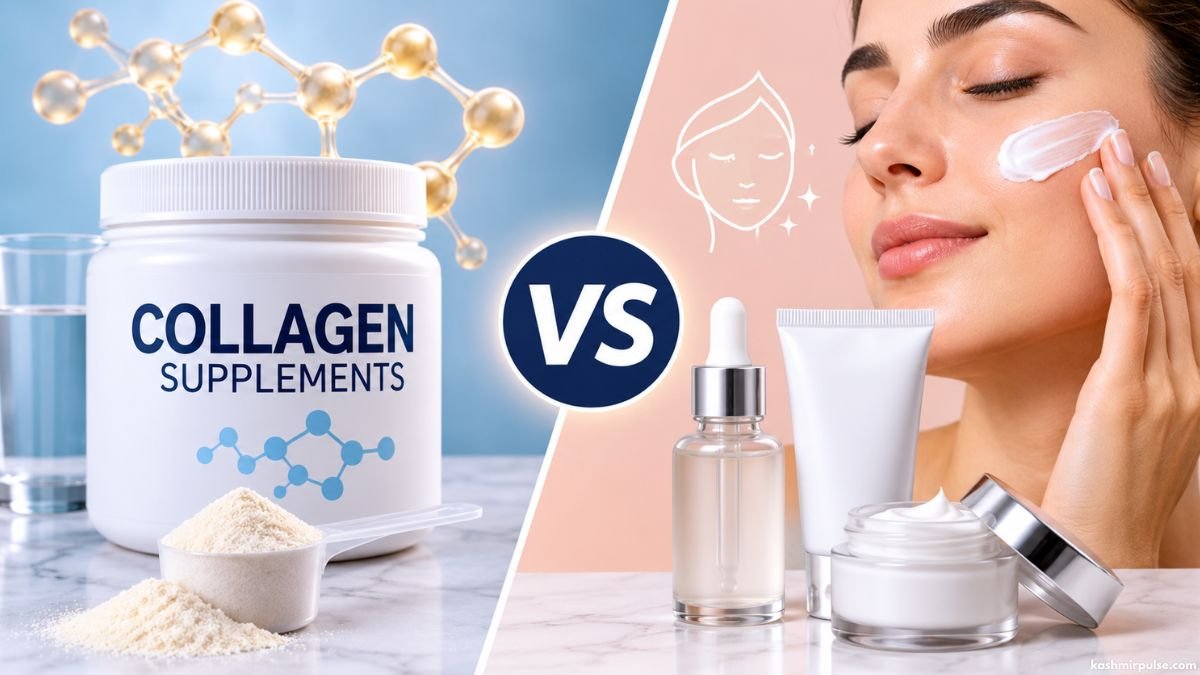
A moisturiser goes on your skin. A supplement becomes part of your daily nutrition routine. Both may appear in conversations about skin care, but they work in different ways.
That can make choosing between them confusing. Do you need a serum, a supplement, or both? The answer depends on what you want from your routine and which steps feel practical for you.
Let’s look at how topical skincare and collagen supplements differ, what to check before choosing them, and how food and everyday habits fit in.
Key Highlights
- Topical skincare is applied to the skin; supplements are taken by mouth.
- Moisturisers, serums and sunscreen each have different roles.
- Collagen supplements vary by source, format and added ingredients.
- A varied diet and everyday skin-care habits can complement your routine.
- Choose supplements that suit your preferences, needs and lifestyle.
What is Collagen?
Collagen is a protein found throughout the body, including in the skin. The body makes it using amino acids, which come from protein in food. Nutrients such as vitamin C also play a part in the body’s collagen formation.
Skin changes over time. Its appearance and feel can reflect many things, including age, sun exposure, daily habits and individual differences. That’s one reason skin care can involve several kinds of support, from sunscreen and moisturiser to nutrition and sleep.
The word “collagen” can appear on different products, but the products themselves may work in different ways. A topical product is applied to the skin. An oral supplement is swallowed and may contain collagen peptides or other ingredients.
Plant-based supplements described as “collagen builders” provide nutrients associated with collagen formation; they do not contain collagen itself. Reading the label helps you understand what you’re choosing.
How Topical Skincare Fits into a Routine
Topical skincare includes products applied directly to the skin, such as cleansers, moisturisers, serums and sunscreen. Each product can serve a different purpose.
A cleanser removes surface dirt and oil. A moisturiser helps care for the skin’s surface and can ease the feeling of dryness. A serum may include ingredients selected for a particular skin-care goal. Sunscreen helps protect exposed skin from ultraviolet rays.
You don’t need to use every type of skin care product. Start with the steps that make sense for you. For many people, a gentle cleanser, moisturiser and daytime sunscreen make a manageable foundation. You can add other products if they suit your skin and routine.
Follow the product directions, and introduce new products one at a time. This makes it easier to notice how your skin responds. If you have sensitive skin or a specific concern, a dermatologist can help you choose suitable products.
Topical skincare may appeal to you if you enjoy applying products as part of a morning or evening routine. It gives you a direct, hands-on step that you can adjust based on how your skin feels.
How Collagen Supplements Fit In
Collagen supplements are taken by mouth and come in formats such as powders, capsules, tablets and drinks. Some people like having a supplement as part of their nutrition routine, especially when they want a format that is easy to take consistently.
Products can differ in their source, serving size and added ingredients. Some contain collagen from animal sources. Others use plant-based ingredients that provide nutrients involved in normal collagen formation. Think about your dietary preferences and check the full ingredient list before deciding.
The label can answer practical questions: What is the serving size? How often should you take it? What other ingredients does it contain? Does it list allergens or ingredients you prefer to avoid? Check the directions and follow them.
If you want to compare different formulas, read our guide to supplements to boost collagen production. It looks at collagen supplements for skin and gives you another reference point while you review product formats and ingredients.
Topical Skincare and Supplements: What’s the Difference?
The main difference is how you use each option. You apply topical skincare to the skin. You take a supplement by mouth as part of your daily routine.
| Topical skincare | Collagen supplements |
| Applied directly to the skin | Taken by mouth |
| Includes products such as moisturisers, serums and sunscreen | Available as powders, capsules, tablets and drinks |
| Choice may depend on skin type and the steps in your routine | Choice may depend on source, ingredients, format and dietary preferences |
| Can form part of a daily skin-care routine | Can form part of a daily nutrition routine |
You don’t have to treat this as an either-or choice. Some people focus on topical skincare. Others include a supplement alongside their usual routine. The option that feels manageable and suits your needs is the one to explore.
For example, if you want to care for skin that feels dry, you might begin with a moisturiser. If you are curious about supplements, compare labels and consider your preferences. If a skin change persists or worries you, a dermatologist can help you understand it.
Food and Daily Habits Also Support Skin Care
Products are only one part of a skin-care routine. A varied diet can provide protein and other nutrients the body uses for everyday functions, including collagen formation.
Choose protein foods that suit your eating pattern. Options include dal, chickpeas, beans, paneer, curd, tofu, eggs, fish or poultry. Fruits and vegetables can add variety and nutrients too. Guava, citrus fruits, tomatoes and capsicum are examples of foods that provide vitamin C. Nuts and seeds can also add variety to meals.
You don’t need to rely on one “beauty food” or make every meal complicated. Aim for a mix of foods that works for your appetite, preferences and lifestyle. Drinking water when you’re thirsty, getting regular sleep and using sunscreen are other practical habits to include.
If you follow a restricted diet or have questions about your nutrition, a dietitian or doctor can help you make choices that suit your needs.
How to Choose an Option That Suits You
Start by asking what you want your routine to do and what you can keep up with. If you enjoy a simple skin-care routine, focus on the topical steps that feel useful. If you want to explore supplements, compare the full formula, serving instructions, source and format.
Your personal needs matter too. Check the label for allergens and ingredients that may not suit you. Ask a qualified professional for guidance if you take medication, have a health condition, or are pregnant or breastfeeding.
A dermatologist can advise you about topical products and skin concerns; a doctor or dietitian can help with supplement and nutrition questions.
At ZeroHarm, check out the plant-based wellness supplements for people exploring different nutrition routines. You can find supplements on the website and at select offline retailers, including Wellness Forever, Noble Plus, Pills & More and Qmart. Availability varies by store, so contact your local retailer to check stock.
Make Your Routine Your Own
Topical skincare and collagen supplements offer different ways to approach skin care. Topical products are applied to the skin, while supplements add a step to your nutrition routine. Food, sleep and sun protection can sit alongside either choice.
Keep the routine practical. Read labels, choose products that match your preferences, and seek professional advice when you need it. You don’t have to add every product at once. Start with the steps that make sense for you and build from there.
The article first appeared on The Kashmir Pulse at https://kashmirpulse.com/health/collagen-supplements-vs-topical-skincare/117649.html