SRINAGAR — A review petition has been filed in the Supreme Court against its verdict upholding the abrogation of Article 370.

The review petition was filed in the top court by Muzaffar Iqbal Khan, one of the petitioners in the Article 370 case.

Speaking with the news agency KNO, Khan said he filed the petition today.

On December 11, a 5-judge Constitution Bench led by Chief Justice DY Chandrachud upheld the legal validity of the abrogation of Article 370 by the President of India in August 2019.

The Supreme had also asked the Centre to restore J&K's statehood as soon as possible and hold elections to the J&K Assembly before September 30, 2024.

This post first appeared on The Kashmir Pulse

SRINAGAR — Petitioners, who had petitioned against the abrogation of Article 370, are mulling to file a review petition in the Supreme Court.

On December 11 this month, the Supreme Court upheld the Government of India’s decision to scrap the provisions of Article 370 of the Constitution, which had granted special status to the erstwhile state of Jammu and Kashmir.

People’s Alliance for Gupkar Declaration (PAGD) and senior CPIM leader Muhammad Yousuf Tarigami told the news agency KNT that all the petitioners and those who backed them are in discussion and hopefully, a review petition will be lodged in the Supreme Court against its recent verdict.

In response to a question, Tarigami said, “It’s not only about the PAGD leaders but also about those who were petitioners and who had petitioned against the Centre’s action. Everything is being evaluated and hopefully, a review petition will be filed in the apex court,” he said.

“We are seeking justice and want the apex court to reconsider its decision. The abrogation of the special status of Jammu and Kashmir was an assault on the people of the region,” he said.

Tarigami said that after discussing the matter with legal luminaries, it was felt that there is room for a review petition before the apex court.

People can differ but judgment was unanimous: Justice SK Kaul

The unanimous judgment on Kashmir was the opinion of five judges and people can differ, Justice (Retd) SK Kaul, who was part of the constitution bench that delivered the verdict, has said.

While talking to a media outlet, he said, "I believe that if five judges have taken a unanimous decision, then at least it is the opinion of these judges that what was done was correct and in accordance with the law.”

The verdict of the five-judge bench led by Chief Justice of India DY Chandrachud earlier this month, had disappointed in Kashmir Valley.

Speaking about the issue, which he insisted deserved to be put to rest, Justice Kaul, who retired on December 25, said the issues which came before the bench could be broadly divided into two questions -- whether Article 370 was a temporary provision and whether the Centre had stuck to the correct legal procedure.

Whether the "shell" of the "slightly different procedure" used to assimilate Jammu and Kashmir to India should stay or go was a political decision, Justice Kaul said. Now the decision for full assimilation has been taken, it was the "correct legal position," he said.

"On the question of process, the court took its call looking at the ground reality -- that there was no state assembly at the time and the power rested with the Centre. The people are entitled to a different opinion of it, so what," he said.

On whether it was a temporary position, all five judges had agreed it was, going by the incorporation and the chapter where it was made.

Asked how he felt about the situation since he felt the pain of Kashmiri Pandits -- the judge is from the erstwhile state -- he said it was essential to acknowledge that "there is something wrong".

Citing the South African model, based not on retribution or revenge but an acknowledgement of wrongdoing and a system of apology, he said it was what people needed to move on.

"There is a legal aspect and a societal aspect. There should be an end to this conflict. 4.5 lakh people were compelled to migrate. Their story was never told. If we have to proceed further, it is necessary to acknowledge there is something wrong. A person who has felt the pain 30 years ago, should feel that someone recognises their pain," Justice Kaul said.

On December 11, the Supreme Court, in a unanimous judgment, upheld the Centre's decision to scrap the provisions of Article 370 of the Constitution, which had granted special status to the erstwhile state of Jammu and Kashmir.

This post first appeared on The Kashmir Pulse

SRINAGAR — Political parties in Jammu and Kashmir on Monday expressed disappointment over the Supreme Court's verdict upholding the constitutional validity of the Centre's August 05, 2019 move to abrogate provisions of Article 370 and bifurcate the erstwhile state into two Union Territories.

As per the news agency KNO, the five-judge Constitution Bench, led by Chief Justice of India DY Chandrachud, on Monday ruled that the provisions of Article 370 were temporary, and there were no issues with the exercise of power under Article 370(3) by the President in issuing the August 2019 order.

National Conference

Vice President of the Jammu and Kashmir National Conference, Omar Abdullah while expressing dissatisfaction with the verdict pledged to continue the party's “struggle for the restoration” of Article 370.

During a live stream on X (formerly Twitter), Omar described the decision as unexpected. He apologised to the people for not securing a favourable outcome.

“… We were not expecting such a verdict. We were hoping for justice for the people of Jammu and Kashmir from the highest court of the country. Unfortunately, we could not convince the 5-bench judges of the SC but I can say with certainty that we could not have done more than that. The fact is that our opponents also admitted that the National Conference left no stone unturned to defend the case and we could not have expected our lawyers Kapil Sibal and Gopala Subramaniam to present our case in a better way. In this moment of collective despair, we apologize to the people of Jammu and Kashmir and Ladakh and to those in the country who wanted us to succeed in this fight,” he said.

Despite the setback, the former chief minister said he will continue his “political and constitutional fight within the realm of law”.

“I want to tell the people that the matter does not end here, our efforts will not end here. Apart from the court, our position has always been that this is a political fight, a constitutional fight, a fight within the realm of law,” he added.

People’s Democratic Party

Former Chief Minister and President People's Democratic Party (PDP), Mehbooba Mufti, urged the people not to lose hope, saying the Supreme Court's decision is not the “final destination”. She criticised the government for “betraying” the people and called the verdict a blow to “the idea of India”.

"It is not our failure, but a failure of the idea of India. During the partition, J&K aligned with Gandhi's secular India, so it is the demise of that ideal, not ours," Mehbooba said.

Meanwhile, the PDP in a separate statement said it has suspended all of its political activities for the next one week. “The decision has been taken in order to stand in solidarity with the people of Jammu & Kashmir in the wake of the Supreme Court of India’s judgment on the issue of Article 370,” the party said.

CPI(M)

CPI(M) leader Mohammad Yousuf Tarigami, while criticising the verdict, raised concerns about its impact on the federal structure of the Constitution. Tarigami also alleged that he was not allowed to leave his residence. He said media visits were prohibited, and there was an armoured vehicle stationed outside his gate.

The CPI(M) leader said the verdict implies that Jammu and Kashmir no longer retains any element of sovereignty after the signing of the Instrument of Accession, hence rendering the Constitution of J&K redundant.

He also criticised the verdict for treating J&K like any other state in the Indian Union, thereby depriving it of the special features granted to other regions under various clauses of Article 371.

“The verdict has evaded going into the merits of downgrading the state of J&K into two Union Territories, stating that the Solicitor General has promised the return of statehood. At the same time, the creation of a separate Ladakh Union Territory is upheld as valid. So, the restoration is not for the original state of J&K, but only a part of it and even that remains an assurance on paper,” the party said in a statement.

"Strangely, the Supreme Court directs the Election Commission of India to hold polls in J&K at the earliest not later than September 30, 2024. The verdict, thus, gives the Central government a long rope to retain control over J&K," the CPI(M) added.

Democratic Progressive Azad Party

Chairman Democratic Progressive Azad Party (DPAP) Ghulam Nabi Azad termed the verdict as “sad and unfortunate”, saying the people of J&K are disappointed. “But we have to accept it,” he added.

Congress leader Dr Karan Singh

Congress leader and the son of the last Maharaja of the erstwhile state of Jammu & Kashmir, Dr Karan Singh welcomed the decision. He urged Prime Minister Narendra Modi to restore statehood soon.

He advised those unhappy with the judgment to accept reality and acknowledge that the Supreme Court has validated the action.

"There's no point in unnecessarily hitting their head against the wall," Singh said and suggested redirecting energies towards preparing for the next elections instead of fostering negativity.

People’s Conference

Jammu and Kashmir People’s Conference chairman Sajad Lone expressed disappointment with the SC's decision on Article 370, saying, “The Supreme Court's decision on Article 370 is disheartening. Once again, justice seems out of reach for the people of J&K.”

“Article 370 may be legally erased, but it will always be a part of our political aspirations,” Lone said in a statement.

Regarding the issue of statehood, Sajad said, “The Supreme Court avoided commenting on it, possibly safeguarding the entire country from potential misuse by citing precedence.” However, he expressed hope for “justice” at a “later date”.

Apni Party

Apni Party said the Supreme Court's verdict has saddened the people of Jammu and Kashmir “to the core”. “Over the years and decades, people had been led to believe that this article of the constitution was permanent,” the party said in a statement.

The party said, “The verdict from a five-judge Constitution bench, headed by the Chief Justice of India, has now clarified that the article is gone forever, leaving people deeply disheartened. It is the responsibility of the Central government to come forward and assure the people that they will not be subjected to disempowerment.”

Apni Party has urged the government to bring the domicile law into the constitutional framework in a way that guarantees the exclusive rights of the residents of Jammu and Kashmir to land and jobs.

“Additionally, the government should ensure the immediate restoration of statehood to Jammu and Kashmir and the prompt holding of assembly elections. This will enable the residents to exercise their democratic right of choosing their own representatives,” the party said.

This post first appeared on The Kashmir Pulse

SRINAGAR — In a landmark decision, the Supreme Court has upheld the Central government's move from 2019 to annul the special semi-autonomous status accorded to the erstwhile state of Jammu and Kashmir. The apex court declared that the special status granted to the region was a "temporary provision."

The ruling also emphasized the necessity of placing Jammu and Kashmir on equal footing with other Indian states at the earliest, mandating local elections to be held by September 30, 2024.

Prime Minister Narendra Modi lauded the Supreme Court's verdict through social media on Monday, referring to it as "a beacon of hope, a promise of a brighter future, and a testament to our collective resolve to build a stronger, more united India."

The case revolved around over 20 petitions that contested the contentious abrogation of Article 370 in 2019 by the government at the Centre led by Modi. The petitioners raised concerns about the Indian Parliament's authority to revoke the region’s special status, arguing that only the constituent assembly of Jammu and Kashmir held the right to decide on such matters.

Under Article 370, Jammu and Kashmir, with its Muslim-majority populace, had enjoyed distinct privileges, including limited autonomy, a separate constitution, and inherited protections related to land and employment.

Following the annulment of Article 370, direct governance from New Delhi was imposed on Jammu and Kashmir. The region was bifurcated into two federal territories: Ladakh and Jammu & Kashmir, both administered directly by the Central government without individual legislative assemblies.

The Supreme Court's ruling signifies a significant legal validation of the government's decision, concluding a prolonged legal battle over the revocation of Jammu and Kashmir's special status.

This post first appeared on The Kashmir Pulse
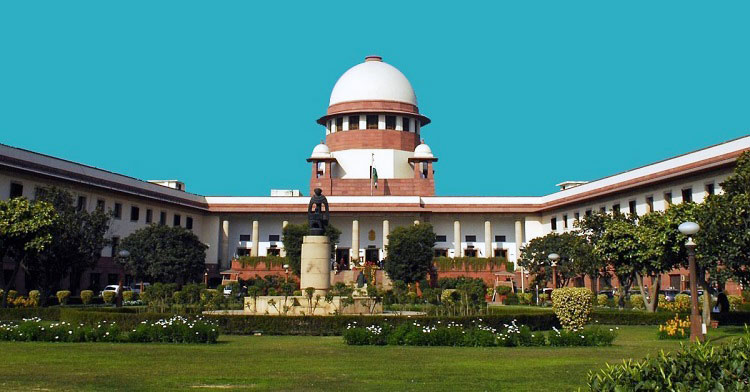
SRINAGAR — Democratic Progressive Azad Party (DPAP) Chairman Ghulam Nabi Azad on Sunday said that he is hopeful that the Supreme Court will pronounce the verdict on Article 370 in favour of Jammu and Kashmir.

He said the people of J&K have been waiting for more than four years for justice from the apex court. “People of J&K were waiting for the last four years for the Supreme Court to pronounce the decision on pleas challenging the decision taken on August 5, 2019 by the Government of India to abrogate the special status of J&K under Article 370 and 35(A). These rights were snatched from us before four years and people have pinned hope on SC to get justice from there,” Azad told reporters here, as per the news agency KNS.

He said the special provision was imperative for Jammu and Kashmir as it was kept intact by Maharaja Hari Singh from his times. “Maharaja Hari Singh kept this provision intact since 1925 with an aim to secure land and employment to domiciles of J&K. Later, this provision was given room in the Constitution of the country and many governments since then kept this law untouched. But unfortunately, BJP tinkered with it and abrogated on August 5, 2019,” he said.

Azad said that common people and politicians of J&K were emotionally attached with Article 370 and 35(A). He reiterated that no political party can return Article 370 and 35(A) back to Jammu and Kashmir except two revered institutions of the country – Parliament and the Supreme Court.

“I have already said that no political party can undo the decisions taken on August 5, 2019. Only Parliament or Supreme Court can return this law back to J&K. There should be 350 seats in the Parliament to restore this law,” Azad added.

He hoped and prayed that a five-member bench headed by Justice DY Chandrachod would pronounce the decision in favour of J&K on December 11.

We trust SC will uphold its constitutional principles: Muzaffar Shah

As the Supreme Court is set to announce its verdict on Monday regarding a series of petitions challenging the abrogation of Article 370 provisions in Jammu and Kashmir, senior leader and vice president of Awami National Conference, Muzaffar Shah stated on Sunday that tomorrow's proceedings are not just about a verdict but also a significant test for the Supreme Court.

In an interview with a national news channel, Shah expressed his views ahead of the constitution bench, led by Chief Justice of India (CJI) D Y Chandrachud, delivering its judgment on Monday, December 11, regarding the challenge to the abrogation of Article 370.

He emphasized that it's not just about the decision; it's a crucial test for the Supreme Court. Shah noted that the government de-operationalized the status of J&K by abrogating Article 370 on August 5, 2019.

"The court has to decide tomorrow whether the action was right or wrong, considering the lack of information and consent from the people. All eyes will be on the top court and its bench as it faces a significant test," he said.

"It's solely a question of whether the government's actions on August 5 were constitutionally right or wrong. We trust that the esteemed top court will uphold its constitutional principles and render a decision in favour of the people of Jammu and Kashmir," he stated.

This post first appeared on The Kashmir Pulse

SRINAGAR — A five-judge constitution bench of the Supreme Court, headed by Chief Justice of India D Y Chandrachud, will deliver one of the most awaited court verdicts on Monday, December 11, when it rules on the constitutionality of abrogation of Article 370 and reorganization of Jammu & Kashmir into two Union Territories.

The five-judge constitution bench, also comprising Justices Sanjay Kishan Kaul, Sanjiv Khanna, BR Gavai, and Surya Kant, is expected to pronounce its verdict on the case on Monday, news agency KNO reported.

In August 2019, the Union Government had abrogated the Article 370 and reorganized Jammu & Kashmir into two UTs.

Several petitions challenging the abrogation of Article 370 were filed in the Supreme Court by different parties. Several political parties including the National Conference and Peoples Conference had also challenged the Centre’s decision.

After hearing the matter for 16 days, the Supreme Court had reserved its verdict in the case on September 05.

This post first appeared on The Kashmir Pulse
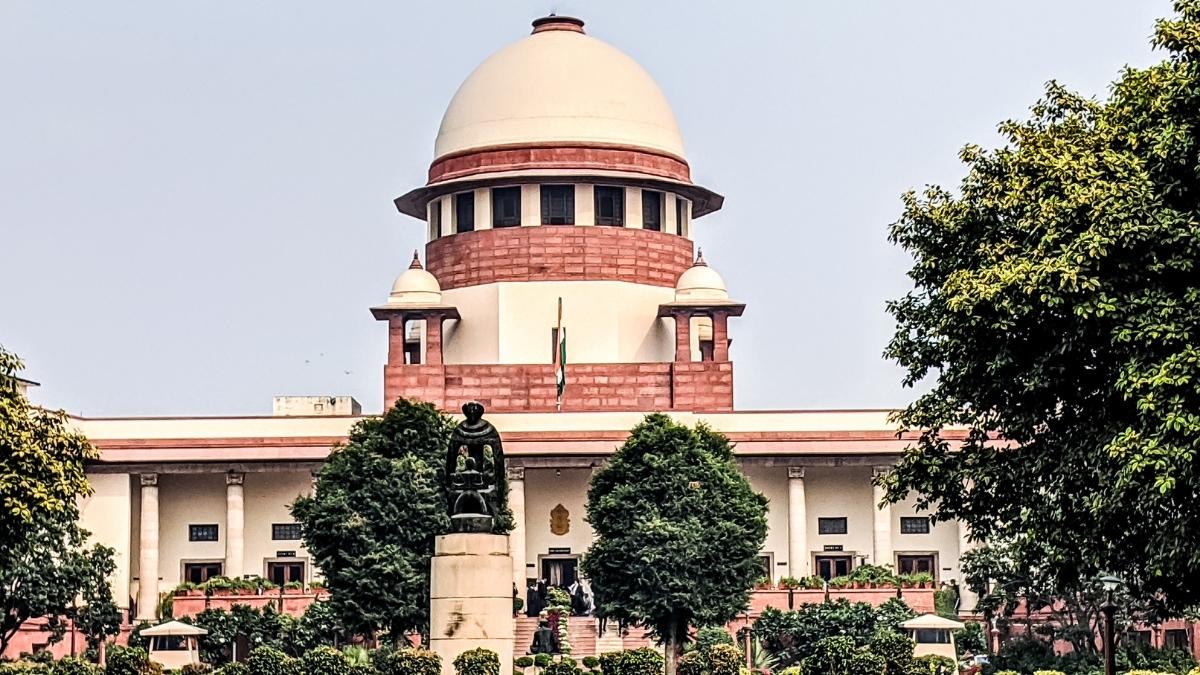
SRINAGAR — In a significant legal debate, the Supreme Court engaged in discussions over the continued applicability of Article 370 to Jammu and Kashmir beyond 1957.

The core argument revolved around whether the dissolution of the J&K Constituent Assembly in 1957 rendered the Indian Constitution frozen in its application to the region.

Senior Advocate Dinesh Dwivedi, representing the petitioners, argued that the abrogation of Article 370 amounted to a regressive measure. He questioned the longstanding notion of "one nation, one constitution," highlighting that no explicit provision mandated this concept.

Chief Justice of India (CJI) responded by questioning whether the Indian government's power to apply constitutional provisions would cease after the Constituent Assembly's decision in 1957. Dwivedi noted that while the Indian government retained control over various matters through Union entries, he aimed to uncover the intent behind the debates surrounding the issue.

However, the CJI disagreed, contending that freezing the Constitution's application to J&K post-1957 would conflict with the region's status as an integral part of India. He emphasized the need for provisions for the democratically elected government of J&K and highlighted the absence of constitutional clauses preventing the Indian Constitution's application to the region.

The debate extended to discussions on the Jammu and Kashmir Reorganisation Act. Senior Advocate CU Singh emphasized the Act's importance to the region and raised concerns about potential implications on democracy and federalism if Article 370's interpretation was upheld.

Senior Advocate Sanjay Parikh criticized the Parliament's action, labeling it unconstitutional as it changed the explanation without the Constituent Assembly's prior recommendation. He stressed the people's sovereignty, enshrined in the J&K Constitution, and the paramountcy of a written constitution.

Senior Advocate PC Sen brought up the historical context of J&K's choice between India and Pakistan, noting that the conscious decision to be a minority in India rather than a majority in Pakistan should be carefully considered.

The hearing concluded without a clear resolution, and discussions are set to continue in the next session on Wednesday.

This post first appeared on The Kashmir Pulse
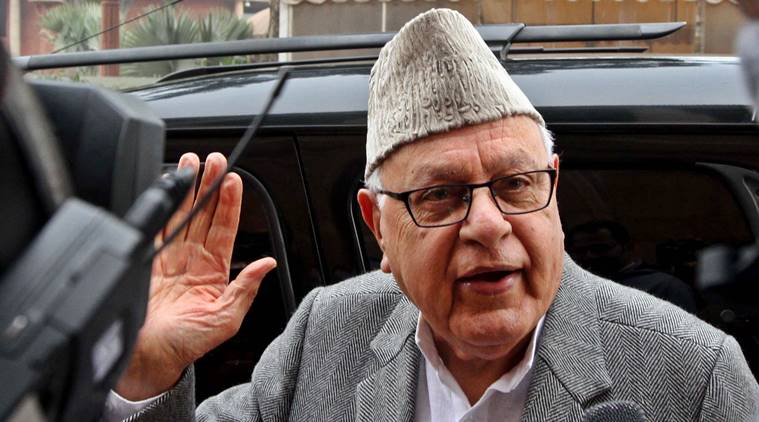
ANANTNAG — National Conference President and former chief minister J&K, Dr. Farooq Abdullah on Friday said that every citizen of Jammu and Kashmir wants statehood back.

"Not only me, but every resident of Jammu and Kashmir wants statehood back," Dr. Farooq Abdullah said while speaking to the news agency KNS exclusively on the sidelines of a party function held in southern Anantnag.

Notably New Delhi on August 5, 2019 took away the special status of Jammu and Kashmir under Article 370 and 35-A and downgraded the erstwhile State into two Union Territories - Jammu & Kashmir, and Ladakh.

Dr. Farooq Abdullah expressed happiness over the verdict of the Supreme Court regarding Delhi that Lieutenant Governor has no power or right to control bureaucracy. "I appreciate SC's verdict regarding Delhi that LG has no right to control bureaucracy. I am happy about the decision. Each and every citizen of J&K wants statehood back," Dr. Farooq Abdullah said.

He hoped that GoI will take into consideration the emotions of people and will fulfill sooner than later the demand for restoration of statehood to J&K. He appealed to workers to strengthen the party at the grassroots level and press every effort for the larger interest of the people of J&K.

"I appeal to my people to exhibit unshakable unity as everything can be achieved only by remaining together," he said.

Farooq Abdullah asks youth to offer Salah, recite Quran

National Conference leader Dr. Farooq Abullah on Friday said that everyone in Jammu and Kashmir wants statehood to be restored so that they can elect their own government.

Farooq Abdullah, as per the news agency KNT, said that there is unemployment, inflation, and anarchy in Jammu and Kashmir.

He appealed to people especially youth to pray, recite the Holy Quran, and follow the Islamic teachings in letter and spirit.

“Those who can’t recite the Holy Quran should at least listen to it,” he said and added it was the love of people and the will of the Creator that he performed Umrah despite being frail and feeble.

This post first appeared on The Kashmir Pulse
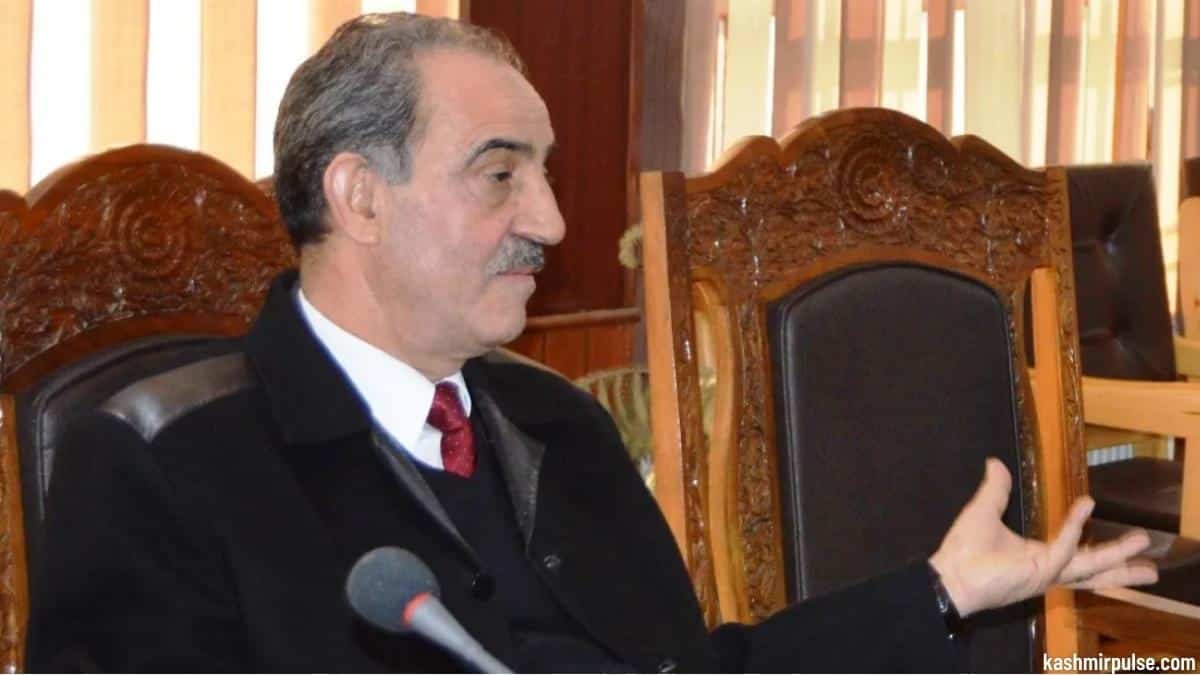


SRINAGAR — The Supreme Court on Monday dismissed the petition challenging the delimitation of Assembly and Parliamentary constituencies in Jammu & Kashmir.


According to details available with the news agency KNO, a division bench of the Apex Court dismissed the petition challenging the notifications for delimitation of Assembly and Parliamentary segments in J&K.


On March 6, 2020, the Centre constituted a three-panel headed by former Supreme Court Judge, Justice Ranjana Desai. Its two other members were Chief Election Commissioner and J&K’s State Election Commissioner.


It was entrusted with the work of delimiting the Assembly and Parliamentary constituencies in the UT of Jammu and Kashmir on the basis of the 2011 Census and in accordance with the provisions of Part-V of the Jammu and Kashmir Reorganisation Act, 2019 (34 of 2019) and the provisions of Delimitation Act, 2002 (33 of 2002).


The Commission unveiled its final order on May 5, 2022, and allocated six additional seats to Jammu and one to Kashmir. It also reserved nine seats for scheduled tribes - six in Jammu region and three in Kashmir.


This post first appeared on The Kashmir Pulse


SRINAGAR — The Supreme Court will deliver its judgment tomorrow on a plea challenging delimitation of Assembly and Parliamentary constituencies in Jammu & Kashmir Union Territory.


According to the news agency KNO, the Apex Court will pronounce its judgment on Monday (February 13) on the petition filed by two Srinagar residents - Haji Abdul Gani Khan and Muhammad Ayub Matto.


On March 6, 2020, the Union Ministry of Law and Justice (Legislative Department) issued a notification in the exercise of power under Section 3 of the Delimitation Act, 2002, constituting a Delimitation Commission, with former Supreme Court judge (Retd) Ranjana Prakash Desai as the chairperson.


The exercise was completed on May 5, 2022, when the delimitation panel unveiled its final order.


The petitioners have contended that the Article 170 of the Constitution of India indicates that the next delimitation exercise is to be carried out only after 2026, enforcing the delimitation process in UT of J&K is not only arbitrary but also violative of the basic structure of the Constitution.


They have submitted that the Delimitation Commission does not have the power to carry out the exercise as under Section 9(1) (b) of the Representation of Peoples Act, 1950 and Section 11(1) (b) of the Delimitation Act 2022, the power vested on the Election Commission is to update the Delimitation order by making the necessary changes on account of subsequent events and the said power cannot change boundaries or areas or extent of any constituency by way of any notification.


This post first appeared on The Kashmir Pulse
SRINAGAR — The Supreme Court Collegium has recommended Justice Ali Mohammad Magrey to be the new Chief Justice of J&K and Ladakh High Court.

The apex court Collegium headed by Chief Justice of India U U Lalit also recommended the transfer of incumbent Chief Justice Pankaj Mithal to the High Court of Rajasthan, according to the copies of the recommendations with the news agency GNS.

Justice Ali Mohammad Magrey was born on December 8, 1960 in village Wattoo, Tehsil Damhal Hanjipora of district Kulgam in south Kashmir. He received school education in his native village and did his Graduation and LL.B (Hon’s) from the University of Kashmir.

He was enrolled as an Advocate in the year 1984 and started practising law in the District courts, including Revenue Courts/Tribunals; simultaneously started conducting matters in the High Court. Justice Magrey remained as standing counsel from 1986 onwards for the State Financial Corporation; Jammu & Kashmir Bank and SIDCO; Sher-i-Kashmir Institute of Medical Sciences; Power Development Department; Service Selection Board; Jammu & Kashmir Wakf Board.

Justice Magrey was appointed as Additional Advocate General in February 2003 with allocation to General Administration Department, Health and Medical Education Department, Service Selection Board, State Public Service Commission, Estates Department, SKIMS and Vigilance Department.

He was appointed as Senior Additional Advocate General in September 2009 with an additional charge of Home Department and appeared and conducted important criminal, Division Bench and Full Bench matters involving important questions of law, on behalf of the State in the High Court as also in numerous appeals in the Supreme Court of India.

Justice Magrey also appeared and conducted important Public Interest Litigation matters, constitutional matters, Service matters, Tax matters, Civil matters involving high stakes and important issues and Arbitration matters. Justice Magrey appeared in commissions of inquiry also on behalf of the State of J&K etc before being appointed as Permanent Judge of the High Court of Jammu and Kashmir on March 7, 2013 and took the oath of office the next day.

This post first appeared on The Kashmir Pulse

SRINAGAR — The Supreme Court on Friday said that it will list the petitions challenging the abrogation of the special status of Jammu and Kashmir under Article 370 after Dussehra festival.

Chief Justice of India UU Lalit said , "We will certainly list that" in response to an urgent mention made by a counsel to list the matters.

It may be noted that in 2019 the petitions were referred to a Constitution Bench comprising Justices N V Ramana, Sanjay Kishan Kaul, R Subhash Reddy, one of the members of the bench, retired in January this year. The CJI was probably referring to this fact while saying that he will have to reconstitute the bench.

The hearings on the Article 370 cases commenced before the 5-judge bench in December 2019, almost 4 months after the notifications issued by the Centre in August 2019.

This post first appeared on The Kashmir Pulse

NEW DELHI — In a significant order, the Supreme Court on Thursday expanded the scope of the Medical Termination of Pregnancy Act to include "unmarried woman" and allowed a woman to abort her 24-weeks pregnancy arising out of a consensual relationship.

A bench of Justices DY Chandrachud, Surya Kant, and AS Bopanna directed the AIIMS director to set up a medical board of two doctors to examine the woman by Friday under the provisions of the Medical Termination of Pregnancy (MTP) Act. It asked the board to determine whether the pregnancy if terminated could risk the life of the woman or not.

"We request the AIIMS director to constitute a medical board in terms of provisions of section 3(2)(d) MTP Act by tomorrow (Friday). In the event, the medical board concludes that the foetus can be aborted without any danger to the life of the petitioner (woman), the AIIMS shall carry out the abortion in terms of the petition…", the bench said.

The top court sought the report of the medical board within one week of the procedure and said that the order of the Delhi High Court stands modified to the above extent.

The bench said that provisions of the MTP Act amended in 2021 include the word "partner" instead of "husband" in the explanation to section 3, which shows the intent of Parliament that it was not to confine the situations arising only out of matrimonial relationships.

It said that the use of the word "partner" ascribes to an intention of the Parliament to cover "unmarried woman" under the Act which is in consonance with the constitution.

It added that the Delhi High Court had taken an unduly restricted view by not allowing the woman to undergo medical termination of pregnancy at 23 weeks arising out of a consensual relationship on the ground that she was "unmarried".

The bench sought the assistance of Additional Solicitor General Aishwarya Bhati on the interpretation of the provisions of the Act and observed that allowing the petitioner woman to suffer an unwanted pregnancy will be contrary to the object and spirit of the legislation.

It said that the petitioner should not be denied the benefit of the law merely on the ground that she is an unmarried woman.

The bench noted that she is the eldest of five siblings and her parents are agriculturists. It said that the woman has submitted that she is qualified in Bachelor of Arts and without an adequate source of livelihood, it would be difficult for her to raise and nurture the child.

The top court said that the woman who was in a consensual relationship in the month of June had come to know about her pregnancy and during the examination, it was found that she was 22 weeks pregnant and she decided to terminate the pregnancy.

The high court had denied the permission to abort, saying that it virtually amounts to killing the foetus.

In an order issued on July 16, a Delhi HC bench refused to grant permission to the woman to abort the 23-week foetus, saying it is not permitted under the abortion law after 20 weeks for pregnancy arising out of a consensual relationship.

The high court, however, sought the Centre's response on the woman's contention that the exclusion of unmarried women from being allowed to undergo medical termination of pregnancy up to 24 weeks, was discriminatory.

The petitioner, a 25-year-old woman, had told the court that her partner, with whom she was in a consensual relationship, had refused to marry her. She had stressed that giving birth outside the wedlock would cause her psychological agony as well as social stigma and she was not mentally prepared to be a mother.

The high court, while dealing with the plea, had said the court cannot go beyond the statute while exercising its power under Article 226 of the Constitution.

"The petitioner, who is an unmarried woman and whose pregnancy arises out of a consensual relationship, is clearly not covered by any of the clauses under the Medical Termination of Pregnancy Rules, 2003," the high court noted in its order dated July 15.

"As of today, Rule 3B of the Medical Termination of Pregnancy Rules, 2003 (which excludes unmarried women) stands, and this court, while exercising its power under Article 226 of the Constitution of India, 1950, cannot go beyond the statute," it had said.

Before passing the order, the high court had suggested that the petitioner can be kept "somewhere safe" until she delivers the child who can subsequently be given up for adoption.

"We will ensure that the girl is kept somewhere safe and she can deliver and go. There is a big queue for adoption," the court had said.

After the lawyer turned down the court's suggestion, it said that it would pass an order on the petition.

This post first appeared on The Kashmir Pulse

SRINAGAR — All Jammu and Kashmir College Contractual Teachers Association (JKCCTA) on Wednesday held a protest here in Srinagar demanding implementation of the Supreme Court (SC) directions regarding the resumption of the services of the academic arrangement faculty.

Scores of contractual college teachers from various districts of Kashmir assembled here in the Press Enclave, holding placards and banners in their hands which read, “Fulfill our demands”, “Justice delayed is justice denied”, ”Save youth, save Kashmir,” “We want justice” and “Implement Supreme Court orders”.

According to the news agency CNS, the spokesperson of JKCCTA, Dr Iqbal expressed dismay over the non-implementation of recent Supreme Court orders (Civil Appeal No. 103 of 2021) by the Department of Higher Education J&K UT regarding the resumption of services of those academic arrangement faculty members whose status is protected by the orders of High Court of J&K and CAT Jammu/Srinagar Benches.

He informed that this petition was filed by the Administrative Department of Higher Education against the verdict of the CAT Jammu Bench in the Supreme Court of India. “But keeping in view the merits of the basic petitions filed by the academic arrangement faculty in High Court and CAT, Supreme Court of India dismissed the appeal of the Higher Education Department and upheld the directions of High Court and CAT passed from time to time,” he said, adding that the apex court also directed the department to resume the services of the faculty with immediate effect.

"Even as the Administrative Department issued an order (HED-LEG/104/2022-04) in context of the above mentioned Supreme Court direction for the resumption of the duties of the academic arrangement faculty working on court directions in different Degree Colleges of Jammu and Kashmir UT, Nodal Principals circulated the vague resumption order (GGM/SC/ COLL/1293-95) which is in total violation of the Supreme Court," Mr Iqbal said.

The protesting teachers castigated the delaying tactics and manipulation of the Supreme Court directions as the orders have been implemented in Jammu province only which is, in turn, harassing the already suffering faculty in Kashmir.

Meanwhile, the protesting college teachers urged Lieutenant Governor Manoj Sinha to personally intervene in the matter and issue necessary directions to uphold the orders of the judiciary in the UT.

This post first appeared on The Kashmir Pulse

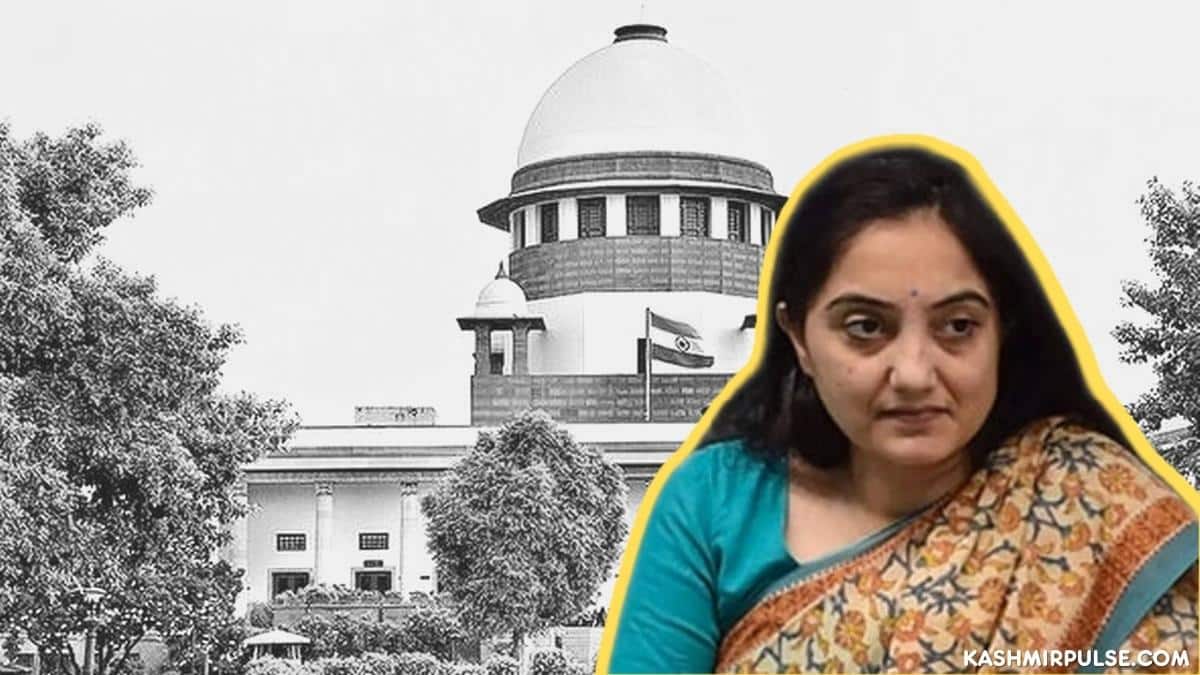
SRINAGAR — The Supreme Court of India on Friday blamed suspended BJP leader Nupur Sharma for igniting tension by her comments on Prophet Muhammad (SAW) and said she should “apologise to the whole country”.

Reports reaching here said that Supreme Court told Nupur Sharma that she should apologise to the nation for her comments, as she is single-handedly responsible for what is happening in the country.

“The way she has ignited emotions across the country, this lady is single-handedly responsible for what is happening in the country,” the top court observed.

Nupur Sharma’s offensive comments, made during a TV debate earlier this month, sparked massive protests in India and several Gulf countries summoned Indian diplomats to issue severe reprimands.

On Tuesday, a tailor, Kanhaiya Lal in Udaipur, who had backed Nupur Sharma in a social media post, was murdered on camera by two men who said they were “avenging an insult to Islam”.

“We saw the debate on how she was incited. But the way she said all this and later says she was a lawyer, it is shameful. She should apologise to the whole country,” said Justice Surya Kant.

Nupur Sharma had requested the court to transfer the multiple FIRs filed against her across the country to Delhi, citing threats. Her lawyer said she had not used her name on the petition because of the threats.

This post first appeared on The Kashmir Pulse

SRINAGAR — In a landmark ruling on Wednesday, the Supreme Court stayed the sedition law and ordered that no new FIRs be filed under it until the Centre reexamines the terms of the British-era law, which has been challenged in the Supreme Court.

Chief Justice of India NV Ramana issued the decision, saying that it would be inappropriate to apply the legislation when people who have already been charged under Section 124A of the Indian Penal Code and are in prison may seek redress from the courts.

The ruling said that the SC hopes and expects the Centre and States to refrain from filing further FIRs under Section 124A (sedition) of the IPC.

25 cases registered under sedition law in J&K in 5 years

At a time when the Supreme Court has put a freeze on British-era sedition law, official data reveals that 25 cases were registered under it in Jammu & Kashmir from 2014 to 2019.

The data accessed by news agency Kashmir News Observer (KNO) lays bare that 25 cases were registered under colonial-era law of sedition in Jammu & Kashmir from 2014 to 2019.

According to the data, one case each under the sedition law was registered in Jammu and Kashmir in 2015 and 2017. As per data, not a single case was registered under the law in J&K in 2014 and 2016.

The data lays bare that 12 cases were registered in 2018 when the erstwhile State was ruled by the PDP-BJP coalition government for nearly six months before the imposition of Governor’s Rule on June 20 that year after BJP withdrew support to Mehbooba Mufti-led government citing “deteriorating security situation” in the State.

In the year 2019 when the Government of India abrogated Article 370 and reorganized the erstwhile state of J&K into two Union Territories, 11 cases were registered under sedition law in J&K.

It is worthwhile to mention that Section 124A of IPC states that whoever “brings or attempts to bring into hatred or contempt, or excites or attempts to excite disaffection towards the government established by law in India” can be held to have committed sedition.

While IPC became applicable to J&K after its reorganization, the provisions of sedition law were also existing in the Ranbir Penal Code (RPC), which was applicable to J&K till October 30, 2019.

This post first appeared on The Kashmir Pulse

SRINAGAR — The Supreme Court (SC) has strongly reprimanded the Jammu and Kashmir Department of Higher Education for ignoring the legitimate demands of contractual college lecturers. In addition to the paid salaries, it has also issued orders to take immediate steps to ensure their immediate placement in the colleges as per the law.

A law has been passed in favour of the employees and the decision to make them permanent after a continuous period of seven years has been made mandatory.

The winning 700 contractual lecturers are performing their duties with a smile on their faces. Unfortunately, several temporary lecturers working in various colleges of Jammu and Kashmir for years have not been brought under the purview of the 2010 Act.

Governments have played with the legitimate demands of hundreds of temporary lecturers, which they are deeply sorry about.

The Department of Higher Education has not given up and has forced hundreds of temporary college lecturers, who have been enlightening the nation for the past two years, to suffer and challenge their demands in the Supreme Court.

It is worth mentioning that the Supreme Court in an order strongly condemned the policy adopted by the Higher Education Department besides the UT Government towards temporary college contractual lecturers.

Wages are remitted on an emergency basis. In addition, about 700 temporary lecturers stationed in Jammu and Kashmir have been waging a war of permanence for the last decade, during which they have fought dozens of times outside the Jammu Secretariat in addition to Srinagar's Press Colony.

This post first appeared on The Kashmir Pulse

SRINAGAR — The Supreme Court (SC) will hear a batch of petitions challenging the law used to scrap Article 370 after the summer holidays. Article 370, which gave special powers to Jammu and Kashmir, was scrapped in 2019 by the Central government as J&K was split into two union territories.

On Monday, senior advocate Shekhar Naphde mentioned the matter before a bench headed by Chief Justice NV Ramana. He said it is urgent as the delimitation exercise in Jammu and Kashmir has started.

To this, the Chief Justice of India responded, “It’s a five-judge bench matter. I will have to ask the other judges as some retirements are also due to take place. We shall see after vacations.”

Several petitions challenging the Centre's decision to abrogate provisions of Article 370 and the Jammu and Kashmir Reorganisation Act, 2019, which splits J-K into two Union Territories -- Jammu and Kashmir, and Ladakh -- were referred to a Constitution Bench headed by Justice N V Ramana in 2019 by the then CJI Ranjan Gogoi.

This post first appeared on The Kashmir Pulse

SRINAGAR — The trial against Jammu and Kashmir Liberation Front (JKLF) leader Farooq Ahmed Dar started at Srinagar's Sessions Court.

Farooq Ahmed Dar alias Bitta Karate is accused of killing over a dozen Kashmiri Pandits during the hey-days of militancy in Kashmir valley.

Bitta Karate spent 16 years in jail and was released on bail in 2006. The order for his release came from the Supreme Court of India. The court released Karate on bail under the Public Safety Act (PSA).

He was arrested in 2019 for his alleged role in militant funding and has been in jail ever since.

The family of a slain Pandit, Satish Tickoo, moved to the Srinagar Sessions Court through Advocate Utsav Bains. The Sessions Court attended the case, seeking all the details pertaining to the case from the government.

The Counsel for the Tickoo’s family, as per the news agency Kashmir News Trust, said that a physical hearing took place in Srinagar Sessions Court and the court sought details from the government.

He said the Supreme Court while releasing the Bitta Karate had maintained that the prosecution failed to show an interest in the case and didn’t come up with the proper pieces of evidence.

Pertinently, when in custody, Bitta Karate in an interaction with a journalist had admitted that he killed some Kashmiri Pandits.

This post first appeared on The Kashmir Pulse

NEW DELHI — A petition has been moved in the Supreme Court challenging the increase of the number of seats in the Union Territory of Jammu and Kashmir from 107 to 114. The plea was filed by two residents of Jammu and Kashmir.

The petitioner sought to declare that the increase in the number of seats in Jammu and Kashmir, as provided in the J-K Reorganisation Act, 2019, is ultra vires the constitutional provisions such as Articles 81, 82, 170, 330 and 332 and statutory provisions particularly Section 63 of the Jammu and Kashmir Reorganisation Act, 2019.

The petition also sought to declare that the notification dated March 6, 2020, constituting the Delimitation Commission to take up delimitation in the UT of J-K and states of Assam, Arunachal Pradesh, Manipur and Nagaland by government and consequential omission of Assam, Arunachal Pradesh, Manipur and Nagaland from the process of delimitation vide notification dated March 3, 2021, and conducting delimitation only for Union Territory of Jammu and Kashmir is unconstitutional as it amounts to classification and violates Article 14.

The petitioner said that the last Delimitation Commission was set up on July 12, 2002, in the exercise of powers conferred by Section 3 of the Delimitation Act, 2002, after the 2001 Census to carry out the exercise throughout the country, Delimitation Commission had issued Guidelines and Methodology for the Delimitation of Assembly and Parliamentary Constituencies vide Letter dated July 5, 2004, along with the constitutional and legal provisions.

The petitioner said that it is clearly stated that the total number of existing seats in the Legislative Assemblies of all states, including UTs of the National Capital Region and Pondicherry, as fixed based on the 1971 census shall remain unaltered till the first census be taken after the year 2026.

“If August 5, 2019, was to unite Jammu and Kashmir State with the rest of India, then delimitation process defeats “new order” of 'One Nation One Constitution' in the country. While Article 170 of the Constitution of India provides that the next delimitation in the country will be taken up after 2026, why has the UT of Jammu and Kashmir been singled out?” the petition asked.

According to the petition, the union government, Ministry of Law and Justice (Legislative Dept) issued a notification on March 6, 2020, in the exercise of power under Section 3 of the Delimitation Act, 2002, constituting a Delimitation Commission, with Justice (Retd) Ranjana Prakash Desai as Chairperson, for the purpose of delimitation of Assembly and Parliamentary constituencies in the Union Territory of Jammu and Kashmir and the state of Assam, Arunachal Pradesh, Manipur and Nagaland, for a period of one year.

This post first appeared on The Kashmir Pulse
Powered by Blogger.