SRINAGAR — The persistent dry spell in Kashmir is wreaking havoc on farmers, as crops suffer extensive damage, prompting the Agriculture Department to issue advisories.

On the outskirts of Srinagar, farmers report substantial losses in turnips, carrots, radishes, and collard greens due to the arid weather conditions.

Nazir Ahmad, a distressed farmer, expressed concerns over the dried-up turnip crops, and a group of farmers highlighted the financial losses incurred. The unexpected weather challenges have disrupted the agricultural rhythm, leaving farmers grappling with emerging consequences.

Director of Agriculture, Kashmir, Choudhary Mohammad Iqbal, assured that the department is closely monitoring the situation and will issue an advisory soon to guide farmers through the ongoing dry spell.

In Anantnag district, the dry spell raises concerns for mustard crops, with farmers reporting deficiency symptoms due to insufficient rainfall or snowfall. Mustard, an annual crop harvested in April, faces vulnerability as the lack of precipitation impacts water availability for upcoming seasons.

Ghulam Rasool Shah, a farmer from Anantnag, expressed worry over the mustard crop's yellowing, emphasizing its reliance on winter snowfall for irrigation.

Director of Agriculture in Kashmir, Choudhary Mohammad Iqbal, stated that the department is actively addressing the issue, and an advisory will be issued shortly.

Meanwhile, Sher-e-Kashmir University of Agricultural Sciences and Technology of Kashmir (SKUAST-K) issued an advisory for orchardists and farmers amid the dry spell. The advisory includes recommendations for Apple, Almond, and Apricot orchardists to avoid pruning and irrigation and maintain sanitation to prevent freezing injury.

For field crops like oilseeds, wheat, peas, and oats, the advisory suggests thinning of brown sarsoon crop, organic mulch use, and field sanitation. Additionally, orchardists are advised to use organic or inorganic mulch, surface scrapping for aeration, and apply shallow irrigation if critically needed during the day.

As the dry spell persists, the cumulative impact on agriculture in the Kashmir Valley raises concerns about the livelihoods of farmers and the region's overall food security.

This post first appeared on The Kashmir Pulse

SRINAGAR — The Unlawful Activities Prevention Act (UAPA) charges against seven students of Sher-e-Kashmir University of Agricultural Sciences and Technology (SKUAST) in Ganderbal, initially arrested after India's defeat to Australia in the World Cup on November 19, have been dropped.

The students, all enrolled at SKUAST in Ganderbal, were granted bail, and their legal representation was provided by Advocate Shafiq Bhat. He confirmed to the news agency KNS that the UAPA charges against them have been dropped by the government.

The arrest had taken place following allegations of the students raising anti-India slogans and celebrating the Indian cricket team's loss in the World Cup 2023 final. The students faced charges under various sections of the UAPA and the Indian Penal Code (IPC).

"Glad to know that UAPA charges against SKUAST students have been dropped. Finally, good sense has prevailed & their future saved from jeopardy," the PDP chief and former chief minister Mehbooba Mufti said in a post on X.

Earlier, parents, the Student Association, and politicians urged the government to drop the charges against them.

This post first appeared on The Kashmir Pulse
SRINAGAR — The Jammu and Kashmir Lake Conservation and Management Authority (LCMA), during the ongoing cleaning of Dal Lake on Thursday, discovered a rare kind of fish for the first time, which is said to be an alligator gar fish.

Known for its crocodile-like head and razor-sharp teeth, alligator gar fish is native to North America.

Masood Ahmad, an expert from J&K LCMA’s Research and Monitoring department told the news agency KNO, said that they are going to conduct the analysis of the discovered fish with the help of fisheries and Sher-e-Kashmir University of Agricultural Science and Technology - Kashmir (SKUAST-K)’s Fisheries Department.

“We are going to seek help from the Fisheries Department and SKUAST-K so as to find out the effects of this type of fish on our existing fish species inside the Dal Lake,” he said.

The official said that during the normal de-weeding routine in Dal Lake, they found a rare kind of fish on the conveyor. “It was the first of its kind here,” he said.

Videos of the rare fish found during the cleaning of the Dal Lake went viral on social media, where the fish was displayed and exhibited. The netizens expressed surprise with many saying that the fish type is an invasive specie and a threat to aquatic life.

Farooz Ahmad Bhat, Dean at the Faculty of Fisheries, SKUAST-K said the fish that was seen in the Dal Lake is an alligator gar fish, which has been sighted for the first time in Kashmir. “This fish is not harmful, but we don't have any research on it as this is the first time it has been seen here in the Dal Lake,” Dr Farooz said.

He said in 2016, grass carp fish were seen here in Dal Lake. “Later, our team also found another in the Mansbal Lake, but this alligator gar has been heard for the first time in Kashmir,” he said, adding, “We will look into how and where it came here in Kashmir and how long it has been here.”

Dr. Farooz said that proper research will be done on how it reached here or whether it is dangerous for the local fish varieties in Kashmir.

This post first appeared on The Kashmir Pulse

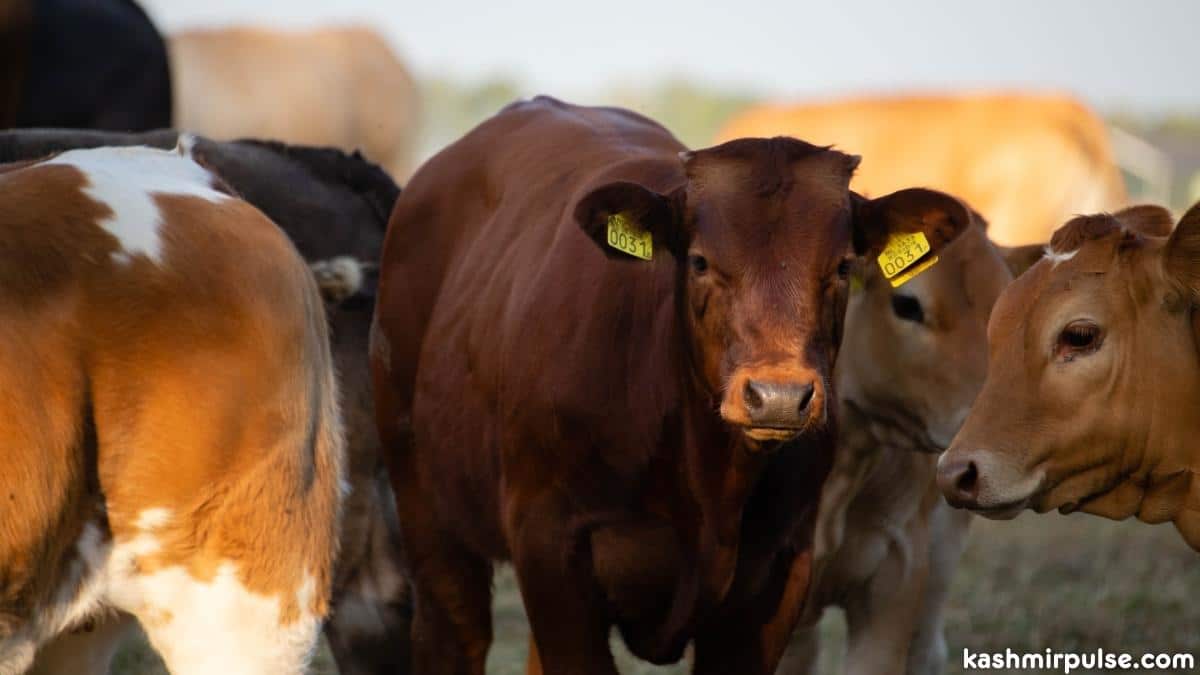
SRINAGAR — In the wake of the outbreak of Lumpy Skin Disease (LSD), the Government of Jammu and Kashmir has constituted two dedicated task forces, one each for two divisions of the UT.

These task forces are to be headed by scientists from SKUAST K/J along with other members from Animal Husbandry departments to monitor the spread of the disease in real time and suggest strategies for its control.

In addition, a notification was issued under Section 6 of Prevention and Control of Infectious and Contagious Diseases in Animals Act, 2009 declaring nine districts of J&K as controlled areas for the purpose of the Act. Subsequently, in pursuance of the notification, an order was issued imposing complete ban on import of bovine animals from outside the UT as well as the inter-district movement of these animals within the UT of J&K.

Vaccination drive against the LSD has started in a campaign mode in both the divisions and the susceptible population is being vaccinated in the form of ring vaccination around the respective epicentres on war-footing to control the spread of disease, besides all bio-security measures which include the use of fly repellents, fogging, isolation and treatment of affected animals are being adopted. District level RRT’s visit all the epicentres of infection for controlling its spread.

The Agriculture Production Department (APD) is abreast of the situation in the UT and Additional Chief Secretary APD, Atal Dulloo is personally monitoring the evolving situation on daily basis.

Farmers are being advised to establish close liaison with Animal Husbandry authorities and cooperate fully in control and immunization programs. APD Department has started dedicated helpline 1962 to assist farmers in case of any eventuality related to the disease.

The samples for confirmation of LSD are being sent to NIHSAD, Bhopal on a daily basis, however, two BSL-II labs have been set up at Jammu and Srinagar to conduct the testing for LSD in J&K only which will start functioning within weeks time and surveillance of the disease shall disease shall be taken up in a large scale for controlling the disease.

This post first appeared on The Kashmir Pulse

SRINAGAR — In wake of the deficient rainfall across Jammu and Kashmir in the past over one month, the experts here have suggested the farmers take all the necessary steps to ensure that their crops are not damaged, which would lead to huge losses to them.

According to the news agency Kashmir News Observer (KNO), the orchardists have been advised to take all the necessary measures for both the crops including standing crops as well as Kharif crops.

A top official in the Agriculture department told KNO that so far there has been no damage to the crops due to the deficient rainfall, but still, the advisory has been issued to ensure there is no damage to the crops in case the dry spell persists.

A meeting of experts was held recently under the chairmanship of Vice-Chancellor of Sher-e-Kashmir University of Agricultural Sciences and Technology (SKUAST-K) to formulate an advisory for agriculture and horticulture in view of the current prevailing above normal temperatures and rainfall deficit.

“For oil seeds (Mustard), stage Siliquae (Pod) formation, light irrigation in case of availability of irrigation, in case of showers, no irrigation is required,” the document, a copy of which lies with KNO reads, adding that for Oat in the vegetative stage, apply light irrigation if the available application of a top dose of nitrogen at the rate of 4.25kg/kanal where sufficient rainfall is received or irrigation is available and for flower initiation stage, the orchardists have been asked to apply light irrigation on priority.

For wheat in the stage of booting/flowering, apply zinc at the rate of 2kg in 400 litres of water for 20 kanals or Boron at the rate of 600gm in 400 litres of water for 20 kanals, it said, adding that for peas in the stage of flowering/pod formation, the orchardists have been asked to wait for the shower or give light irrigation, if available, with weeds to be cut and put in place as mulch.

For vegetable crops, cole crops and root crops in stage flowering/seed/formation, they have been asked to do light irrigation.

For horticultural crops (Apple) in the petal fall stage, the growers have been asked to start drip irrigation in HDP for half an hour in the morning and evening hours. Organic mulching of individual trees, spraying of fungicide at petal fall stage before rains or immediately after rains and also apply calcium chloride 0.3% in orchards at the fruitlet stage.

This post first appeared on The Kashmir Pulse
Powered by Blogger.