NEW DELHI — The Centre on Tuesday said that the production of saffron has declined by over 67 per cent from 2010 to 2024, however, the production has increased marginally by 4 per cent in the last year.

Replying to a question raised by National Conference MP Hasnain Masoodi in the Lok Sabha, Union Minister for Agriculture and Farmers Welfare, Arjun Munda, as per the news agency KNS, said that as per the estimates provided by the Office of Financial Commissioner (Revenue), UT of Jammu & Kashmir, the production of saffron in Jammu and Kashmir has decreased from 8.0 MT in 2010-11 to 2.6 MT in 2023-24 (provisional), resulting in an overall decline in production by about 67.5% over the period.

"However, during the last one year from 2022-23 to 2023-24, the saffron production has marginally increased by 4%," he said.

He also said that as per the information received from the Planning and Agriculture Production Department of J&K, out of the 128 deep bore wells sanctioned under the Mission, 123 have been constructed by the Horticulture Department and handed over to the Mechanical Engineering Department, Kashmir for their harnessing and further linkage with the Sprinkler Irrigation Systems.

"The Mechanical Engineering Department, Kashmir has successfully connected 73 deep bore wells with the Sprinkler Irrigation Systems having a command of 2187.08 hectares. However, the irrigation facilities are not being utilized fully as the User Groups for management and upkeep of these bore wells have not been created as per the Mission Guidelines and have not been handed over to the farmer user groups," he added.

The minister also said that as per the information received from the Planning, Agriculture Production Department of J&K, there has been no report of adverse effects on saffron flowers due to factors such as cement dust from any industrial establishments.

"The Agriculture Production Department along with the revenue authorities, UT of J&K are implementing the Saffron Act, saffron rules and other revenue laws which safeguard the saffron land from being diverted for any other purposes," he added.

He further said that no high-level committee has been constituted by the Government of India to look into the declining condition of saffron production.

"However, the Department of Agriculture & Farmers Welfare, Government of India has requested the UT Administration to conduct a detailed review of all the activities taken up under the National Saffron Mission in J&K to ensure the effective utilization of infrastructure and facilities created under the National Saffron Mission for the overall development of saffron sector in Jammu & Kashmir," he stated.

This post first appeared on The Kashmir Pulse

PULWAMA — Saffron growers in south Kashmir’s Pulwama district are worried as porcupines continue to damage their saffron corms.

Speaking to the news agency KNO, the distressed farmers from Pampore, Lethpora and neighbouring areas said that porcupines have been causing extensive damage to saffron beds, impacting their livelihoods.

Shabir Ahmad, a saffron grower, expressed concern over the severe damage caused by porcupines. He said the production of saffron is directly affected when corms are damaged. “The economic well-being of saffron growers is at stake due to this menace,” he said.

Yasir Ahmad, another grower, said that despite efforts to deter porcupines using lights and horns, the nocturnal activity of these animals remains a serious issue. If immediate measures are not taken, saffron corms may be entirely depleted in the coming years, he warned.

Unlike other orchardists who have various methods to protect their crops, saffron growers said they face unique challenges.

“Other orchardists have options like covering the trunks of trees, but no such option is available to protect saffron fields from the attacks of porcupines,” Yasir said, adding, “The government must at least consult the technical persons and experts who can guide us on how to get rid of the menace.”

The saffron growers said they have brought this issue to the notice of concerned authorities but no concrete steps have been taken in this regard.

An official from the Agriculture Department suggested the use of a repellent that emits an odour and deters porcupines for approximately seven days when applied.

The use of lethal methods is prohibited by wildlife regulations, the official said, adding that only humane and non-lethal solutions can be applied to protect saffron crops from porcupine attacks.

This post first appeared on The Kashmir Pulse

JAMMU — Kishtwar Saffron, which is cultivated and harvested in the higher reaches, has been given the Geographical Indication (GI) tag by the Geographical Indications Registry.

As per the news agency KNO, the news was shared by Deputy Commissioner Kishtwar, Dr Devansh Yadav on social media platform X with a picture of the certificate.

“Kishtwar Saffron brand gets GI tagged for the first time… Tagged along with Kashmiri saffron - multiple FPO brands coming up now!! Icing on the cake - certified as grade 1,” the post reads.

https://twitter.com/Devansh_IAS/status/1726984946173329885

The spice is grown in some parts of Kishtwar region of Jammu along with parts of Kashmir.

The legendary most expensive harvest of saffron, popularly known as Kumkum, is also a key cash crop in Jammu's isolated mountainous district of Kishtwar.

Saffron cultivation is a cultural heritage that represents freshness and purity. Kishtwar's saffron production area is called locally as Mandal.

This post first appeared on The Kashmir Pulse

SRINAGAR — Wild tulips in Karewas of the saffron town of Pampore are attracting hundreds of tourists and locals. The wild tulips in pink and white against a yellow background of mustard flowers presents an attractive look to people visiting the Pampore Karewas.

As per the news agency KNO, tourists visiting different areas of Kashmir halt in Pampore Karewas along both sides of the National Highway to spend some time and have photoshoots in wild tulips.

Dozens of youth, who have been selling pure Kashmiri saffron to tourists, said that tourists in thousands are visiting Pampore saffron fields where wild tulips are in full bloom. They said that even some schools have been visiting the spot for excursions to enjoy some time in wild tulips.

Vijay, a tourist from Kerala, said that he has been visiting Kashmir on a regular basis as it is truly a paradise on Earth. He said that saffron fields have something to offer in every season for tourists as in Autumn, saffron fields with full saffron bloom are attractive for tourists and in spring, tulips in full bloom are attracting tourists again.

A tourist from UP said that he has visited several tourist spots in the last few days but Pampore Karewas with tulips are more beautiful nowadays. "I stopped my vehicle to have close look at the tulips as everyone passing hereby gets towards the beautiful scene that Karewas are presenting currently,” he said.

Kashmir is a much safer place and tourists across the country must visit here to see the beauty of tulips in Pampore and other tourist spots in Kashmir, tourists said. They said that the specialty of Kashmir is that beauty here is natural and people here are hospitable, so everyone must visit here at least once.

An official said that the tulip growing in saffron fields of Pampore has been identified as Tulipa Stellata which grows as an associated weed with saffron. "This naturally occurring perennial herb belongs to the family Liliaceae with six identical flowers including three petals and as many sepals," they said.

This post first appeared on The Kashmir Pulse


SRINAGAR — Kashmir has recorded 16 metric tonnes of saffron in 2022 which is the highest in the last 27 years.


A senior official said Kashmir produced 16 metric tonnes of saffron in the last year, which is the highest since 1996. “Adequate rain at the proper time helped and that's why we had good production last year,” the official told news agency KINS.


Bashir Ahmad, a saffron grower, said they witnessed good saffron production last year. “During 2021, I earned Rs 1.20 lakh from saffron cultivation which went up to Rs 1.50 lakh last year,” the official added.


Saffron is cultivated in three districts including Pulwama, Srinagar and Budgam. Pampore, the township in Pulwama district, produces the most. However, the spice is now being cultivated across different districts of Kashmir valley as well.


Saffron flowers are sensitive to the vagaries of the weather. Its production depends on the weather conditions and the irrigation facilities. One hectare of land produces around 4 kilograms of saffron. Each kilogram of saffron costs Rs 2 to 3 lakh depending upon the demand from the consumers.


Bashir Ahmad, another farmer, said that during the year 2022, the crop was far better than in previous years. He said the GI tag has also benefited the farmers. “Earlier Iranian saffron was being sold on Kashmiri name, which has been stopped,” he added.


More than 16,000 families are associated with this crop production in the valley.


Kashmiri saffron is of superior quality because of the higher concentration of crocin, a carotenoid pigment that gives saffron its colour and medicinal value. Its crocin content is 8.72% compared to the Iranian variant’s 6.82%.


Saffron, despite its price, is in high demand for its antioxidant properties.


This post first appeared on The Kashmir Pulse

PAMPORE — The Directorate of Tourism, Kashmir on Tuesday organized a saffron festival in Karewas of Pampore.

The festival was organized in collaboration with the Agriculture Department, SKUAST Kashmir, Cooperative Societies, and local saffron growers.

Speaking on the occasion as chief guest, Divisional Commissioner, Kashmir Pandurang K Pole said Kashmiri saffron is popular all over the world and it is needed to work together to maintain its reputation. He said the government has introduced several measures to boost saffron production through technological interventions, technological support, and irrigation facilities.

The Divisional Commissioner said that farmers need to take benefit of the technological interventions and make use of the better irrigation facilities and GI certification for better returns. He also exhorted the farmers that they should not use the Karewa land for any other purpose as this land produces the world's best saffron.

He said that the tourists have added to the economy of the locals as the tourists are experiencing the landscape of the saffron fields. He further said that GI tagging has opened new windows for Kashmir saffron and the government is endeavoring to ensure that all the globally accepted quality parameters are met during the cultivation and post-harvest management of the saffron.

Deputy Commissioner Pulwama Baseer-ul-Haq Chaudhary, while speaking on the occasion, said that the government is committed to bringing the saffron Karewas on the tourism map of Kashmir and said that wetlands and saffron are an interconnected economy to the local populace of Pampore.

Mr Baseer appreciated the Tourism Department for organizing the festival, thereby creating an interface between tourists and the local saffron growers. He thanked all the stakeholders for their support and cooperation and said that more such festivals will be organized on a larger scale. He said that the participation of locals is a sign of better things to come.

Director Tourism Kashmir, Fazl-ul-Haseeb also spoke on the occasion and said that more festivals will be organized to involve more and more locals in the promotion of saffron, so that the concerned growers' economic interests are secured at all levels. He said the aim of holding a festival at Pampore was to celebrate the uniqueness of the place and the pride saffron cultivation has brought to Kashmir.

Director, Agriculture Kashmir, Chowdhary Mohammad Iqbal, saffron growers, representatives of various travel and trade bodies, and other stakeholders were present on the occasion.

Earlier, the festival witnessed many cultural events and activities, folk dances, and music performances. A skit by a young artist on Nasha Mukta Abhiyan won accolades from the audience.

This post first appeared on The Kashmir Pulse

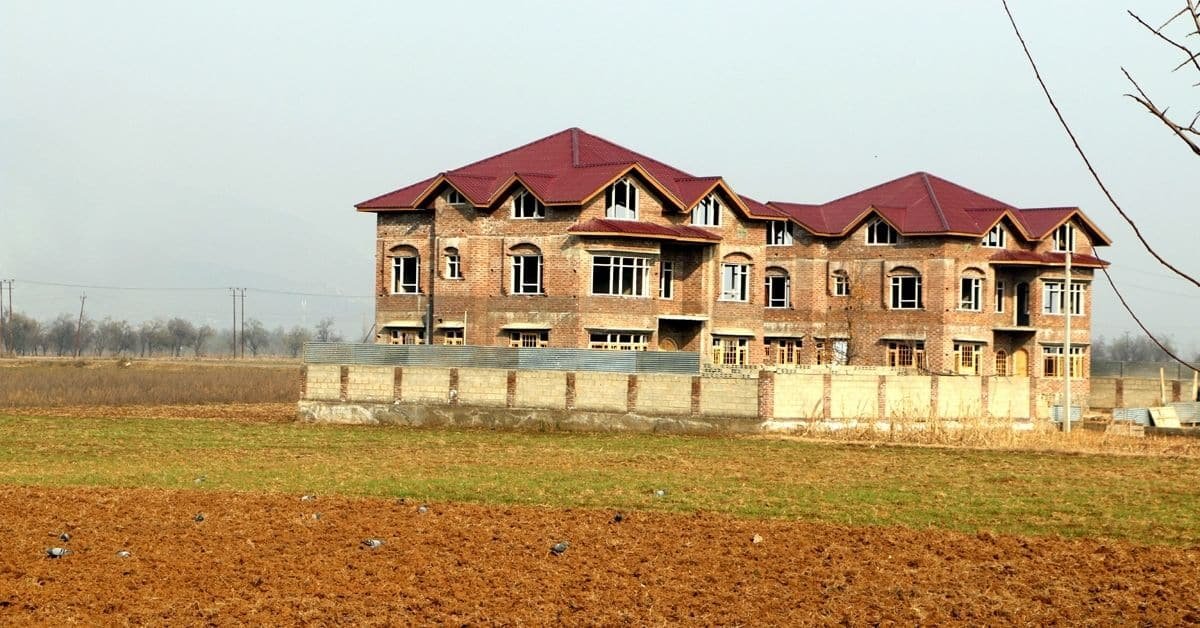
SRINAGAR — Pampore, which is known as the saffron town, is witnessing an uptick in constructions in saffron fields, causing a decline in saffron production as well as shrinking land for the prized spice.

Locals from Pampore told the news agency KNO that land under saffron is shrinking because of residential and commercial complexes coming up in saffron fields. For this reason, many growers have switched to other crops in the absence of facilities and the government’s non-seriousness towards the promotion of saffron.

Locals said that the much-hyped National Saffron Mission has not yielded results as the authorities were unable to make water pumps functional meant for irrigating the fields in the dry season.

Chairman of Saffron Growers Association Kashmir, Abdul Majeed Wani told KNO that the Manmohan Singh-led government released over 400 crores under National Saffron Mission so as to provide better facilities to growers. "However, the mission could not achieve its target as the irrigation system remained incomplete," he said. This, according to him, prompted many to switch to other crops.

Wani said that since 2014, most of the growers have lost interest in saffron and the last three years have seen a decline in production. Saffron production has decreased from 16.45 metric tonnes to 0.02 metric tonnes in the last five years in Kashmir, according to official data.

He also highlighted the conversion of saffron fields, saying people are constructing complexes and houses amid the ban.

He appealed to the government to come up with a seed nursery so that growers can get seeds there to continue growing saffron.

This post first appeared on The Kashmir Pulse
Powered by Blogger.