NEW DELHI — Muslims in Jammu and Kashmir, Ladakh and various other states including Tamil Nadu and Kerala joined millions worldwide on Wednesday in celebrating Eid-ul-Fitr, marking the conclusion of the month-long Ramadan fasting period.

In a show of faith and unity, worshippers gathered at mosques and open prayer grounds to offer 'Namaz', or Eid prayers. In Jammu and Kashmir, morning prayers marked the start of Eid celebrations, with communities coming together to observe the holy festival.

In Coimbatore, hundreds congregated for mass prayer ceremonies, while similar scenes unfolded in Kerala's Ernakulam district and Thiruvananthapuram, where large numbers participated in prayers.

The festive spirit extended beyond prayer as markets bustled with activity, with people flocking to buy traditional sweets and delicacies for the occasion. Shopkeepers reported high demand for treats such as gulab jamun, rasgulla, and seviyan, along with a variety of savoury snacks.

Despite the shared joy, regional differences in the sighting of the crescent moon led to varying observations of Eid-ul-Fitr. While Jammu and Kashmir, along with Ladakh, confirmed celebrations for Wednesday after moon sighting on April 9, other regions like Hyderabad, Lucknow, and Delhi opted to celebrate on April 11 due to the absence of moon sighting.

Eid-ul-Fitr holds profound significance in the Islamic calendar, signifying the end of Ramadan fasting and the beginning of Shawwal. The observance of the moon-sighting tradition underscores the cultural and spiritual significance of the festival, which also marks the start of a new Islamic year.

With rituals and grace, Muslims across India and beyond embrace Eid-ul-Fitr as a time of joy, reflection, and community solidarity.

This post first appeared on The Kashmir Pulse

SRINAGAR — Bidding adieu to the auspicious month of Ramadan, congregational Friday prayers were held on the Jumu'atul-Widaa (the last Friday of Ramadan) at revered shrines and mosques across Kashmir except for the Jamia Masjid Srinagar, which remained closed.

It was learnt by the news agency CNS that shrines and mosques in the valley on the Jumu'atul-Widaa witnessed a surge in devotees’ presence, who offered their Friday prayers, seeking expiation for their sins and bidding farewell with moist eyes to the ongoing Ramadan (month of fasting), which is drawing closer to its end.

On the occasion of the Jumu'atul-Widaa, the biggest gathering was held at Dargah Hazratbal, Srinagar, where devotees in large numbers participated in Friday prayers. JKNC President Dr Farooq Abdullah, Vice President Omar Abdullah, PDP President Mehbooba Mufti and Apni Party President Altaf Bukhari also visited the Hazratbal shrine and offered Friday prayers.

In Srinagar, the congregational prayers were held at Masjid Asar-e-Sharif, Janab Sahib, Soura; Jamiat-e-Ahle Hadith, Gawkadal; Asar-e-Sharif, Shehri Kalashpora; Ziarat Dastgeer Sahib, Sarai Bala; Ziarat Dastgeer Sahib, Khanyar; Ziarat-e-Makhdoom Sahib, Khanqah-e-Moula, and several other mosques and shrines.

Meanwhile, authorities shut the Jamia Masjid Srinagar for Friday prayers on the Jumu'atul-Widaa and did not allow Mirwaiz Dr Umar Farooq to deliver a sermon, which he was expected to address the devotees on the last Friday of Ramadan.

In central Kashmir’s Budgam, Anjuman-e-Sharie Shian said that a huge rally was held on Friday, with scores of women and children in attendance.

Addressing the gathering, Anjuman Sharie Shian President Aga Syed Hassan Mosavi Al-Safavi criticised the world community for supporting Israel in its oppression of Palestinians. He demanded that Muslim countries should come together for the Palestinian cause.

This post first appeared on The Kashmir Pulse

BANDIPORA — Amidst the holy month of Ramadan, approximately 1000 devout Muslims are participating in Itikaf at the renowned seminary, Darul Uloom Raheemiyyah, Bandipora, dedicating themselves to spiritual reflection and worship.

Itikaf is a spiritual practice observed by Muslims during the last 10 days of Ramadan. Participants withdraw from worldly activities and distractions, focusing on worship, recitation of the Quran, and acts of remembrance and supplication to seek closeness to Allah.

The management at the seminary informed the news agency KNO that around 1000 individuals, including both youth and elderly from various parts of the valley, are observing Itikaf this Ramadan. Approximately 250 food plates (Traamis) are being served daily, covering both Sehri (pre-dawn meals) and Iftaar (breaking of fast).

In addition to those performing Itikaf, a large number of locals join for prayers and a grand Iftaar on a daily basis.

It is worth mentioning that during the last Ramadan, over 600 men observed Itikaf at this Islamic seminary. Over the years, the seminary has become a popular destination for people from both the valley and outsiders.

This post first appeared on The Kashmir Pulse

SRINAGAR — With Ramadan in progress, demand for Kashmiri apples has soared across India. Since the beginning of Ramadan, growers have started shipping apples, which were stored in cold storages, to the rest of India.

As per the growers, the apples currently have a good demand across India as the holy month of Ramadan is in progress.

“CA-stored apples have a good demand right now. Right now Kashmiri apples are being shipped to the leading fruit markets of India. We still have a huge quantity of apples still stored in cold chain facilities ready to be shipped to the various markets of India,” President North Kashmir Fruit Growers and Dealers Association, Fayaz Ahmad Malik, told the news agency KNO.

With Ramadan being a time of increased consumption of fruits and other nutritious foods, Kashmiri apples have become a staple on Iftar tables in many households. According to reports, the demand for Kashmiri apples has soared in major cities like Delhi, Mumbai, Kolkata, and Bengaluru.

Apple growers said the rate of apples ranges between Rs 1500-1600 in various fruit markets in India. “CA-stored apples get a good price since they become available in various cities of India during the off-season. Right now, an apple box costs from Rs 1500-1600,” Malik said.

Apple growers said Ramadan often proves to be a lucrative season for Kashmiri apples given their demand in various cities of India.

“During the current season, only Kashmiri apples become available in the markets of India. So, growers ship a bulk quantity of apples to various fruit markets. The CA-stored apples will hit markets for the next three months,” said Shabir Ahmad Khan, an apple grower who too has preferred to ship his CA-stored apples to New Delhi’s Azadpur Fruit Mandi during Ramadan.

CA stores have come as a shot in the arm for apple growers of Kashmir, who get good returns of the crop during the off-season. As per the apple growers, all the CA stores were occupied at full capacity as the rates of apples this season have been comparatively better.

This post first appeared on The Kashmir Pulse

SRINAGAR — Grand Mufti of Jammu and Kashmir, Mufti Nasir-ul Islam Farooqi on Monday announced the Sadq-e-Fitr (Zakaat-ul-Fitr) as Rs 70 per person this holy month of Ramadan.

The Grand Mufti highlighted the significance of the charity under the (Sadq-e-Fitr), saying after reaching a consensus with the scholars of different schools of thought, the amount has been fixed as Rs 70 per person.

He said the special kind of charity has also to be paid on behalf of the infants.

It is in place to mention here that Sadq-e-Fitr is a religious charity paid by Muslims across the world by or before Eid-ul-Fitr prayers.

This post first appeared on The Kashmir Pulse

SRINAGAR — People, especially those who are diabetic, need to limit the intake of salty, sugary and spicy food during Sehri (pre-dawn) meals in Ramadan to maintain fluid balance in the body, a noted endocrinologist said.

Speaking with the news agency KNO, Dr Shariq Masoodi said that people, particularly those with diabetes, should control their consumption of sugar, salt and spices in their meals. “The sodium present in foods aids in maintaining fluid balance, but excessive intake of salty, sugary, and spicy foods can lead to increased thirst as water is withdrawn from the cells,” he said.

Dr Masoodi advised people to drink water regularly throughout Sehri but cautioned against consuming large quantities at once, as it may be quickly eliminated through urine. He suggested alternatives such as lemon water, buttermilk (lassi), coconut water, and unsweetened fruit juice while recommending avoidance of caffeinated beverages due to their dehydrating effects.

For Sehri, Dr Shariq recommended starting with water followed by a balanced diet consisting of green leafy vegetables for fibre, whole grain cereals with a low glycemic index to avoid sudden spikes in blood sugar levels, a small portion of pulses, fish, chicken, yoghurt, and fruits with skin like grapes, oranges, and apples.

During Iftari, he advised diabetic people to consume sugar-free fluids and limit themselves to one to three dates based on their disease control. Foods high in carbohydrates, salt, and fat should be avoided.

“The diabetic patients need to monitor blood sugar levels and check their levels several times a day, including before dawn, in the morning, midday, mid-afternoon, before sunset, two hours after Iftar, and anytime symptoms of hypoglycemia, hyperglycemia, or feeling unwell arise,” he said.

The endocrinologist emphasised the necessity of proper sleep, recommending 7-8 hours of sleep even if it's divided into two portions.

This post first appeared on The Kashmir Pulse

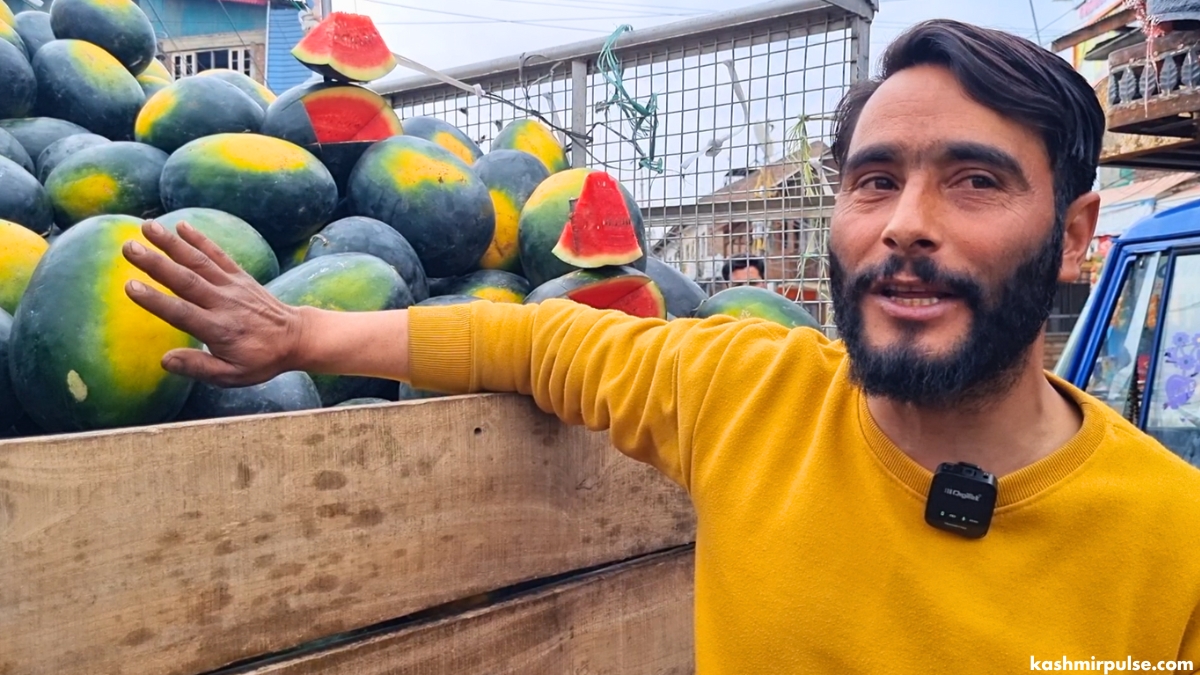
SRINAGAR — The Kashmir Valley has witnessed a 50% decrease in watermelon sales following concerns raised on social media regarding the safety of consuming artificially ripened watermelons.

Dr Wajahat, a clinical oncologist at a premier hospital, recently cautioned against consuming artificially ripened watermelons during the off-season, citing potential cancer risks.

"This Ramzan, say NO to artificially ripened watermelons. Protect yourself from harmful chemicals and potential chemotherapy," Dr Wajahat posted on a social media site X on March 8, which garnered support from several other doctors.

Ghulam Nabi Bhat, a vendor, expressed concern over economic losses incurred since the beginning of Ramadan. He said that despite bringing watermelons to the market, nobody is buying them due to claims made by doctors. Bhat urged the government to investigate the matter to help vendors like him avoid further economic losses.

Bashir Ahmad Bashir, chairman of the Kashmir Valley Fruit Growers Cum Dealers Union, while speaking with the news agency KNO, said there has been a 50% drop in watermelon sales in the valley due to the current situation. "Previously, the valley used to receive 12 trucks of watermelons daily, but now there has been a 50% decrease in sales,” he said.

Bashir said the Food Safety Department has taken samples of watermelons, and he hopes for clarity soon. “Health is a priority, but economic losses are also concerning. The government should share the test samples as soon as possible,” he added.

Deputy Commissioner of Food Safety in Kashmir, Shagufta Jalal, said the department has collected hundreds of samples from various districts of the valley for testing. “The test reports will be available tomorrow,” she said.

Once the report is available, it will be shared with the public to address any concerns, Shagufta said, adding that there have been no adverse findings so far in the surveillance sampling.

This post first appeared on The Kashmir Pulse

SRINAGAR — For the first time in almost five years since August 2019, Mirwaiz Umar Farooq was allowed to lead prayers at historic Jamia Masjid Srinagar in the holy month of Ramadan.

During his address, Mirwaiz appealed to all sects and organisations - religious, social or political to rise above personal and sectarian interests and ensure unity and brotherhood among the people of Jammu and Kashmir to preserve and protect its collective identity.

He said that the best way to ensure collectivism is by following basic human, moral and religious principles and values, otherwise fighting and oneupmanship will make us perish.

He also said that the youth are the future of this place and through pursuance of education and awareness, that will bring out their inner capabilities and consciousness, they can help shape a just and prosperous community.

Appealing to the authorities, he said that they should listen to the voice of people's conscience and unconditionally release thousands of Kashmiri political prisoners who are in jails in Jammu and Kashmir and all over India, as a goodwill gesture in Ramadan.

He said the condition of many prisoners, who are in jails for years on end, is very bad, causing great distress to people.

He said that it is incumbent upon authorities to address the issues of people including the lack of electricity that has increased the hardships for people especially in Ramadan, particularly for the poor who don’t have alternative means.

He said that authorities should address this issue at the earliest, as they have the means to do so. He said the condition of roads is pathetic making commuting a nightmare.

He said as this month is one of great blessings and mercy, people should make the most of it. “This month gives us the opportunity to reassess ourselves and take stock of what we are doing and how we are living and is it in order with the teachings of the Quran and Sunnah. It gives us another chance to realign our faith with the principles of Islam and follow them accordingly so that we earn the Raza of Allah in this world and Jannah in the hereafter.”

This post first appeared on The Kashmir Pulse

SRINAGAR — With the commencement of the holy month of Ramadan, Kashmir valley continues to face unscheduled power curtailments and distress cuts—leaving the consumers to reel under darkness, especially at Suhoor and fast-breaking (Iftar) time.

Locals from almost all districts of Kashmir region informed the news agency KNO that the power scenario has worsened over the past four days.

One of the locals of southern Kashmir’s Pulwama area, Razaq Ahmad, said, “Despite being a local of a smart metered area, the power is playing hide and seek with us.”

“At the time of installing smart meters, we were promised an uninterrupted power supply. All I can see is a fake promise by the Power Development Department,” he said.

Ahmad said that the people of his area continue to reel under darkness. “The irony is that we are not even being provided electricity, especially at Suhoor and Iftar time.”

Similarly, the residents of Qazigund area narrated the same ordeal. One of the locals of Qazigund, Rashid Ahmad Khan, said that he has never witnessed such a bad scenario of power in Ramadan.

The 45-year-old Khan said, “This is the worst ever power scenario in my area. I request the Lieutenant Government administration to intervene in this matter and resolve the matter at the earliest.”

In the meantime, we received many such calls from the electricity consumers of Srinagar and northern Kashmir’s Baramulla, Bandipora and Kupwara districts. Besides, the electricity consumers of central Kashmir’s Ganderbal and Budgam districts expressed antipathy against the authorities for failing to provide uninterrupted electricity.

Inhabitants of several villages of Kangan area in central Kashmir’s Ganderbal district also expressed resentment against the PDD for failing to provide adequate electricity to them, especially in the holy month of Ramadan.

The residents of the areas said that they were not getting electricity as per the schedule and were facing tremendous hardships, especially during Sehri and Iftar times.

The locals from Prang, Kangan, Akhal, Anderwan, Haripora, Wussan, Chattergul, Kachnabal, Najwan, Wayil, Nunner and main town Ganderbal said they were receiving electricity for a maximum of two to four hours a day.

The locals of Kashmir Valley appealed to the Jammu and Kashmir administration to resolve the matter at the earliest.

A top official of KPDCL said that it has provided a smooth power supply across the Kashmir Division. “There are some local issues and snags which are taken care of.”

On asking about the unscheduled power cuts and change in power curtailment in the month of Ramadan, the official said, “Consumers have a habit of generalizing things. The majority of the faults in 11 KV feeders is due to system overloads and massive misuse of electricity by exceeding sanctioned load in non-metered areas.”

The official said that the rural belt was almost all flat-rated. It also said that because of DT outages due to excessive overload, some feeders were under fault due to overnight rains and snow in certain areas.

Meanwhile, Principal Secretary Power Development Department H Rajesh Prasad said, “Our power supply position remains the same.”

On asking about any change in the power curtailment schedule in the month of Ramadan, the Principal Secretary said that there was no change in it. “We have not taken any decision in this regard and as of now there is no change in the power curtailment schedule.”

Pertinently, earlier this week, Chief Engineer KPDCL (Distribution) Sandeep Seth said that it was charting out the plan and mechanism to resolve the power curtailment issues for the month of Ramadan.

“We are working on it and most likely, the new curtailment schedule will be implemented from the first day of Ramadan,” he said.

This post first appeared on The Kashmir Pulse

SRINAGAR — The Food Safety Department of Kashmir on Thursday rebuked the claims as baseless about the premature ripening of watermelons with the use of chemicals and assured that the department remains committed to maintaining stringent food safety standards.

Deputy Commissioner of Food Safety Department, Shugufta Jalal, while exclusively speaking with the news agency KNS said that the experts, who specialise in food technology, have conducted rigorous tests across the region and that the claims of premature ripening are baseless.

She said that the tests include both surveillance and in-depth analysis using advanced equipment, and the results have confirmed that the watermelons are safe for consumption.

She said that the watermelons are grown throughout the year in various parts of India due to the country’s diverse climatic conditions which makes the fruit available in all seasons, contrary to the claims that it is not a seasonal fruit.

Shagufta said that the department has been proactive with teams deployed and mobile testing vans stationed in key areas across Kashmir to conduct on-the-spot testing. She criticized the oncologist for not consulting with the authorities before making public statements as such remarks have caused undue distress among the population.

“The department remains committed to maintaining stringent food safety standards and preventing misinformation from causing panic. We continue to monitor the situation closely and are dedicated to communicating transparently with the public to uphold trust and ensure the health and safety of all consumers,” she said.

The controversy erupted after a social media post by a doctor went viral, suggesting that watermelons available in the market were artificially ripened using chemicals.

The claim raised alarm among consumers, as watermelons are a staple fruit during Ramadan, often consumed during Iftar.

This post first appeared on The Kashmir Pulse

PULWAMA — A social media storm ignited by a tweet from Dr Wajahat (MD), warning against the consumption of artificially ripened watermelons during Ramadan, has led to widespread confusion and financial strain for watermelon vendors in Kashmir.

The controversy began when Dr Wajahat's tweet gained traction, urging consumers to boycott watermelons purportedly artificially ripened with chemicals. The tweet resonated with many netizens, sparking fear and scepticism among residents ahead of the Ramadan.

However, a subsequent investigation by The Kashmir Pulse news portal revealed conflicting perspectives. Speaking to local vendors and traders, they vehemently denied the existence of injected watermelons, dismissing Dr Wajahat's claims as misinformation.

"We have been selling watermelons for years, and there's no truth to these allegations. Our livelihoods are at stake because of baseless rumours spread on social media," expressed one vendor, echoing the sentiments of many in the community.

Seeking clarity, reporters from The Kashmir Pulse approached doctors at District Hospital Pulwama for expert opinion. However, they declined to comment, citing a lack of scientific evidence to support the notion of artificially ripened watermelons.

In response to mounting concerns, the J&K Food and Drugs Department stepped in, collecting samples of watermelons for testing to ascertain the veracity of the claims. The results of these tests are awaited and are anticipated to shed light on the ongoing controversy.

Amidst the uncertainty, vendors expressed frustration over the financial impact of the controversy. "Our sales have plummeted since these allegations surfaced. We urge the public to rely on real-life facts rather than succumbing to the influence of social media warriors," pleaded another vendor.

The polarizing nature of the issue has left consumers torn between caution and scepticism, highlighting the power and pitfalls of social media discourse in shaping public opinion.

As the investigation unfolds, residents of Kashmir remain vigilant, awaiting conclusive evidence to put to rest the swirling rumours surrounding the safety of watermelon consumption during Ramadan.

This post first appeared on The Kashmir Pulse

SRINAGAR — The Ramadan moon has been sighted in Jammu and Kashmir this evening, Grand Mufti, Jammu and Kashmir, Mufti Nasir ul Islam Farooqi, announced.

“Ramzan crescent of 1445 AH was sighted in different parts of Jammu and Kashmir and the holy month commences this evening with the first day of the month of fasting to be marked tomorrow,” Mufti Nasir ul Islam said, as per the news agency GNS.

He conveyed that the announcement is being made after consultations with other respected members.

Greeting the people, the Grand Mufti prayed that the Almighty Allah ease the hardships and shower his blessings and bring peace and prosperity during this holy month to everyone.

This post first appeared on The Kashmir Pulse

SRINAGAR — The Power Development Department is mulling to improve the power curtailment schedule in the holy month of Ramadan.

Besides, the department said that it will improve and reduce the power curtailment, especially at Suhoor and fast breaking time (Iftar).

Speaking to the news agency KNO, Chief Engineer KPDCL (Distribution) Sandeep Seth said that it was charting out the plan and mechanism to resolve the power curtailment issues for the month of Ramadan.

“We are working on it and most likely, the new curtailment schedule will be implemented from the first day of Ramadan,” he said.

On asking about improving power curtailment at peak hours, the Chief Engineer said, “In the month of Ramadan, the peak hours will be pre-dawn and dusk. We are mulling to improve the power curtailment, especially at Sahoor and Iftar.”

Pertinently, the holy Ramadan is likely to commence on Tuesday.

In the last week of February, amid frequent power outages and distress cuts across Kashmir valley, Kashmir Power Developed Corporation Limited (KPDCL) had said that it was facing a power shortage of nearly 400 Megawatts (MWs).

An official of KPDCL had said, “As of now, sufficient power is not available with us. Currently, KPDCL is reeling under a shortage of electricity.”

The official said, “There is a shortage of nearly 300-400 Mega Watts. In view of the power shortage, there may be some areas in Kashmir that would be facing distress cuts and unscheduled outage.”

This post first appeared on The Kashmir Pulse

SRINAGAR — In a move aimed at ensuring clarity and consensus on the sighting of the upcoming Holy Ramadan and Eid-ul-Fitr crescent in Jammu and Kashmir, a prominent scholarly committee has been established under the leadership of Grand Mufti Mufti Nasir-ul-Islam Farooqi.

The committee, spearheaded by Mufti Farooqi and comprising notable religious figures including Mirwaiz Kashmir Moulvi Umar Farooq, will evaluate the credibility of witnesses reporting crescent sightings across the region, as confirmed by a communiqué obtained by The Kashmir Pulse.

The decision to form this committee comes in the wake of last year's reported discrepancies in crescent sightings during Ramadan, aiming to mitigate confusion among the populace. Mufti Nasir-ul-Islam Farooqi clarified that the committee was exclusively constituted by the Muslim Personal Law Board, dismissing rumours of involvement from other quarters.

The committee's members, spread across various districts of Jammu and Kashmir, will remain in constant communication to swiftly report any crescent sightings to Mufti Farooqi or designated committee members. Once witnesses come forward, the scholars will meticulously assess their reliability before making an official announcement.

A long list of committee members from different regions, including Srinagar, Ganderbal, Bandipora, Baramulla, Kupwara, Budgam, Kulgam, Anantnag, Jammu, Pulwama, Shopian, Samba, Kathua, Ramban, Rajouri, Poonch, Reasi, and Leh/Ladakh, underscores the broad representation and concerted effort to ensure a thorough evaluation process.

This post first appeared on The Kashmir Pulse

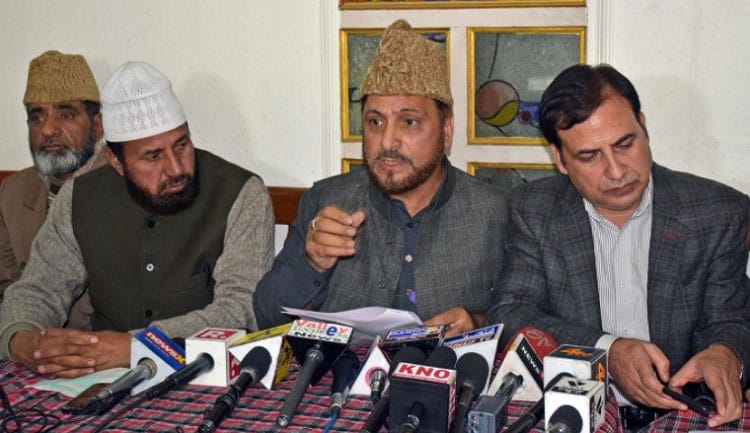
SRINAGAR — Jammu and Kashmir’s Grand Mufti Nasir-ul-Islam on Tuesday said that Shab-e-Qadr will be observed on April 17 while as Eid moon will be sighted on April 20 and in case the moon is sighted on April 20, people will have to offer Qaza fasting of a day.

Talking to reporters after the marathon meeting of Ulema that include Moulana Rahmatullah Qasmi, Ghulam Rasool Hami and Prof Muhammad Tayib Kamili, Moulana Aga Syed Al Hassan Mousivi, Ghulam Muhammad Bhat, Moulana Fayaz Ahmed Rizivi, Masroor Abbas Ansari and others, the Grand Mufti, as per the news agency KNO, said, “Shab-e-Qadr will be observed on April 17. Moon sighting will be done on April 20 and if the moon is sighted, people will have to offer one-day Qaza fasting after Eid.”

He said any decision regarding Eid will be made public after thorough consultation with Ulema. “MeT department will also be consulted before any announcement,” he said.

Pertinently, earlier there was a controversy over fasting as Grand Mufti had stated that the people should fast from Friday while the majority of the people in Kashmir had started fasting from Thursday. Grand Mufti had stated he had received no witness about the sighting of the Ramadan crescent on Wednesday night.

Meanwhile, Grand Mufti also demanded the release of Mirwaiz Moulvi Umar Farooq, Moulana Abdur Rashid Dawoodi and other Ulema who are serving detention in various jails.

This post first appeared on The Kashmir Pulse
SRINAGAR — Amid complaints of pesky power cuts during Sehri and Iftar time from various parts of Kashmir, Kashmir Power Development Corporation Ltd (KPDCL) on Monday said that the department was supplying record electricity during the fasting month and the cuts were the result of huge load shedding at peak hours.

Pertinently, the government had promised adequate electricity this Ramadan and issued directions to the department. However, consumers from different parts of the Valley continued to complain of erratic power supply during Sehri and Iftar times.

As per the news agency KNO, the locals from Srinagar and other districts of Kashmir said that the Kashmir Power Distribution Corporation Limited has failed to bring respite from the unscheduled power cuts to the people during the holy month of Ramadan. "The people are being pushed to the wall, especially at the peak times, Sehri and Iftar," they said.

The locals from Prang, Kangan, Akhal, Chattergul, Kachnabal, Najwan, Wayil, Prang, Barwalla Nunner and main town Ganderbal said they are getting electricity for merely 5 to 6 hours a day, thus leaving the consumers here to lurch at large, adding that the concerned department, however, is acting as a mute spectator.

Manzoor Ahmad, a resident of Ganderbal, said that despite paying hefty electricity bills, the department has failed to ensure adequate electricity to them, adding that the locals are being pushed to the wall by forcing them to reel under darkness.

Besides Srinagar, south Kashmir areas like Pulwama, Shopian, Anantnag, Awantipora, Tral, Keller, Zainapora, Harmain, Pampore, Kakapora, Rajpora, Litter, Dooru, Pahalgam, Ashmuqam, Kokernag, Verinag, Bijbehara, Mattan, Seer and north Kashmir areas including Sopore, Baramulla, Lalpora, Tangmarg, Bandipora and many areas of the district also witness the unscheduled power cuts at present.

Meanwhile, the consumers demanded the government look into the matter and ensure that adequate electricity is supplied to them, especially during Sehri and Iftar times.

Kashmir Power Distribution Corporation Limited's Chief Engineer, Javaid Yousuf Dar, however, said that the department supplied the highest-ever electricity to the consumers on the first day of Ramadan at 1893 MWs.

“The demand usually remains high during the peak hours and we have been supplying the best to our consumers. 1850 MWs are being supplied on a regular basis during the peak hours, but as the demand remains high, the curtailments have to be done," he said.

He added that less curtailment is being ensured to supply better electricity to people. He, however, said that since people use electricity one time i.e. during Sehri by switching on all appliances, huge load shedding is witnessed in some areas which lead to power cuts. “The situation will improve by Eid,” he said.

This post first appeared on The Kashmir Pulse

SRINAGAR — The ongoing holy month of Ramadhan has entered its final Ashra (10 days) and thousands of Muslims began to observe Aitikaf in Masjids and Shrines from Friday evening.

The month of blessings, Ramadhan, in the Islamic calendar is divided into three parts of 10 days with each stage called an Ashra, a word meaning “10” in Arabic. The third Ashra begins on the 20th day of Ramadhan as sunsets.

“The first Ashra reflects mercy of Allah (Rehmah), second part reflects forgiveness of Allah (Maghfirah), and third part reflects safety from the hell (Nijaat),” J&K Grand Mufti Nasir-ul-Islam told KNS.

He said these last 10 days are also known as the days of seeking refuge from hellfire. “These last 10 days of Ramadhan are very significant as they are when Laylat-ul-Qadr takes place. The holy night of Laylat-ul-Qadr commemorates the night when the Qur'an was first revealed. This holy night has to be sought in the last 10 days of the odd nights,” he said.

As per Islamic scholars, the greatest Sunnah of the last 10 days of Ramadhan is the observance of Aitikaf. “The Aitikaf begins on the 20th day of Ramdhan with the sunset. In Aitikaf, all the time that a Muslim spends is in the worship of Allah Almighty to ensure that Allah grants forgiveness and blessings to the seeker,” the Grand Mufti said.

He added that no one knows whether they will be alive for the next Ramadhan or not, “therefore, the last 10 days should be spent in the best manner to bid farewell to this holy month and earn maximum blessings and mercy from Allah.”

Quoting Hadith, he said: “Ramadhan is the month, whose beginning is mercy, its middle is forgiveness and its end is emancipation from the fire of hell.”

He said indeed the month of Ramadhan is full of blessings, mercy and forgiveness. “It is the best opportunity for all the Muslims to collect more blessings of Allah and pray for their forgiveness and to be saved from the hellfire during this final Ashra of ongoing Ramadhan.”

He reiterated his appeal to Muslims for paying Sadaqat-ul-Fitr, also known as Zakat-ul-Fitr, by or before Eid prayers, the best within these 10 days. The amount has been fixed at Rs 65 per person for this year.

This post first appeared on The Kashmir Pulse

SRINAGAR — Amid the ongoing holy month of Ramadan, the people from different parts of Kashmir here have complained of unscheduled power cuts, especially during Sehri and Iftaar times, which according to them leaves them to lurch at large.

According to the news agency Kashmir News Observer (KNO), the locals from Srinagar and other districts of Kashmir said that the Power Development Department (PDD) has failed to bring respite from the unscheduled power cuts as the people are being pushed to the wall, especially at the peak times (Sehri and Iftaar).

Earlier, the Divisional Commissioner, Kashmir, P K Pole had directed the concerned Chief Engineer to ensure adequate electricity in the holy month of Ramadan. However, the locals rue the absence of a facility, saying that it is the first Ramadan when the people are being forced to reel under darkness at Sehri and Iftaar times.

The locals from Prang, Kangan, Akhal, Chattergul, Kachnabal, Najwan, Wayil, Prang, Barwalla Nunner and main town Ganderbal said they are getting electricity for merely 5 to 6 hours a day, thus leaving the consumers here to lurch at large, adding that the concerned department, however, is acting as a mute spectator.

Manzoor Ahmad Lone from Kangan Ganderbal said that despite paying hefty electricity bills, the department has failed to ensure adequate electricity to them, adding that the locals are being pushed to the wall by forcing them to reel under darkness.

Besides, the Srinagar areas, the famous tourist places including Sonamarg and others also witness the unscheduled power cuts at present.

Meanwhile, the consumers demanded the government to look into the matter and ensure that adequate electricity is supplied to them, especially during Sehri and Iftaar times.

Kashmir Power Distribution Corporation Limited (KPDCL) Chief Engineer, Javaid Yousuf Dar said that the demand and supply issues at present have led to unscheduled power cuts.

He added that the temperature has increased much earlier this year and subsequently the demand for electricity has increased outside as well and at the same time, the availability, as well as the generation, is less.

Besides, he said that the coal import due to the Russia-Ukraine war has also affected the thermal stations outside. “The situation is not the worst in Kashmir only, but it is at present in Jammu, Haryana, Punjab and Andhra Pradesh as well,” he said.

He added that the unscheduled power cuts would continue for the next few days.

This post first appeared on The Kashmir Pulse

SRINAGAR — In the ensuing month of Ramadhan, Kashmir is consuming at least 100 trucks of watermelon per day at the cost of Rs 5 crore.

Talking to the news agency Kashmir News Observer (KNO), Bashir Ahmad Bashir, President of Fruit and Vegetable Association Kashmir said that a week ago, they were receiving a supply of 50 to 60 trucks of watermelon from various states of India but the demand went up and has exceeded 100 trucks as of now.

“Every vehicle contains 15 to 20 tons of watermelon. In the next few weeks, we expect that number of vehicles will reach 200-250,” he said. “Product is coming from Madya Pradesh and Gujarat. The produce is yet to come from Punjab and other states.”

The rates are coming down with each passing day, he said. “People associated with watermelon trade and business are earning handsome amount this year owing to the fact that temperatures have remained dry and hot,” he said, adding that it has been observed that people love to break fast with watermelon that gives them a cooling effect.

He said that this is for the first time that in this season, such a huge number of vehicles laden with watermelon are arriving in Kashmir while as each vehicle with watermelon load costs Rs 4-5 lakh. “Consuming 100 trucks of watermelon a day fetches the businessmen Rs 5 crore,” Bashir said.

The watermelon is being sold at higher rates against the Rs 30 per kg fixed price by the Food and Supplies Department.

“We have issued the rate list to the suppliers and sellers. Checking squads are in the field to check the hoarding and whosoever is found involved selling watermelon at higher rates is being fined,” said Dr Abdul Salaam Mir, Director of Food and Supplies Department Kashmir.

This post first appeared on The Kashmir Pulse
SRINAGAR — Sadaqat al-Fitr, also known as Zakat al-Fitr, amount has been fixed at Rs 65 per person, Jammu and Kashmir’s Grand Mufti, Nasir-ul-lslam announced on Monday.

Talking to the news agency Kashmir News Observer (KNO), Grand Mufti said that Sadaqat al-Fitr is a duty required of every Muslim and becomes obligatory to pay it before the beginning of Eid prayer and could be given from the beginning of the holy month of Ramadan.

He said the main purpose of Zakat al-Fitr is to provide the poor with a means with which they can celebrate the festival Eid al-Fitr along with the rest of the Muslims.

Mufti Nasir-ul-Islam urged people to ensure Fitr money reaches the poor and destitute before Eid. "It is better to prefer poor and destitute over Darul-Ulooms," he said.

Quoting Hadith, he said: "Every Muslim is required to pay Zakat al-Fitr at the conclusion of the month of Ramadan as a token of thankfulness to Allah for having enabled him or her to observe the obligatory fast. Its purpose is: as a levy on the fasting person. The fasting person will be hanging between the Earth and heavens and it will not be raised up to the Divine Presence without paying the Zakat al-Fitr."

He said that it can be given to the poor and needy but not for the construction purposes of Masjids and any other structures. "There is no harm for any person who is wealthier and wants to pay more than Rs 65 per person as fixed for this year," he said.

This post first appeared on The Kashmir Pulse
Powered by Blogger.