SRINAGAR — Family members of a pregnant lady, who died at Sher-i-Kashmir Institute of Medical Sciences (SKIMS) on Sunday, alleged medical negligence by hospital authorities.


The family members of the deceased woman, identified as Ulfat Jan, resident of Wakura Ganderbal, according to the news agency KDC, held a protest at SKIMS Soura against the hospital authorities, alleging that “she was not given proper treatment which consequently led to her death” this morning.


The relatives of the deceased lady have demanded stern action against the doctors, who they said, were supposed to be present.


The Medical Superintendent of SKIMS, Dr. Farooq Jan said, "An inquiry has been initiated in this regard and the committee has been asked to submit the report within five days."


"Whosoever will be found involved in any kind of negligence will be dealt with strictly as per law,” Jan added.


This post first appeared on The Kashmir Pulse

While maternity can be one of the most beautiful experiences in a woman's life, the associated health issues and treatments can put financial pressure on you. So, it's important to know how your health insurance plan can help you during this time.

Parenthood can be a blissful experience that many parents look forward to. However, rising healthcare expenses can put you under considerable financial stress in the form of prenatal and postnatal costs. Therefore, it's wise to plan your health insurance in advance and include maternity benefits to enjoy one of the best moments in life without any worry.

Does health insurance cover maternity benefits?

A health plan doesn’t cover maternity benefits by default. However, you can include maternity benefits in your standard health insurance plan by including some specific add-ons, as discussed in the next section.

What are the benefits offered under maternity cover?

A health insurance plan can offer a maternity add-on as a set of 2-3 different add-ons to be taken together. Following are the common maternity add-on covers you can include with your base health insurance policy.

Maternity benefit

It covers both the prenatal and postnatal expenses of the insured person. The coverage can include two deliveries across the policy tenure. Apart from the medical expenses for childbirth of the insured person, it can also cover lawful termination of pregnancy.

Newborn baby coverage

It covers certain medical expenses associated with the insured person’s newborn baby.

Vaccination costs

It is one of the most important health insurance add-ons that covers the vaccination costs incurred on the insured person’s newborn baby. It usually covers all the vaccination costs until the baby is two years old.

Factors to consider while purchasing maternity health plans

A health insurance policy with maternity benefits can help you save significant expenses. However, checking certain factors before making the final purchase is crucial.

Check premium

Maternity health plans can be available at a higher premium compared to regular health plans. So, check the premium amount beforehand to ensure that you have the right budget.

Know the waiting period

All maternity health plans come with a waiting period. It’s the period after purchasing the health policy during which the insurer will not accept any maternity claim. So, it’s vital to check the waiting period of a maternity health policy before buying one.

Network hospitals

Check the list of network hospitals where you can avail of the benefits of the maternity health plan. Your home should be at a drivable distance to the nearest network hospital empanelled by the insurer. Moreover, enquire about the availability of a cashless treatment facility in that hospital.

Extent of coverage

It’s important to understand the extent of coverage in detail. Are there any sub-limits? If yes, how much? Make sure the policy you buy covers the costs adequately, or else it will not be useful to you.

Inclusions and exclusions

A maternity health insurance policy has well-defined terms and conditions regarding what’s covered and what is not covered under the policy. Read the policy documents carefully to know the complete list of these inclusions and exclusions.

For example, ambulance charges, hospital room rent, medication, etc., are some expenses that are included in the policy. However, pre-existing conditions, cosmetic surgery, etc., are excluded from the coverage.

Buy the right health insurance policy with maternity cover

Once you've got the right health policy with suitable maternity health cover, you'll no longer worry about the expenses incurred during pre-natal and post-natal healthcare. And you can fully focus on how to welcome a new life. Happy parenthood!

This post first appeared on The Kashmir Pulse

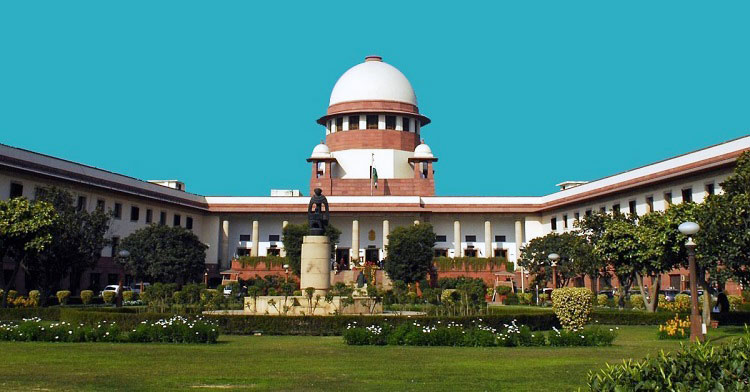
NEW DELHI — In a significant order, the Supreme Court on Thursday expanded the scope of the Medical Termination of Pregnancy Act to include "unmarried woman" and allowed a woman to abort her 24-weeks pregnancy arising out of a consensual relationship.

A bench of Justices DY Chandrachud, Surya Kant, and AS Bopanna directed the AIIMS director to set up a medical board of two doctors to examine the woman by Friday under the provisions of the Medical Termination of Pregnancy (MTP) Act. It asked the board to determine whether the pregnancy if terminated could risk the life of the woman or not.

"We request the AIIMS director to constitute a medical board in terms of provisions of section 3(2)(d) MTP Act by tomorrow (Friday). In the event, the medical board concludes that the foetus can be aborted without any danger to the life of the petitioner (woman), the AIIMS shall carry out the abortion in terms of the petition…", the bench said.

The top court sought the report of the medical board within one week of the procedure and said that the order of the Delhi High Court stands modified to the above extent.

The bench said that provisions of the MTP Act amended in 2021 include the word "partner" instead of "husband" in the explanation to section 3, which shows the intent of Parliament that it was not to confine the situations arising only out of matrimonial relationships.

It said that the use of the word "partner" ascribes to an intention of the Parliament to cover "unmarried woman" under the Act which is in consonance with the constitution.

It added that the Delhi High Court had taken an unduly restricted view by not allowing the woman to undergo medical termination of pregnancy at 23 weeks arising out of a consensual relationship on the ground that she was "unmarried".

The bench sought the assistance of Additional Solicitor General Aishwarya Bhati on the interpretation of the provisions of the Act and observed that allowing the petitioner woman to suffer an unwanted pregnancy will be contrary to the object and spirit of the legislation.

It said that the petitioner should not be denied the benefit of the law merely on the ground that she is an unmarried woman.

The bench noted that she is the eldest of five siblings and her parents are agriculturists. It said that the woman has submitted that she is qualified in Bachelor of Arts and without an adequate source of livelihood, it would be difficult for her to raise and nurture the child.

The top court said that the woman who was in a consensual relationship in the month of June had come to know about her pregnancy and during the examination, it was found that she was 22 weeks pregnant and she decided to terminate the pregnancy.

The high court had denied the permission to abort, saying that it virtually amounts to killing the foetus.

In an order issued on July 16, a Delhi HC bench refused to grant permission to the woman to abort the 23-week foetus, saying it is not permitted under the abortion law after 20 weeks for pregnancy arising out of a consensual relationship.

The high court, however, sought the Centre's response on the woman's contention that the exclusion of unmarried women from being allowed to undergo medical termination of pregnancy up to 24 weeks, was discriminatory.

The petitioner, a 25-year-old woman, had told the court that her partner, with whom she was in a consensual relationship, had refused to marry her. She had stressed that giving birth outside the wedlock would cause her psychological agony as well as social stigma and she was not mentally prepared to be a mother.

The high court, while dealing with the plea, had said the court cannot go beyond the statute while exercising its power under Article 226 of the Constitution.

"The petitioner, who is an unmarried woman and whose pregnancy arises out of a consensual relationship, is clearly not covered by any of the clauses under the Medical Termination of Pregnancy Rules, 2003," the high court noted in its order dated July 15.

"As of today, Rule 3B of the Medical Termination of Pregnancy Rules, 2003 (which excludes unmarried women) stands, and this court, while exercising its power under Article 226 of the Constitution of India, 1950, cannot go beyond the statute," it had said.

Before passing the order, the high court had suggested that the petitioner can be kept "somewhere safe" until she delivers the child who can subsequently be given up for adoption.

"We will ensure that the girl is kept somewhere safe and she can deliver and go. There is a big queue for adoption," the court had said.

After the lawyer turned down the court's suggestion, it said that it would pass an order on the petition.

This post first appeared on The Kashmir Pulse
Powered by Blogger.