When it comes to your financial future, there are several things that you have to keep in mind. It is always best to make informed decisions on the best saving scheme for your portfolio, instead of blindly going by others’ advice and inputs. However, to do this, you will have to thoroughly evaluate multiple such savings and investment schemes before coming to a final decision.

Some of the key aspects in this regard also include tax implications and benefits, risks, and, of course, the final returns that you can expect. Let us look at some of the best options in this article.

Best Saving Scheme for You: Top Choices

Here are some of the top savings schemes that you can consider:

1. PPF (Public Provident Fund): This is ideal for those with lower risk tolerance levels. You can expect assured returns from this government-backed scheme with tax deductions for your annual contributions and exemptions for the maturity amount. Yes, the returns may seem lower than many other market-linked plans, but there is not much risk involved. The lock-in period of 15 years (you can extend this) is another point worth considering for building up long-term savings.

2. Fixed Deposits: The interest rates are again lower than many investment plans, but the returns are fixed. There are virtually zero risk elements in this plan, and you can choose to compound your money to earn even higher returns over a period of time.

3. ULIPs: Unit-linked insurance plans are excellent savings options and suit those with moderate risk appetite. They offer life coverage throughout the policy period while enabling you to invest in market-linked instruments for earning higher returns in the long haul. Of course, there are risks involved, but you can mitigate them with features like fund-switching and professional fund management. The premium payments are tax-deductible, depending on certain conditions. However, the annuity received is taxable as income.

4. Pension Plans: These plans are ideal for getting a guaranteed income stream after retirement. You have to invest a certain amount in a lump sum or periodically over time and then get an annuity to cover you after retirement. Many pension plans also have handy life coverage that you can consider. Premiums of immediate annuity plans are tax-exempted.

Some other options include post office monthly income schemes, National Savings Certificate, Senior Citizen Savings Scheme, Pradhan Mantri Jan Dhan Yojana, and the National Pension Scheme (NPS). You should evaluate each of these choices thoroughly and then go ahead.

What Should You Do?

As they say, it is not advisable to keep all your eggs in one basket. Hence, you should diversify your savings and investment portfolio. If you have a lump sum amount, put some into a fixed deposit for long-term wealth creation, and also invest in the PPF every year.

Simultaneously, consider ULIPs for mid-term and long-term goals while investing in pension plans for retirement. Make sure you have adequate life and health insurance coverage while spreading out your investments in avenues like mutual funds, ELSS, NSC, and so on, with varying levels of risk.

This post first appeared on The Kashmir Pulse

There seems to be nothing as blissful and soothing as finally being able to retire, right? It is that one time of your entire life when you can just do what you want. These may include the hobbies you wish to pursue, reading, spending time with near and dear ones, travelling, getting involved in community service, or even starting something of your own. However, retirement can only be free of stress and turmoil if you are financially sorted.

Now, in this case, pension plans are something of a godsend, helping meet your financial requirements seamlessly after you retire. How to choose the best one? Here’s the lowdown below.

What are Your Financial Objectives?

Right before you sign on the dotted line of any pension plan, a few things should always be clear to you. These include the costs that you will have to cover down the line and also the lifestyle that you will lead once you retire. This will give you a picture of the money that you need. You can use this point of view to look for suitable pension plans that will help you accomplish these objectives.

Just to take an example, you can always opt to accumulate money over a prolonged duration and then get it as a pension income after you retire. You can also choose to invest a large sum of money that you receive at retirement into a pension plan. In such cases, the annuity will begin immediately once you make the investment.

Check the Available Plans

Some of the pension plans available can be summed up below:

Deferred Annuity: This means a policy where you can build up your corpus for retirement steadily. Thereafter, up to 60% of the corpus can be withdrawn as a lump sum, and the remainder must be used to purchase an annuity plan, as per current Indian regulations (PFRDA).

Immediate Annuity: This is often a convenient option for those who are close to retirement. Once you get a big lump sum payout, you can use it to invest in these plans. They will start giving you regular pension income immediately.

Future Costs and Your Risk Appetite

When planning retirement, your consideration should also be based on future expenses and your risk tolerance. For instance, medical expenses are expected to rise with age so you need to make sure your pension plan offers sufficient coverage.

Also, consider where you are on the risk tolerance spectrum. You might want to opt for a traditional pension plan with its guaranteed returns if you're risk averse. Yet, in case your risk appetite is on the higher side, then unit-linked plans may be better choices.

Conclusion

Evaluate your financial goals, and weigh the different considerations, to see which plan fits into your future needs and risk profile. Ultimately, retirement should be about living life not worrying about how to pay for it so invest in pension plans with careful consideration.

This post first appeared on The Kashmir Pulse
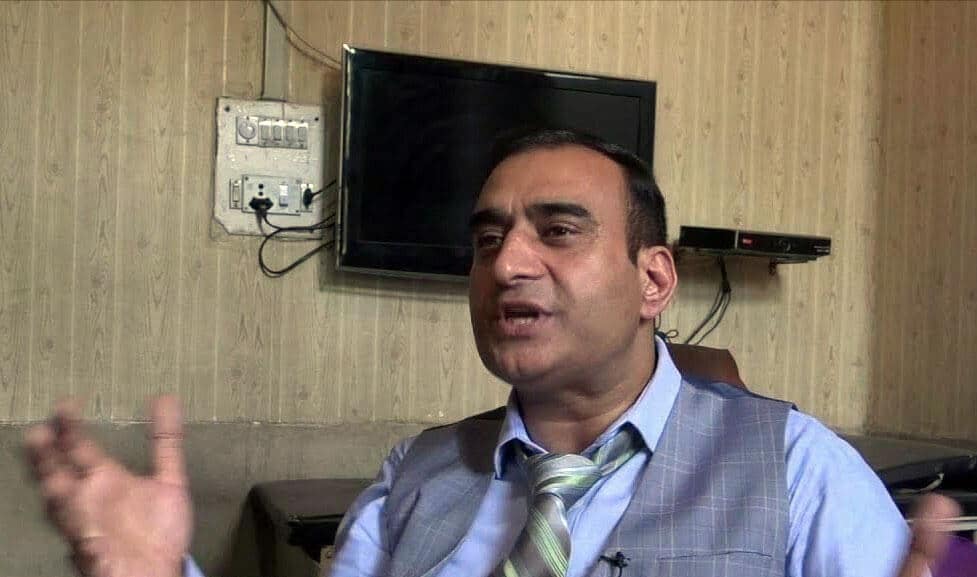
SRINAGAR — The people belonging to the weaker sections have complained that they have been struggling for survival due to the government’s “failure” to release a Rs 1000 pension to them since February this year.

The old-age persons, widows, divorcees, women in distress, transgender people and persons with disabilities (PwDs) said the government was providing Rs 1000 in the name of financial assistance to them through the Social Welfare Department under the Integrated Social Security Scheme for years.

“But we were told to apply afresh on the SUGAM portal to get the benefit. Even those who have already applied afresh are also waiting for the pension,” a woman from Srinagar told the news agency KNO.

Mohammad Maqbool, a handicapped person from Pulwama, said that in September-October last year, the government came up with new rules and asked them to apply fresh on the SUGAM portal to avail of the benefits.

“The people like me belonging to any such categories had to move from pillar to post for days together to prepare all the documents including Domicile Certificate, Age Certificate, Aadhaar and Disability Certificate to register on the SUGAM portal. Despite completing all the formalities, most of the persons including me are yet to receive pension since then,” he said.

In April, the government released the pension of only those beneficiaries whose bank accounts were seeded with Aadhaar while the rest are still waiting for it.

"It seems the government has no mercy on old, handicapped, windows and other weaker sections of society as they asked us to make UIDAI cards to avail pension scheme. When we made these cards after a lot of struggle, they then asked us to apply on the SUGAM portal to get the benefit of the pension scheme,” Maqbool said, adding that even those who have applied on the SUGAM portal are awaiting pension for months.

Many old-age people said the government is well aware of their plight but is not doing anything for them. “There are hundreds of people among us who are wholly and solely dependent on this assistance but for months, they have been going through very tough times,” they said.

They have appealed to Lieutenant Governor Manoj Sinha to look into the matter.

Meanwhile, an official of the Social Welfare Department said that those who have successfully registered themselves on the SUGAM portal and whose cases have been approved will start getting pensions in their bank accounts. “Backlog will be cleared and other cases are being verified,” he said.

This post first appeared on The Kashmir Pulse


SRINAGAR — Doctors Association Kashmir (DAK) on Thursday sought restoration of the old pension scheme for the government employees of Jammu and Kashmir.


“Revival of the old pension system would ensure the social and financial security of employees,” said DAK President Dr. Nisar ul Hassan in a statement issued to the news agency KNO.


Dr. Hassan said under the old pension scheme, an employee gets 50% of his/her last drawn salary as a monthly pension with the addition of a dearness allowance as and when declared by the government. “After the demise of the retired employee, the nominee gets 50% of the total amount drawn by the retired employee as a family pension,” he said.


Government employees in J&K recruited on or after January 1, 2010, are not eligible for the old pension scheme and come under the new pension scheme.


The DAK President said the new pension scheme does not provide a guarantee of pension and there is no provision for family pension in the new system. “Under the new scheme, employees are required to contribute 10% of their monthly salary, which the government matches and invests in equity shares,” he said, adding “The new scheme is market-linked and hence uncertain.”


Dr. Nisar said employees spend their productive years of life in government service with the hope that post-retirement, they get a guaranteed pension which will give them financial independence in old age when they can’t earn. “The employees put in their blood and sweat during service to cause good governance and the government is duty bound to provide them with a sense of security post-retirement,” he said.


General Secretary DAK, Dr. Arshad Ali said under the new pension system, the hard-earned retirement fund of employees is subjected to the vagaries of the share market which fluctuates at the drop of a hat, putting the social security of employees at risk.


“An employee cannot work with his full potential and contribute to good governance if his socio-economic security is threatened,” he said.


“Four of the States including Rajasthan, Chhattisgarh, Jharkhand and Haryana have gone back to the old pension scheme and the chorus for restoration is also mounting in other states,” he added.


This post first appeared on The Kashmir Pulse

The thought or impression of not having saved anything for the future shakes all of us to the core. Everyone seems to be battling with the realisation that they haven't done anything to protect and save something for their old age. The common man is the most adversely affected by inflation and economic disruption. Therefore, it is crucial to be aware of the pension schemes in India.

Opportunities abound after retirement. Finally, you have enough time to complete everything on your wishlist. However, you will need enough money to support your existing way of life and realise your long-held aspirations. (You can mark the estimates of your investments using a compound interest calculator).

Relying solely on your savings and investments would not be a good choice given the rising rate of inflation and the restricted social security programmes accessible for seniors.

Why choose a pension plan?

There are many different reasons why one should choose the best pension schemes in India. Some of them are listed below:

1. Increase in Life Expectancy

According to the report of the World Bank, India's life expectancy in the year 2017 was 68.78 years. In nearly 20 years, the life expectancy rate has improved by 10 years. The amount required in old age or after retirement will rise as life expectancy increases.

2. Lack of Social Security System

We’re a developing nation. India is yet to be equipped with a social security system. When all sources of money are cut off, people usually avail of these services to support themselves or their families. There aren't enough policies and programmes in India that will take care of retirement benefits, the needs of the crippled, etc. Even when there are a few, they might not meet the needs of everyone. That’s why investing in pension schemes in India is highly recommended.

3. Regular Flow of Income

A pension or retirement plan guarantees you an income stream that is consistent once you retire; helping you live a relaxed and comfortable life.

4. Tax Advantages

Making an investment in a pension plan at a young age is always a good idea. You can receive tax benefits under Section 80C of the Income Tax Act's rules that can help you save taxes.

5. Rising Inflation and Health Care Expenses

The cost of healthcare has increased dramatically along with the country's population increase and the average life expectancy. Prices for hospital stays and medications are continually rising. All of this has a negative impact on our economy. So much so that anyone can face financial burdens if they remain unprepared.

Having a pension plan and using a compound interest calculator to calculate returns would undoubtedly reduce stress and give you financial security during your post-retirement years.

Pension scheme, savings in India

Best pension schemes in India

Knowing the many plans available on the market and selecting the one that best suits your needs will help you choose the option that is the most effective.

Plans With and Without Life Cover

With Life Cover: Those that have a life component also have life cover. The family members are given a lump sum payment in the event of death under this arrangement.

Without Life Insurance: As the name suggests, there is no life insurance in these pension schemes. The only money returned to the nominees is the premiums paid (depending on the type of policy).

Immediate and Deferred Annuity Plan

In an immediate annuity plan, a lump sum investment is required, and the pension payments begin right away. While in deferred annuity plans, the pension stats after a few years, mostly when the policy term's accumulation period is complete. There is a tax advantage applicable to this type of plan as well.

National Pension Programme (NPS)

In this programme, subscribers can invest and generate wealth by investing in market-linked assets. NPS invests in the equities and debt markets according to the subscriber’s preferences. At maturity, 60% of the money is available for withdrawal, and the remaining 40% must be utilised to buy an annuity plan.

Understanding the benefits provided by different pension schemes in India, as well as the features and advantages of retirement planning, is crucial if you're looking for the finest pension schemes in India. Each pension plan offers a unique set of retirement benefits.

A compound interest calculator can help you in making a safe retirement decision as it helps you calculate the growth of your investment. So, start investing in the best pension schemes in India today!

This post first appeared on The Kashmir Pulse
Powered by Blogger.