SRINAGAR — In a significant development for Jammu and Kashmir, the Rajya Sabha on Friday passed two bills aimed at fostering social inclusion and political representation in the Union Territory.

The first bill, the Jammu and Kashmir Local Bodies Laws (Amendment) Bill, 2024, received approval to provide reservation to Other Backward Classes (OBCs) in Panchayats and Municipalities. Additionally, it empowers the State Election Commission to conduct Urban Local Bodies polls, a task previously held by the Chief Electoral Officer.

Introduced in the Lok Sabha by Minister of State for Home, Nityanand Rai on February 5, the bill was swiftly cleared by the Rajya Sabha via voice vote today, marking its immediate implementation.

Simultaneously, the Rajya Sabha endorsed the Constitution (Jammu and Kashmir) Scheduled Tribes Order (Amendment) Bill, 2023, which grants scheduled tribe (ST) status to Paharis and three other communities in the region. This bill, passed three days after its approval in the Lok Sabha, includes Paharis, Paddaris, Gadda Braman, and Koli communities in the Scheduled Tribes list of J&K.

The passage of these bills signifies a significant step toward inclusive governance and representation in the Union Territory. Both bills were cleared without contention.

The State Election Commission is now tasked with overseeing civic polls, ensuring fair representation for all segments of the population in local governance. This move underscores efforts to strengthen democratic processes and promote social equity in Jammu and Kashmir.

The administration has reiterated that the ST status granted to Paharis will not impact existing reservations for other tribal communities, including Gujjars and Bakarwals.

Lieutenant Governor Manoj Sinha affirmed on February 6, 2023, that the inclusion of these communities in the Scheduled Tribes list will not diminish current reservation levels. He assured that necessary notifications would be issued to ensure equitable reservation provisions for all eligible communities.

This post first appeared on The Kashmir Pulse

NEW DELHI — The Parliament on Tuesday passed a bill to provide reservations to Other Backward Classes in local bodies in Jammu and Kashmir. The government said that the Union territory has undergone important changes since the abrogation of Article 370 in 2019.

Replying to the debate on the Jammu and Kashmir Local Bodies Law (Amendment) Bill 2024, Union Minister of State for Home Nityanand Rai highlighted that the people of the Union Territory have started witnessing development done by the Narendra Modi government.

At present, there is no provision for reservation of seats for Other Backward Classes (OBCs) in panchayats and municipalities in Jammu and Kashmir.

The bill seeks to provide reservation to OBCs in panchayats and municipalities in Jammu and Kashmir and bring consistency in the local body laws of the Union territory with the provisions of the Constitution.

"With this, justice will be ensured to the citizens of Other Backward Classes of Jammu and Kashmir for the first time after 75 years of independence," according to the statement of objects and reasons of the bill.

Rai, during the discussion on the bill in Lok Sabha, said that he did not refer to the Opposition’s demand for the government to declare a time frame for holding elections in Jammu and Kashmir and the restoration of statehood.

Rai said the opposition members, participating in the debate, were resorting to a drama of supporting the bill granting reservation to OBCs in panchayats and municipalities in Jammu and Kashmir and were raising other issues.

This post first appeared on The Kashmir Pulse

NEW DELHI — A bill that seeks to amend laws related to local bodies in Jammu and Kashmir was introduced in the Lok Sabha on Monday.

According to details reported by the news agency KNS, Minister of State for Home Nityanand Rai introduced the bill in the Lok Sabha today.

The Jammu and Kashmir Local Bodies Laws (Amendment) Bill, 2024, seeks to amend the Jammu and Kashmir Panchayati Raj Act, 1989; the Jammu and Kashmir Municipal Act, 2000; and the Jammu and Kashmir Municipal Corporation Act, 2000.

The parliament budget session is underway and will end on February 9. This will be the last session of both houses ahead of the Lok Sabha elections scheduled to be held in April-May this year.

This post first appeared on The Kashmir Pulse
SRINAGAR — In a significant development, the Centre has extended an invitation to Ladakh leaders for a crucial second round of talks with the High Powered Committee in Delhi, scheduled for February 19. This follows the reconstitution of the committee under the chairmanship of Minister of State for Home, Nitiyanand Rai, in November of the previous year.

The talks are slated to address pressing issues in accordance with the committee's terms of reference, as per an official order quoted by a local news agency. The High Powered Committee had previously engaged in the maiden round of discussions with Ladakh leaders in December of the preceding year, marking a vital step in addressing regional concerns.

The committee, spearheaded by Minister Nitiyanand Rai, has been entrusted with addressing and resolving key matters pertinent to Ladakh's development and governance. The upcoming talks on February 19 are anticipated to delve into a range of issues critical to the region's welfare.

The first round of talks in December laid the foundation for ongoing discussions, providing a platform for constructive dialogue between Ladakh leaders and the committee. The February meeting is expected to further advance the discourse and work towards effective solutions to bolster the region's development and address the aspirations of its people.

This post first appeared on The Kashmir Pulse
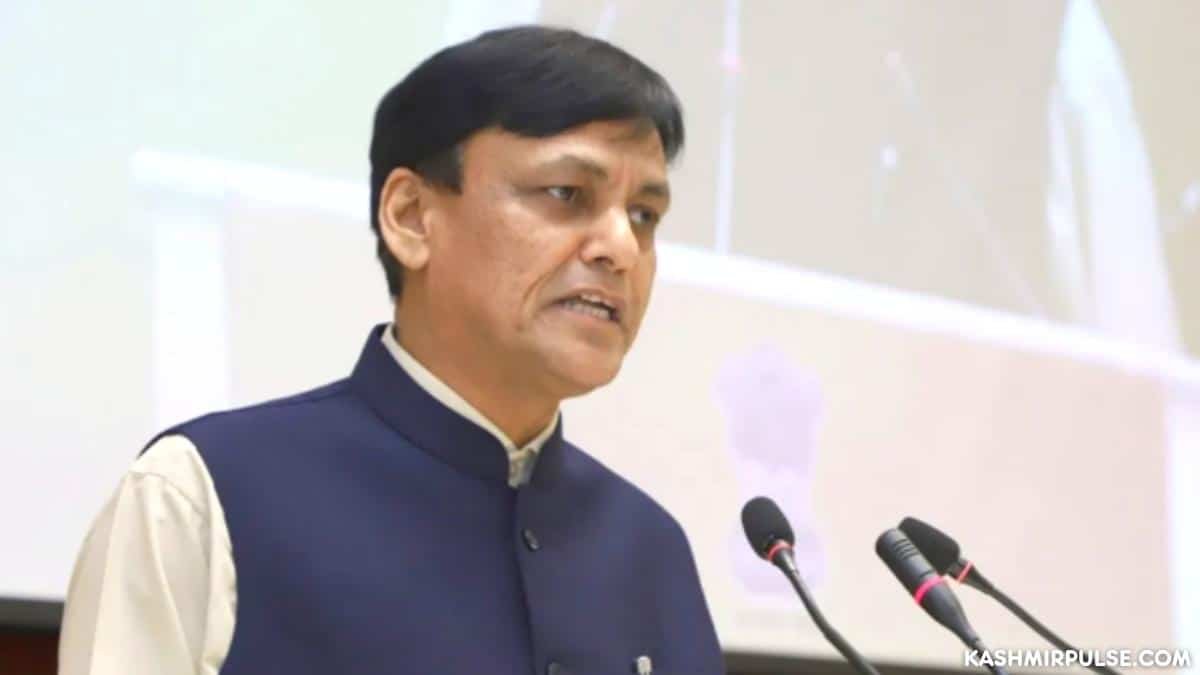
NEW DELHI — The Government of India reaffirmed on Wednesday that every citizen in Jammu and Kashmir is entitled to the benefits offered by the Ayushman Bharat Pradhan Mantri Jan Arogya Yojana - SEHAT scheme.

Responding to a query in the Rajya Sabha, Minister of State for Home Affairs, Nityanand Rai, conveyed that all residents of Jammu and Kashmir are encompassed within the ambit of the Ayushman Bharat PMJAY-SEHAT scheme. This program extends health coverage of up to Rs. 5 lakh per family, catering to their medical needs free of cost.

Rai emphasized that this scheme is inclusive, extending its benefits to government employees, thereby supplementing the existing provisions of medical attendance rules.

The primary objective behind the initiative is to provide comprehensive health insurance coverage to every resident of Jammu and Kashmir. The scheme facilitates free insurance cover to all residents and offers financial support of up to Rs. 5 lahks per family on a floater basis, encompassing additional families amounting to approximately 15 lahks.

The announcement, made by the Government, assures complete coverage under the Ayushman Bharat PMJAY-SEHAT scheme for all inhabitants of J&K, ensuring accessible healthcare for the region's populace.

This post first appeared on The Kashmir Pulse

SRINAGAR — The Rajya Sabha made a significant move on Monday by passing The Government of Union Territories (Amendment) Bill 2023, aiming to allocate 33 per cent of seats within the Jammu and Kashmir Assembly for women.

According to the news agency KNS, Rajya Sabha Chairman Jagdeep Dhankar permitted Ministry of State for Home Affairs Nityanand Rai to introduce the bill, which had already secured passage in the Lok Sabha the previous week.

The essence of The Government of Union Territories (Amendment) Bill, 2023 revolves around earmarking 33% of seats in both the Jammu and Kashmir Assembly and the Puducherry Assembly for women, a pivotal step toward enhancing gender representation and inclusivity in legislative bodies.

Additionally, the Rajya Sabha also endorsed The Jammu and Kashmir Reorganisation (Second Amendment) Bill, 2023. This amendment aims to introduce modifications to the Jammu and Kashmir Reorganisation Act, 2019, reflecting further changes within the region.

This post first appeared on The Kashmir Pulse

SRINAGAR — A bill to extend the provisions of the women's reservation law to Jammu and Kashmir was introduced in the Lok Sabha on Tuesday.

As per details available with the news agency KNS, the bills introduced by Minister of State for Home Affairs, Nityanand Rai were the Jammu and Kashmir Reorganisation (Second Amendment) Bill and the Government of Union Territories (Amendment) Bill in the Lok Sabha.

The bill seeks to enable greater representation and participation of women as public representatives in law-making processes in the legislative assemblies of Jammu and Kashmir.

Officially known as the Constitution (106th Amendment) Act, the women's reservation law seeks to provide 33 per cent reservation to women in the Lok Sabha and state assemblies.

The law will take some time before being implemented as the next census and the subsequent delimitation exercise -- redrawing of Lok Sabha and assembly constituencies -- will ascertain the particular seats being earmarked for women.

The quota for women in the Lok Sabha and assemblies will continue for 15 years and Parliament can later extend the benefit period.

This post first appeared on The Kashmir Pulse

SRINAGAR — The Centre on Wednesday said that 185 persons from outside Jammu and Kashmir have bought land in the Union Territory during the years 2020, 2021 and 2022.

In a written reply to a question, Union Minister of State for Home, Nityanand Rai, as per the news agency KNO, informed the Rajya Sabha that in 2020, only one person brought land while 57 persons bought it in 2021 and 127 in 2022.

"Further, as per the information provided by the Union Territory of Ladakh, no land has been bought by persons from outside the UT during the last three years," he said.

He said as per the information provided by the Government of Jammu and Kashmir, a total of 1559 Indian companies, including multinational companies, have made investments in the UT.

"In the 2020-21 financial year, 310 entitles have been invested while 175 in 2021-22 and 1074 in 2022-23," he said, adding that as per the information provided by the Union Territory of Ladakh, no Indian companies, including multinational companies, have invested in the UT during the last three years.

This post first appeared on The Kashmir Pulse

SRINAGAR — The Union Ministry of Home Affairs has constituted a high-powered committee to discuss safeguards for the Union Territory of Ladakh.

According to an order, a copy of which lies with the news agency KNO, the committee will be headed by Minister of State for Home Affairs Nityanad Rai. “It has been decided to constitute a High Powered Committee (HPC) under the chairmanship of Shri Nityanand Rai, Minister of State for Home Affairs, Gol, for the Union Territory of Ladakh,” reads the order.

As per the order, the committee has been set up to discuss measures to protect the region's unique culture and language, taking into consideration its geographical location and its strategic importance.

The committee will also discuss measures to ensure the protection of land and employment for the people of Ladakh, the order states. It will also discuss measures for inclusive development and employment generation in the region empowerment of Ladakh Autonomous Hill Development Council Leh and Kargil.

The composition of the committee includes Nityanand Rai, Minister of State for Home, Chairman, Radha Krishna Mathur, Lieutenant Governor, Union territory of Ladakh, Jamyang Tsering Namgyal, Member of Parliament (Ladakh), Chairman/CEC, Ladakh Autonomous Hill Development Council, Leh, Chairman/CEC, Ladakh Autonomous Hill Development Council, Kargil, Joint Secretary, Jammu, Kashmir and Ladakh Affairs, MHA, Director/Deputy Secretary (Ladakh), Department of Jammu, Kashmir and Ladakh Affairs, MHA – member Secretary and one nominated member from MHA.

The committee will have Leh Thupstan Chhewang (former MP), Nawang Rigzin Jora (ex-Minister, Ashraf Ali Barcha (President, Anjuman-e-Imamia; Shia body, Leh), Acharya Stanzin Wangtak (President, All Ladakh Gompa Association), Kushok Thiksey alias Nawang Chamba Stanzin alias Thiksey Rinpoche, Leh.

From Kargil Democratic Alliance/KDA, Asgar Ali Karablai (Co-chairman, KDA and working President Territorial Congress Committee, Ladakh), Qamar Ali Akhoon (co-chairman, KDA and senior NC Leader), Sajad Kargili (social activist and representative, Islamia School, Kargil) and Tsewang Nurboo (President, LBA, Kargil).

This post first appeared on The Kashmir Pulse

SRINAGAR — Above 2100 migrants have returned to Kashmir after the abrogation of Article 370, the Ministry of Home Affairs (MHA) said on Wednesday.

As per news agency Kashmir News Observer (KNO), replying to a question about the number of Kashmiri Pandits rehabilitated since August 2019 when Article 370 was abrogated, Minister of State in the Ministry of Home Affairs, Nityanand Rai, said 2105 migrants have returned to Kashmir for taking up the jobs provided under Prime Minister's Development Package.

He said 841 appointments were made in 2020-21 while 1264 appointments were made in 2021-22.

To another question about the number of Hindus along with Kashmiri Pandits killed in J&K, Rai said that 14 Hindus including four Kashmiri Pandits have been killed in Kashmir since August 2019.

He said that three Hindus were killed in Kashmir in 2019 after abrogation of Article 370, one Kashmiri Pandit and one Hindu was killed in Kashmir in 2020, three Kashmiri Pandits and six Hindus were killed in Kashmir in 2021.

Rai said that 3000 government jobs under Prime Minister's Development Package 2015 (PMDP-2015), for Kashmiri migrants have been created. The selection process for appointment of 2828 migrants has been completed, out of which 1913 migrants have been appointed and verification of documents of the remaining 915 migrants has been taken up.

He said the construction of transit accommodations under Prime Minister's Reconstruction Package 2008 (PMRP 2008) is complete, while work is being completed in respect of accommodations approved under PMDP-2015.

Construction of 1025 Units has been completed/substantially completed, 1488 Units are at different stages of completion and work on remaining Units has been taken up.

He said that in the initial phase, private land was to be acquired for the construction of these transit accommodations. However, due to cost escalation and delay in the land acquisition process, it was decided in 2019 to provide government land in order to speed up the construction work. Land required for construction of transit accommodations is now available with the concerned department.

"Moreover, Jammu and Kashmir has hilly terrain and receives heavy snowfall during winters which shortens the working season. The construction work further suffered due to the COVID-19 situation. However, the work on the project has been expedited,” he said.

According to Rai, the Government of India reimburses monthly cash relief to Kashmiri migrants, which was last enhanced from Rs 10,000 to Rs 13,000 per family in June 2018.

“The enhancement of cash relief to Kashmiri Migrants is considered from time to time on the recommendation of the Government of Jammu and Kashmir keeping in view of the trend of inflation,” he added.

This post first appeared on The Kashmir Pulse

SRINAGAR — 34 persons from outside Jammu and Kashmir have purchased properties in J&K since the abrogation of Article 370 of the Indian Constitution, Ministry of Home Affairs (MHA) informed the Lok Sabha on Tuesday.

On 15 December last, the MHA had informed that “seven plots of land” have been purchased by persons from outside, meaning thereby that 27 more persons have bought the properties in J&K in the last three months.

While the previous purchases were restricted to Jammu division, the MHA informed that the properties have been bought in central Kashmir’s Ganderbal district also.

“As per the information provided by the Government of Jammu and Kashmir, 34 persons from outside the Union Territory (UT) of Jammu and Kashmir (J&K) have bought properties in UT of J&K after the abrogation of Article 370,” Minister of State for Home, Nityanand Rai said in a written reply, a copy of which is with GNS.

“The properties are located in Jammu, Reasi, Udhampur and Ganderbal districts,” Rai said while responding to a question by parliamentarian Haji Fazlur Rehman of Bahujan Samaj Party.

Rehman had sought to know the number of people from outside Jammu and Kashmir who have bought properties in J&K after the abrogation of Article 370 and the location of the areas where the properties have been purchased.

In August last year, the Home Ministry informed Parliament that two persons from outside J&K have purchased properties in J&K following the effective annulling of Article 370, which barred people from outside J&K to buy land or property in the region.

The vires of the government decision have been challenged before the Supreme Court in a bunch of petitions but the apex court has not fixed any hearing date hitherto despite applications for early hearings recently.

This post first appeared on The Kashmir Pulse
Powered by Blogger.