PULWAMA — Amidst a picturesque scene of the Kashmir Valley draped in pristine white, a heartwarming moment unfolded as the boundaries between security forces and civilians momentarily dissolved. In the once restive Tral area of southern Kashmir's Pulwama district, CRPF personnel stepped in to assist a snowbound groom in reaching his in-laws' home, facilitating the continuation of wedding celebrations.

The unusual display of camaraderie took place in Branpathri, a remote village in Pulwama's Tral, where CRPF officers clad in khaki transformed into virtual wedding attendees and rescuers. They aided Mukhtar Ahmed, the groom, in navigating the snow-covered path towards his bride's residence.

Local sources reported to The Kashmir Pulse that Mukhtar Ahmed, son of Ghulam Hasan Poswal, a resident of Branpathri, had his wedding scheduled for Tuesday, February 20. However, heavy snowfall disrupted the plans, blocking roads and stranding the wedding party.

Responding to distress calls, a team from the CRPF's 180 Battalion at Mandurah camp swiftly arrived at the scene to assist. Faced with the impracticality of a traditional horse-drawn carriage due to the snow, the CRPF personnel offered an armoured vehicle, typically associated with conflict in Kashmir.

Without hesitation, the groom and his companions boarded the vehicle, accompanied by armed CRPF officers. Before departing for the bride's home, photographs were taken capturing the unusual but heartening moment.

The local community expressed gratitude towards the CRPF's 180 Battalion for their timely intervention. Mukhtar Ahmed, speaking to the media, extended his appreciation, stating, "After the heavy snowfall, I was afraid that I would not be able to reach my in-laws, but the CRPF played a key role in fulfilling my lifelong dream."

Zakir, one of the wedding attendees, echoed sentiments of gratitude, thanking the CRPF from the depths of his heart for their assistance during a crucial moment. CRPF officer Ram Jath, who led the rescue operation, explained that upon receiving the call for help, he promptly coordinated with senior officers to execute the rescue mission.

The upper reaches of the Kashmir Valley woke up to a fresh blanket of snow on Tuesday, February 20, with even the plains being enveloped by afternoon. The snowfall disrupted normal life, leading to road closures and flight cancellations at Srinagar airport.

This post first appeared on The Kashmir Pulse

SRINAGAR — In a shocking incident, a group of men along with their lawyer gathered in Srinagar's Press Enclave and held a protest against a woman alleging that the single woman married nearly a dozen men and ran away with their belongings including cash and gold.

At least six men, all claiming to be the husbands of the woman, staged a protest, stating that the woman married them one by one “under a well-planned strategy” and later ran away with cash, gold and other belongings.

Abid Zahoor Andrabi, the lawyer of the men duped by the woman, while talking to the news agency KNO, said: “I belong to district Budgam, and one of the grooms came to me nearly four months ago while claiming there is a woman hailing from Rajouri district, whom he was married to. He told me that the woman after a few days of the marriage ran away along with gold, cash and belongings.”

Andrabi said that his client had put Rs 2.5 lakh as Mehar besides gold and other stuff. “The woman fled just days after the marriage on the pretext that she was going to see a doctor at a hospital in Budgam district,” he said.

Within days, many men also came with the same complaint. "After listening to the men who seemed to have been duped by the same woman, I filed a case in court and the case was handed over to Munsif Court Budgam, who ordered the police to take action in this regard and lodge an FIR. The FIR was lodged under FIR number 64, 2023 under 420, and 120-B of IPC in Police Station Budgam,” he said.

Andrabi said that there seems to be a big inter-district gang involved in the act.

“I approached a matchmaker and he promised my marriage but I never knew I am falling into a trap. I was told that marriage will take place in Rajouri,” said Abdul Ahad Mir, a resident of Budgam.

“The matchmaker sought two lakh rupees from me. I was asked to reach Rajouri for marriage where my marriage was solemnised with the woman. Under the cover of darkness, the marriage took place. After a month of my marriage, my wife told me that she needs to visit the hospital for a check-up. I allowed her but she fled and never returned,” he alleged.

Other affected men said there seems to be a big network involved in the act and requested police to probe the case as the case seems high profile fake marriage gang that needs to be uncovered within the shortest possible time so that other families are saved.

This post first appeared on The Kashmir Pulse

SRINAGAR — A soul-stirring Kashmiri song titled "Kya Karie Korimol" from Coke Studio Bharat has taken the internet by storm, capturing the hearts of netizens, especially those in Kashmir. The music video, which focuses on Kashmir's traditional Wazwan feast and the financial struggles faced by the bride's father, has garnered widespread acclaim for its emotional portrayal of the father-daughter bond on a wedding day.

The Emotional Journey: Unveiling the father-daughter bond in 'Kya Karie Korimol'

The song, performed by Alif band, Aashima Mahajan, and Noor Mohammad, has resonated deeply with listeners. It highlights the immense compassion, protection, and love shared between a father and daughter, showcasing their unique connection that grows stronger with time.

Preserving Tradition: Exploring Kashmir's Wazwan feast and its significance in the song

With poignant and melancholic lyrics penned by Alif, the song delves into the emotional journey of a bride and her father as they prepare for the wedding feast. The narrative beautifully portrays the financial hardships that the bride's father endures to arrange the elaborate Wazwan feast, a traditional and cherished aspect of Kashmiri weddings.

Accompanied by Aashima Mahajan's soulful vocals and Noor Mohammad's mesmerizing Sufi music, the song captures the essence of Kashmir's cultural heritage. It celebrates the beautiful bond between a father and his daughter, offering a glimpse into their shared love and unbreakable connection.

Impact and Reflection: How 'Kya Karie Korimol' sparks discussions on family, love, and cultural heritage

The music video has sparked a wave of appreciation and nostalgia among listeners, who have praised its relatable theme, heartfelt lyrics, and enchanting melody. Many viewers have shared personal stories and sentiments, reminiscing about their own father-daughter relationships and the emotions evoked during weddings.

The viral success of "Kya Karie Korimol" underscores the power of music to unite communities and evoke strong emotions. It serves as a reminder of the importance of preserving cultural traditions and cherishing family bonds in a rapidly changing world.

As the song continues to captivate audiences, it has become a symbol of the enduring love and sacrifices made by parents, particularly fathers, in ensuring the happiness of their children during significant life events. It has also generated discussions about the need for greater support and understanding of the financial burdens faced by families during weddings.

With its heartfelt lyrics, captivating melodies, and celebration of the father-daughter bond, "Kya Karie Korimol" stands as a testament to the beauty and depth of Kashmiri culture, leaving an indelible mark on the hearts of listeners worldwide.

This post first appeared on The Kashmir Pulse

SRINAGAR — In a significant move, the administration of Jammu & Kashmir has unveiled the draft rules for implementation of the Prohibition of Child Marriage Act in the Union Territory.

In a notification, as per the news agency KNO, the department of Social Welfare has unveiled the draft “Jammu and Kashmir Prohibition of Child Marriage Rules, 2023”.

The draft rules, which have been put in the public domain for seeking suggestions, have been framed under the powers vested with UT administration by sub-section (1) of section 19 of the Prohibition of Child Marriage Act, 2006.

The Social Welfare department has asked interested individuals, organizations, government statutory bodies, and all other interested stakeholders to submit their feedback on the proposal within 15 days.

The key feature of the draft rules is that the government has proposed to designate certain officers as “child marriage prohibition officers” within their respective jurisdiction.

The officers to be designated include the Chief Education Officer, Zonal Education Officer, Block Medical Officer, Block Development Officer, Assistant Labour Commissioner, Assistant Commissioner (Panchayat), District Social Welfare Officer, Child Development Protection Officer, Tehsildar and Naib-Tehsildar.

According to the draft rules, it shall be the duty of every child marriage prohibition officer to act immediately upon any information of solemnization of any child marriage that may be received through any mode of communication including written or oral i.e. through a letter, telephone, telegram, e-mail, etc. or by any other means and forthwith initiate all necessary action.

The officer shall furnish quarterly returns and statistics to the district magistrate concerned and the directorates of Social Welfare Jammu/Kashmir. The officer shall file a petition before a judicial magistrate first class/metropolitan magistrate for obtaining information prohibiting child marriage.

As per draft rules, the officer shall also file a petition for annulling a child marriage in district court in case any of the contracting parties to the marriage is a minor. Their mandate is also to file the petition before the district court for maintenance and residence to the female contracting party of the marriage until her remarriage.

They have also been empowered to file petitions before the district court for the custody and maintenance of children of child marriage.

According to the draft rules, these officers would be invested with the powers of a police officer as prescribed in sections 156, 160, 161, 165 and 175 of the Criminal Procedure Code subject to the condition that such powers are exercised by the said officer herself/himself within her/his jurisdiction for taking cognizance of offences prescribed under the Act.

The draft rules also state that the district magistrate shall ensure that in every Panchayat, a committee is constituted to assist the child marriage prohibition officer in obtaining information about such child marriages, in the prevention of such ceremonies and in annulling of such marriages.

These committees would comprise of Sarpanch (chairperson), Supervisor, Mission Poshan (convener), Village Level Worker/Secretary Panchayat (member), Headmaster of the nearest school/senior teacher (member) and one women ward member (member).

According to the draft rules, it shall be the duty of local priests of any religion bestowed with the solemnization of marriages, to inform the “child marriage prohibition officer” of her/his area about the likelihood of such child marriages and shall refrain from solemnizing such marriages with a view to preventing such instances of child marriage.

The rules state that the Government of Jammu and Kashmir may declare suitable awards for such persons on whose initiatives/information the incident(s) of child marriages are prevented. “The district magistrates shall also felicitate such persons on suitable occasions of national importance,” the rules state.

This post first appeared on The Kashmir Pulse
BARAMULLA — With Indo-Pak armies maintaining ceasefire along the Line of Control (LoC), at least 250 marriages have taken place in border villages of Kashmir, bringing back the old memories of weddings in their own houses instead of moving the events to safer places outside the villages.

Tentative figures available with the news agency KNO said that at least 250 marriage ceremonies have taken place this year so far in Keran, Machil, Bangus, Tangdhar, Gurez, and Uri area along the LoC in north Kashmir.

Locals said that they are happy to witness such celebrations after a very long time. "Earlier, we used to stay indoors for days together due to intense shelling from across the border but now people are participating in marriages on a large scale without anyone fear," Iqra Khan, a newly-wed girl from Gurez, said.

Similarly at Uri, Nowreen, another recently married girl, said that the ceasefire violation had become routine earlier, making the lives of the people along the border miserable but for the last two years, marriages are taking place here with great enthusiasm while people are living a life of peace and order.

"About five weddings have taken place in our settlement recently and a large gathering of people attended these weddings which were never seen before," Mushtaq Ahmad, a local from Karnah, said. He said that the memory of those who lost their lives during the shelling in the past will always remain and haunt us.

"Earlier, I had seen many times that some weddings turned into mourning when there was shelling on the borders here," said Nuzhat Khan, another girl from the Machil area.

On February 2021, India and Pakistan announced that they have agreed to strictly observe all agreements on the ceasefire along the Line of Control in Jammu and Kashmir and other sectors.

This post first appeared on The Kashmir Pulse

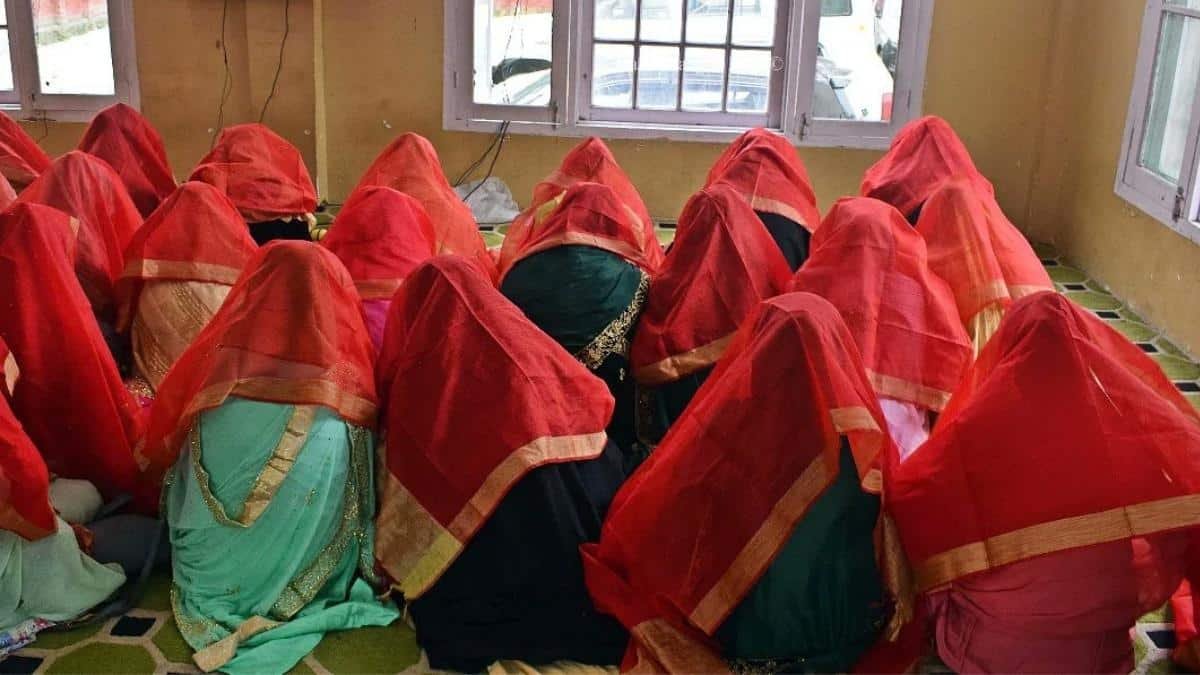
SRINAGAR — In a mass marriage ceremony, at least 51 couples from different areas of Kashmir tied the nuptial knot in Srinagar on Thursday.

The mass marriage ceremony was once again organised by the NGO “We - The Helping Hand Foundation”, which has already solemnized a series of such ceremonies in the last few years.

“We have already borne the marriage expenses of over 400 poor girls and expect to continue to organize more mass marriage ceremonies in future,” said Umar Wani, the Chairman of the NGO, as per news agency KNO.

He added, “This year, we have already borne the marriage expenses of over 60 poor and orphan girls during two mass marriage functions and today, we have borne the marriage expenses of 51 poor girls from different areas of Kashmir.”

Wani said that the main aim behind organising a mass marriage is to promote austerity and simplicity during Nikkah and to help poor, orphan girls to get married who are overage now but unmarried due to social customs like dowry and gold demands.

He further added that they neither disclose the names of the girls who are getting married in mass marriage functions nor do they allow anybody to capture photos of the brides. “Besides that, no male is allowed to enter the rooms where these brides stay,” Wani said, adding that “many rituals have become a headache for underprivileged people and in order to help them with the help of public donations, these poor girls register themselves with the organization, and after verifying their credentials and other details, the NGO starts arrangements for their marriage.”

Wani said that they are also trying to unite the whole Ummah as they are inviting scholars and Muftis of all schools of faith who deliver Nikkah ceremonies.

He further added rich people have to play an important role in promoting simple Nikkah as they should first see whether their neighbours have been able to marry their wards and if all will perform Nikkah simply, then everyone can get rid of this headache.

This post first appeared on The Kashmir Pulse
Powered by Blogger.