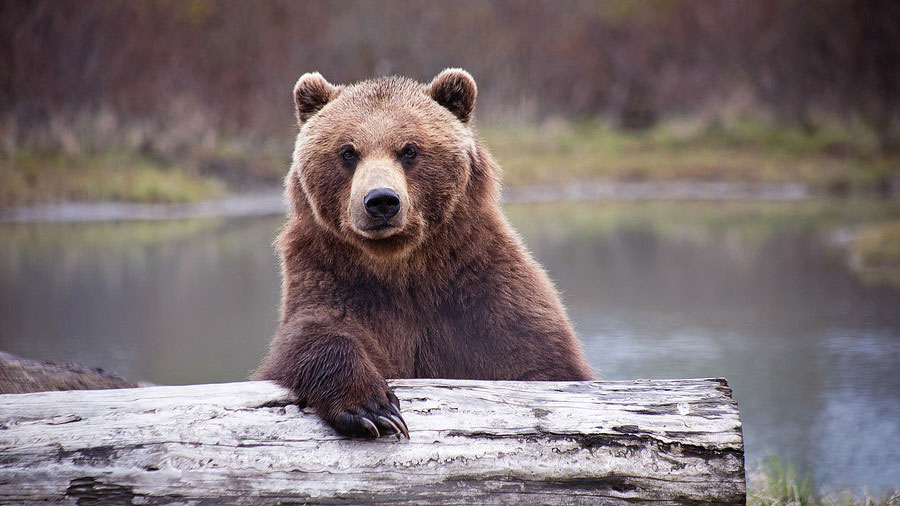
SRINAGAR — A Wildlife official was injured after being attacked by a bear in Parigam area of southern Kashmir's Kulgam district on Sunday.

An official quoted by the local news agency Kashmir Scroll said that a Wildlife official namely Bashir Ahmad Bhat, son of Ghulam Ahmad Bhat and a resident of Devsar area, was attacked by a bear in Parigam area.

He said that Bhat received injuries and was shifted to a local hospital in injured condition.

This post first appeared on The Kashmir Pulse

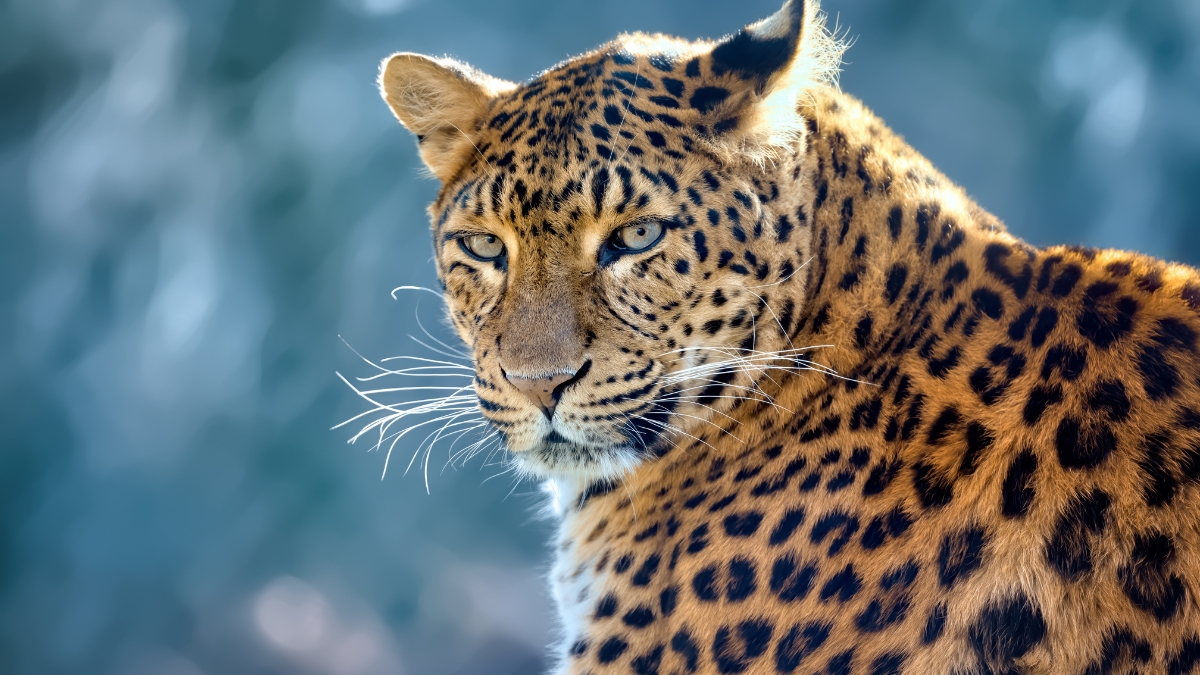
GANDERBAL — A leopard attack left five people injured, including two women and three Wildlife Department officials, on Wednesday in central Kashmir's Ganderbal district.

An official said that the incident occurred during a search operation initiated after locals spotted the leopard in the area.

Fortunately, the authorities managed to capture the leopard alive after a strenuous effort, the official said, adding that the injured have been transported to a nearby hospital for treatment.

This post first appeared on The Kashmir Pulse

BUDGAM — Following another fatal attack on a child in Khansahib area of central Kashmir's Budgam district, the Wildlife Department issued shoot-at-sight orders on Friday to eliminate the "man-eater" leopard.

The Khansahib area has been gripped with fear and anguish after a series of leopard attacks claimed the lives of two minor girls and left a minor boy injured within a span of 17 days.

Toiba Mushtaq, 7, daughter of Mushtaq Ahmad, was taken from the lawns of her home during the evening hours, and her body was later found in nearby bushes. Notably, a 9-year-old girl was fatally attacked, while a minor boy sustained injuries in a separate incident involving a leopard in the neighbouring village of Samsan within the past 17 days.

The rise in human-animal conflicts has left villagers living in constant fear, who had appealed for a shoot-at-sight order from the district administration.

Altaf Hussain, Wildlife Warden (Central), informed the news agency KNO that they have issued the shoot-at-sight order for the "man-eater" leopard.

"Our priority will be tranquilising or trapping the animal, but if these measures fail, shooting will be considered. After assessing the situation, orders have been issued to hunt down the said animal following the necessary formalities," he said.

Over the past 17 days, the Jammu and Kashmir Wildlife Department has conducted extensive search operations, utilising drones in various areas where the presence of the leopard is suspected.

Officials have advised residents to stay indoors, especially during morning and evening hours, to avoid further attacks until the leopard is captured.

Stay indoors, asks Deputy Commissioner Budgam

Earlier, Deputy Commissioner Budgam Akshay Labroo asked people in the area to stay indoors, particularly in the morning and evening, and to take extra care of their children by not letting them go outside.

Speaking to media persons following his visit to Hariwani where a 7-year-old girl was mauled to death by a leopard, the DC advised people to exercise extra caution until the operation is over, especially with regard to their children, and to walk in groups to prevent any more unfortunate incidents.

"I urge people to cooperate with the police, wildlife, and revenue departments to make this operation effective. Only then will people be able to heave a sigh of relief when the leopard that has turned into a monster is swiftly apprehended," he said.

"In order for the wildlife team and police to follow up on leads, sightings can also be reported to our SDPO, SHO and police department, who are already at work," the DC said.

Earlier, speaking to the media persons, SDM Khansahib said the administration is keeping a close eye on the leopard. "Cages had already been set up in Samsan village, but unfortunately, the leopard moved and attacked another child four kilometres away in Hariwani," he said.

He said that under the Deputy Commissioner's direction, a wildlife team has been permanently deployed in the village, and community awareness campaigns have been conducted, advising residents to stay inside during the morning and evening hours and to take extra care of their children until the leopard is apprehended.

Constant fear due to horrific attacks

Describing the horrific incident, Ajaz Ahmad, a local of Hariwani, said that 7-year-old Toiba Mushtaq was taken away from the lawns of her home in the evening, despite her mother being with her when they stepped outside to use the toilet. Her body was later found in nearby bushes.

"Out of the three brothers, only one brother had a child, and she was that, but the leopard also made her its victim. The Wildlife Department hasn't succeeded in catching it, and the district administration has remained a silent spectator," he lamented. "No orders are being given by them to kill this leopard even after two killings. We are living in constant fear, and our children are not able to go out of the house, affecting their education."

Javed Ahmad, another local of Hariwani village, said the recent leopard attacks have left them trembling with fear. "We cannot even step out of our homes without worrying about the safety of our children. Yesterday, after killing a minor girl, the leopard attacked another person in the same village, but he luckily managed to escape," he said.

"This man-eating leopard attacks by entering the yards of houses, and fearing that, a person cannot even step outside the houses. The Wildlife Department has very few staff, due to which they are not able to catch the leopard," he added.

This post first appeared on The Kashmir Pulse
SRINAGAR — The Department of Wildlife Protection has transferred over 200 kanals of land to different agencies in Jammu and Kashmir.

An application filed under the Right to Information Act by social activist MM Shuja reveals that nearly 10 kanals of land from Ramnagar Wildlife Sanctuary has been given to the Ministry of Defense, Government of India for laying underground optical fibre cable for Indian Army by the Director General of Signal, Ministry of Defense, GOI.

The data, as per the news agency KNT, further reveals that the National Highway Authority of India has secured over 187 kanals of land owned by the Department of Wildlife Protection at two places. This land has been transferred to construct a four-lanning on the National Highway in Ramnagar and the development of Package 17 of the Delhi-Katra Expressway.

Nearly 20 kanals of land have been secured by the Government of India under PMGSY for the construction of a road from Mantlai to Gamsadu and again for the construction of a road from Barkunda to Kharwa.

The data reveals that over 13 kanals of land belonging to the Department of Wildlife Protection have either been encroached on or are in the possession of private or government agencies.

This post first appeared on The Kashmir Pulse

SRINAGAR — A bear attack in Bandipora district resulted in the death of at least eighteen sheep and left twenty-five others injured during the intervening night of Wednesday and Thursday, according to officials.

Officials disclosed that the bear attack occurred at Check Arsalan Khan village, inflicting fatalities and injuries among the livestock on the intervening night.

The authorities have confirmed the incident and stated that a team from the Wildlife Department promptly arrived at the site to assess the extent of the losses incurred due to the bear attack.

"A Wildlife Department team responded to the situation and has evaluated the damage caused by the attack," the officials added.

Authorities are working diligently to address the repercussions of the bear attack and offer necessary assistance to affected livestock owners.

This post first appeared on The Kashmir Pulse

GANDERBAL — The Department of Wildlife Protection J&K has warned of strict action as per law involving imprisonment as well as a fine against anyone involved in capturing owls or any kind of hunting activity. The notice in this regard came following the reports of several incidents of alleged capturing of owls from some parts of the valley over the past month.

After a few photographs of the owl species, especially the Barn Owl and Tawny Owl, being captured surfaced on social media, the Wildlife department issued a notice warning that capturing, coursing, snaring, trapping, driving or baiting of any wild animal, including wild birds, comes under the definition of “hunting” which is a punishable wildlife offence under Section 51 of the Wildlife (Protection) Act, 1972.

“A person committing such an offence shall on conviction be punishable with imprisonment for a term which may extend to three years or with fine which may extend to 20,000 rupees or both,” the department warned.

Anyone coming across a wild bird which has been accidentally injured or seems to be in distress should not attempt to handle or rescue the bird on his/her own but immediately contact the Wildlife department on the phone number 9796171787 or through email rwlwkashmir@gmail.com, according to the notice.

Why do people catch owls?

Dr Bilal Nasir Zargar, a wildlife biologist, while talking to the news agency KNO, said, “There is a myth in Kashmir that keeping an owl's nails wards off evil. People catch them and cut their nails off and they eventually die, due to which the population of owls has declined drastically.”

Owls play a very important role in controlling the rodent population. They are phenomenal in pest control and help maintain the food chain. Owls also get rid of diseased rodents and stop the spread of zoonotic diseases.

Dr Bilal said the warning by the Wildlife Protection Department is not enough because there are some species of owls out there that are threatened at this point in time and they may not be able to survive for much longer due to hunting or their habitat being destroyed. “As a result of this, they are struggling to be able to survive out there in the wild. It isn’t too late though to help these owl species to have a future. However, in order for that to happen, we need to acknowledge what the problems really are, then we can be a part of the solution and not the problem,” he said.

What can be done to save them?

The wildlife botanist said that critical conservation of habitat with prior research and social awareness by educating the public about an owl’s role in the environment can save them. “Building social awareness against superstition will help implement stringent legal action against poaching and trading. There is no place for them to nest and breed due to rapid urbanisation. Their habitat must be protected, and their nesting places saved. We need to study them to learn such details,” he suggests.

Dr Bilal Nasir, who holds a Doctorate degree in Botany, was the first to record a long-eared owl in 2019 at Manasbal. He has been observing the behaviour of owls for the last five years and is one of the most famous and passionate nature photographers in Kashmir. “I enjoy taking photos of birds and animals in jungles and forests. I have travelled extensively to many national and international sanctuaries,” he told KNO.

Dr Bilal has educated and inspired thousands of people towards the conservation of nature and has received many awards.

Another expert, while talking to KNO, said it is a myth that owls can rotate their heads 360 degrees. “They can actually turn their necks 135 degrees in either direction which gives them 270 degrees of the total movement,” he said, adding, “Not all species of owls are nocturnal. Many times you might just spot an owl in the day peeping out from its home on the tree. When there is a shortage of food, owls may hunt at any time during the day. They are carnivorous and eat rodents, small and medium-sized mammals, insects, fish, and other birds. Sometimes, they even eat smaller owls.”

Divisional Forest Officer (DFO), Wildlife Department, Ifshana said owls are a kind of scheduled species and capturing these birds breaches the Wildlife Protection Act. “The recent reports suggest that only two owl-capturing incidents took place following which an advisory was issued for their protection,” she told KNO, adding, “Capturing owls is a severe crime. Anybody involved in it will be held under the relevant sections of law and a case will also be filed against such a person.”

This post first appeared on The Kashmir Pulse

BARAMULLA — After giving sleepless nights to locals and keeping wildlife teams on their toes for more than a fortnight, the “man-eater” leopard was on Sunday “hunted down” in Uri area of north Kashmir’s Baramulla district.

The wildlife team and police eliminated the man-eater wildlife beast after it attacked a woman namely Dilshada Begum (30) wife of Farid Ahmad of Latchipora. While the woman was removed to GMC Baramulla for medical treatment, teams of wildlife and police, camping in the area from last more than a week, achieved success in eliminating the beast.

Officials of the Wildlife department told the news agency GNS that the movement pattern of the beast was highly dynamic and had been closely watched.

The officials said that after the killing of two minors, several teams were deputed to several spots in Uri and launched search operations to locate the animal. The animal had killed at least two minors before the officials ordered the “hunting down” of the leopard.

On September 16 at 7:00 PM, a girl child namely Munzia Beigh daughter of Imran of Jabadar Lachipora Boniyar (Uri) was lifted and killed by a leopard. Her body was recovered from a nearby forest area late in the night on the same day.

Subsequently on September 22, at about 7:30 PM, another child namely Ali Hussain son of Abbas Hussain of Dani Cholan Boniyar (Uri) was lifted and killed by the leopard and subsequently, his body was retrieved after several hours of search from the forest area.

This post first appeared on The Kashmir Pulse
Powered by Blogger.