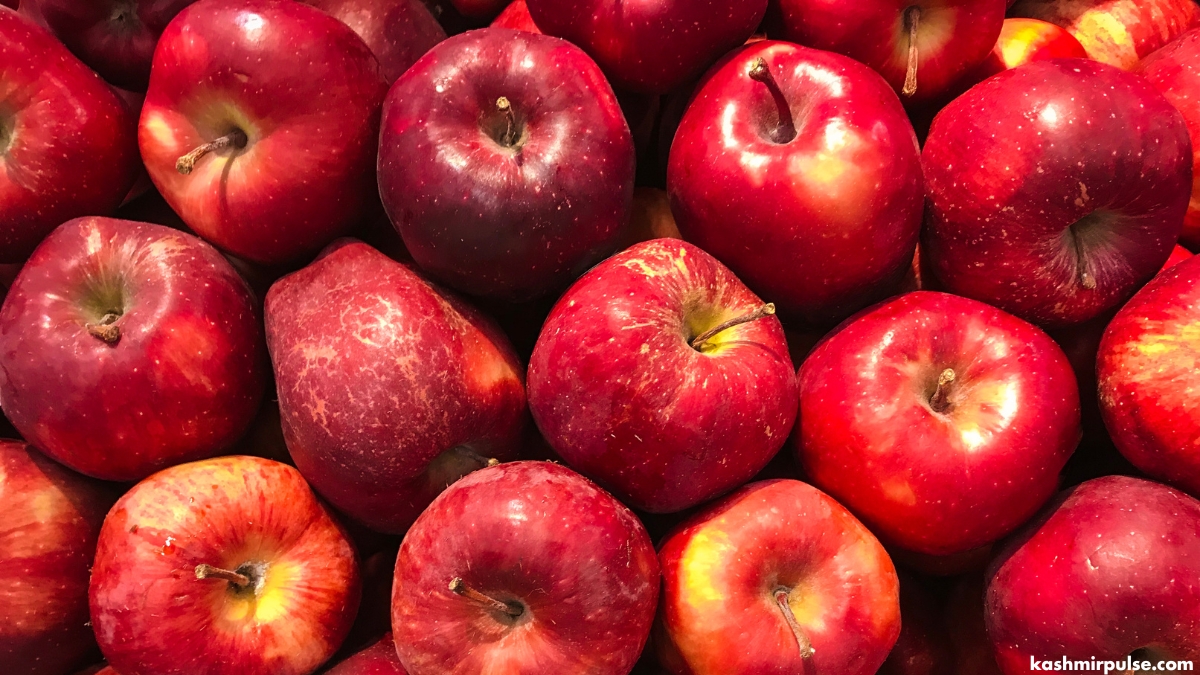
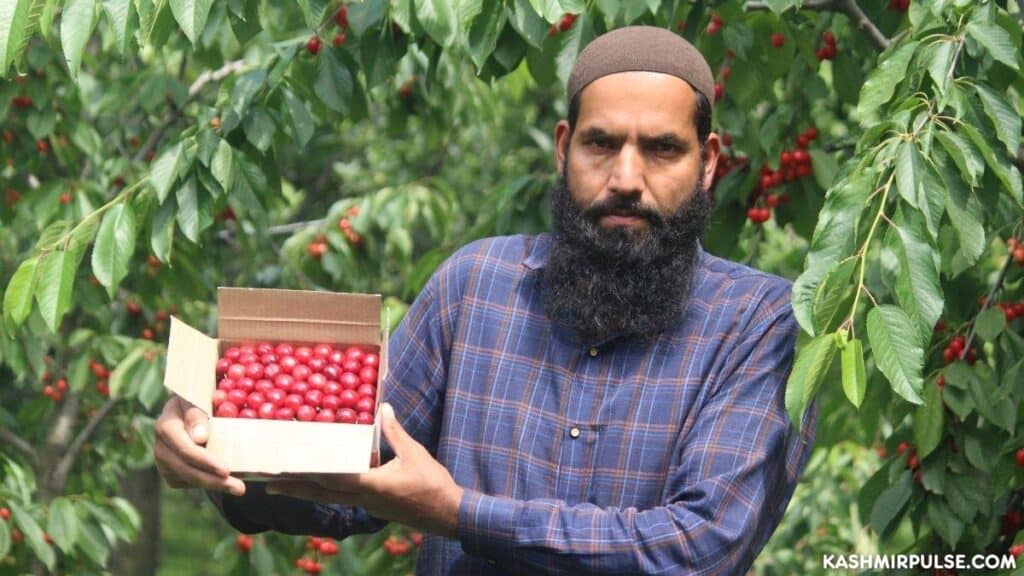
SRINAGAR — With the political situation in Bangladesh showing signs of stabilisation, Kashmir's fruit industry has cautiously resumed its apple exports to the country, particularly the American Apple variety.

The development comes after weeks of uncertainty when unrest in Bangladesh had severely impacted trade, leading to concerns among Kashmiri fruit growers and dealers.

Speaking with the news agency KNO, Shahid Choudhary, a senior member of the fruit growers body in Kashmir said the resumption of apple exports to Bangladesh is a much-needed respite not only for him but for all the growers who work entire year to ensure a quality produce for foreign markets.

“It is a much-needed relief for both dealers and growers. The recent unrest in Bangladesh created uncertainty among all of us. We were unsure of any orders this year,” he said.

Choudhary said the fresh resumption of the apple export trade was a welcome development and has spread happiness among the growers and dealers.

Bashir Ahmad Bashir, the president of the apex fruit body representing Kashmir's fruit growers, said that in recent days, shipments of the American Apple varieties have started reaching Bangladeshi markets.

He, however, noted that while the export market has not yet fully recovered, there was optimism among growers. "We are hopeful that in the coming days, the volume of orders from Bangladeshi buyers will increase," Bashir said.

Notably, during the harvest season in Kashmir, several apple traders from Bangladesh camp in Kashmir to buy and meet the demand for Kashmiri apples in their homeland.

According to Choudhary, Bangladesh is an important market for varieties of apples from Kashmir, especially American Apples.

"We export over 70 percent American Apple variety produce to Bangladeshi markets," he said.

It is pertinent to mention here that after the Union finance ministry ordered the lifting of additional duties on apples, almonds, chickpeas and walnuts in September last year, the Kashmir apple industry is facing an unprecedented crisis and grappling with low demand due to the influx of foreign apples in the Indian markets.

Several mainstream politicians in the region have urged the government to reconsider the decision, saying it impacts the growers in Kashmir.

As apple revenue has been one of the key GDP contributors in J&K, fruit dealers have been urging the government for a long time to slash the export duty on apples, so that they can export the fruit to various countries.

This post first appeared on The Kashmir Pulse

SRINAGAR — The ongoing dry spell and heatwave in Kashmir have left fruit growers deeply concerned, who fear severe impacts on the region's horticulture sector. The sector, which is a vital source of income for many in Kashmir, is experiencing stress due to the lack of rainfall and high temperatures.

Speaking to the news agency KNO, growers expressed their worries about the prolonged dry weather's effects.

Mohammad Shaban Dar, an orchardist from Shopian, said the intense sunlight with the absence of rain over the past two months is adversely affecting fruit trees and their produce. He said that the lack of moisture is causing heavy fruit fall and affecting the quality and shine of the fruit. “This hampers its competitiveness in the market against apples from other countries,” he said.

Javid Ahmad, a horticulture expert, explained that the high temperatures and lack of rainfall are stressing the fruit trees, especially apple orchards, which are crucial to the local economy. “This could lead to smaller fruit sizes, sunburnt produce and an overall reduction in yield,” Ahmad said, adding that the lack of soil moisture could lower the quality of the fruit, which could lead to a decline in market prices and profitability for growers.

Experts are also concerned about the long-term health of the orchards if the current weather conditions continue, as most of the orchards in the region are rain-fed and lack proper irrigation facilities.

Bashir Ahmad Basheer, chairman of the Kashmir Valley Fruit Growers Cum Dealers Union, said the prolonged dry spell is likely to impact the horticulture sector negatively. “This will lead to losses due to reduced fruit quality,” he said.

Director Horticulture Kashmir, Zahoor Ahmad Bhat said that around 60 percent of orchards in Kashmir are rain-fed, and the ongoing dry conditions could result in undersized fruit, heavy fruit fall and a decline in quality.

“Such conditions not only affect the current season's yield but can also reduce the fruit-bearing capacity of trees in future seasons, which damages the apple trees that growers work hard to maintain,” he said.

The horticulture sector is a significant contributor to the State Gross Domestic Product (SGDP) of Jammu and Kashmir, with a share of about 9.5 percent. It also generates approximately 8.50 crore man-days of employment annually.

The average apple production in Kashmir ranges from 20 to 25 lakh metric tonnes per year, with half of Kashmir's population directly or indirectly dependent on the apple industry, according to the 2017 economic survey in J&K.

This post first appeared on The Kashmir Pulse

SRINAGAR — Apple growers in several areas of southern Kashmir are increasingly concerned as a leaf miner pest continues to infect their orchards for the fourth consecutive year.

The farmers told the news agency KNO that the pest has wreaked havoc in their orchards over the past three years. “Wherever the pest was found in the last three years, the produce was less shiny and smaller in size, as this insect sucks all the nutrients from the trees,” they said.

Zahoor Ahmad, a fruit grower from the Dachnipora area of Anantnag, described how the pest lays web layers from one branch to another, even reaching the trunk and fruit. “This pest, numbering in millions, is sucking all nutrients from the tree, causing the fruit to remain small. It damages leaves and trees as well,” he said, adding that visitors to the pest-affected orchards have complained of allergies and other issues with their throats and nose.

Initially found in Shopian’s Zainapora, the pest has spread to Zainapora, Litter, Watchi, Yaripora, Lassipora, Tahab and Bijbehara areas over the years. This season, orchardists from various parts of south Kashmir have raised alarms about the pest, despite following horticulture advisories to combat it.

The growers have called for urgent attention from the horticulture department and experts to prevent further damage. “Even after spraying insecticides several times every year, these pests keep reappearing,” they said, adding that the affected orchards have reported premature fruit fall, along with reduced fruit quality and size.

Senior scientists from Sher-e-Kashmir University of Agriculture Science and Technology-Kashmir (SKUAST-K) have identified the pest as a “leaf miner” – an invasive insect that likely arrived four or five years ago. They said that while leaf miners were reported some time ago, their presence has significantly increased in the past two years. Despite this, the pest is manageable if growers consistently follow advisories, they added.

The horticulture department has called for a collective approach to managing the pest and advised spraying insecticides across all affected orchards to prevent any residual population from serving as a source of infestation the following year.

Recommendations for farmers include installing sticky traps 10 meters apart for monitoring and surveillance of the apple leaf blotch miner (ALBM), maintaining proper sanitation practices within and around the orchards, and installing pheromone-baited traps at a density of 8-10 traps per hectare.

They should spray one of the following insecticides at the recommended dosage: Thiamethoxam 25 WG (50g per 100 litres of water), Flubendiamide 39.35 SC (40ml per 100 litres of water), Chlorantraniliprole 18.5 SC (100ml per 100 litres of water), Thiacloprid 21.7 SC (60ml per 100 litres of water), Lambda Cyhalothrin 5 EC (50ml per 100 litres of water), Pre-mix formulation of Thiamethoxam 12.6 + Lambda Cyhalothrin 9.5 ZC (50ml per 100 litres of water), and pre-mix formulation of Imidacloprid 6 + Lambda Cyhalothrin 4 SL (50ml per 100 litres of water).

The department has advised farmers not to mix insecticides with any other plant protection chemicals or plant nutrients.

This post first appeared on The Kashmir Pulse

PULWAMA — The fruit growers and traders in Kashmir who had kept their produce in cold storage units said they are facing huge losses as rates have plummeted to an all-time low.

Speaking to the news agency KNO, the growers and traders said they have been facing huge losses as rates have been going down with each passing day. They said currently apple boxes are being sold at Rs 300-400 per box while the rates of C-grade apples in the main season were more than that.

Mudasir Ahmad, a fruit trader, said that he had purchased around 10 thousand apple crates at around Rs 1000-1500 per crate and kept them in cold storage units in Lassipora Pulwama. He said currently his apple crates are fetching just around Rs 300-400 only due to which he faces a loss of Rs 1000-1200 per crate which is around one crore rupees of loss.

"I have been doing fruit business for the last 10 years but have earned just a few lakhs in the last 10 years as I have been facing a loss in crores which has left me and my family in depression," Mudasir said, adding that same is the case of other fruit traders who have purchased and kept their produce in CA stores.

Traders said they stopped packing their produce for some time but are aware that they can't keep it there for a long time. "Six to seven months have already passed since we kept it there," they said.

"Even the C-grade apples fetched more returns in the main season and this is an all-time low rate of produce kept in cold storage units," they said. "This is because apples in bulk quantity have been reaching Indian markets from different countries, thereby denting local apples."

Meanwhile, cold unit holders sought the government's intervention under these conditions. "Otherwise, this may have a negative impact on cold storage units," they said.

Anjum Abrar, a manager of one such unit, said there is a positive impact of cold storage units that they maintain the supply and demand chain, which benefits growers by ensuring favourable returns. "If the produce kept in cold storage units won't fetch good returns, then how will people prefer to keep their produce in CA stores?" he asked.

"The government must intervene in stopping the import of apples so that Kashmiri growers and traders fetch good returns," Abrar said.

He said that the cold storage units have been employing thousands of people. "Neglecting this sector would impact the livelihoods of thousands of workers," he said.

This post first appeared on The Kashmir Pulse

SRINAGAR — A remarkable trend is unfolding in Kashmir with farmers and horticulturists embracing exotic apple plant varieties over traditional ones. As per the news agency KNO, this surge in interest is reshaping the agricultural landscape of the region, known for its traditional apple cultivation.

In recent years, there has been a noticeable shift towards cultivating exotic varieties of apples, spurred by changing consumer preferences and evolving market dynamics.

Varieties including Red Velox, Pink Lady, Redlum Gala, Scarlet II, Golden Delicious and Jeromine are ruling the roost in Kashmir these days. These varieties, known for their distinctive flavours, textures, and extended shelf life, are increasingly finding favour among consumers both domestically and internationally.

Aarif Bhat, a progressive farmer from Baramulla district, shares his experience, "I have been cultivating traditional apple varieties for decades, but I decided to diversify my orchard by introducing exotic varieties. The response has been overwhelming, with buyers showing great interest in these apples."

The shift towards exotic apple varieties is not only driven by consumer demand but also by economic factors. Farmers are recognizing the potential for higher returns associated with cultivating these premium varieties.

“A box of Red Velox apples costs almost 30 per cent more than the traditional variety. So, growers are increasingly shifting from traditional to exotic varieties to make more money,” said Mohammad Shahbaz, an apple dealer.

As such various entrepreneurs have emerged in the valley who grow the nurseries of such varieties to sell to growers during the season.

“We grow varieties of apple plants in the nursery. For the last five years, we have been associated with the farming of these varieties and growers come from various districts to buy saplings from our nursery,” said Abdul Quyoom Bhat, an entrepreneur.

Pertinently, the government too is encouraging and promoting the high-density apple plantation in Kashmir to grow the income of farmers.

The Department of Horticulture has set a target to bring 5500 hectares of land under the Modified High-Density Plantation Scheme in Jammu and Kashmir by 2026.

According to government figures, Kashmir exports more than 20 lakh metric tonnes of apples every year, and the horticulture industry is pegged to be worth around 9,000 to 10,000 crore including the employment it generates. Kashmir produces 75 per cent of the total apple production in the country.

This post first appeared on The Kashmir Pulse
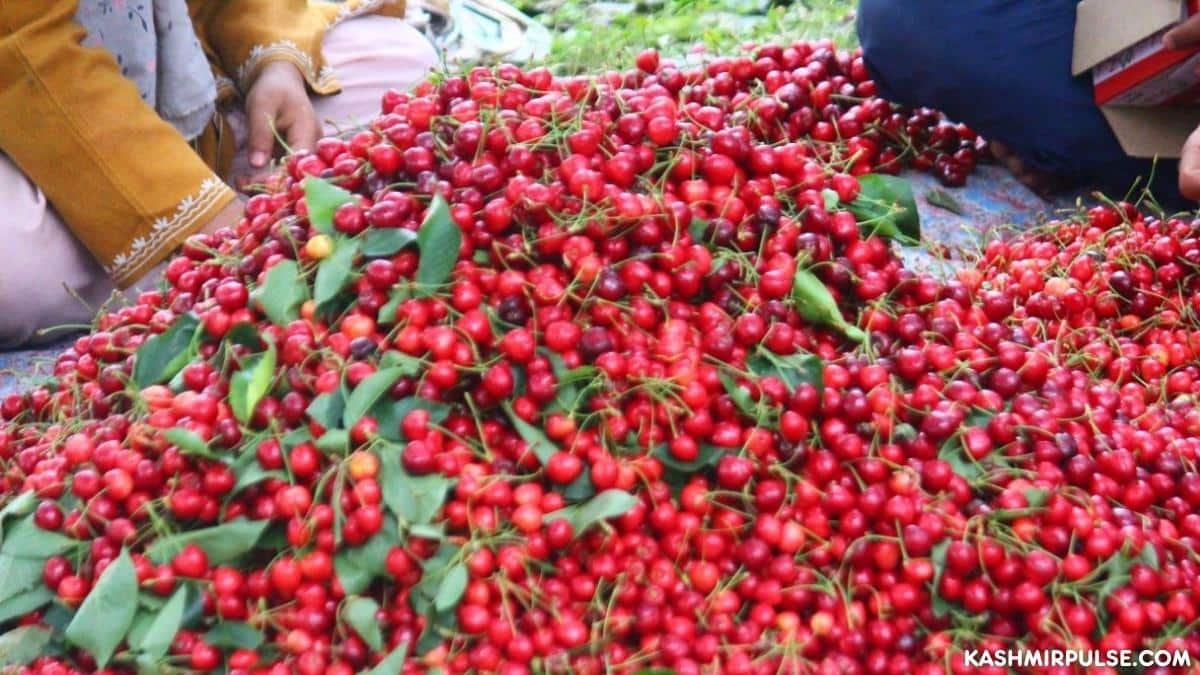
SRINAGAR — In order to protect the interests of the country's apple producers, the Central government has amended its import policy for apples by introducing Minimum Important Price (MIP) and banning the import of apples costing below Rs 50 per kg.

According to an official notification issued by the Ministry of Commerce and Industry, as per the news agency KNO, the import of apples is now prohibited and import is free only if CIF value is above Rs 50 per kg.

"In exercise of powers conferred by Section 3 read with Section 5 of the Foreign Trade (Development and Regulation) Act, 1992, read with paragraph 1.02 and 2.01 of the Foreign Trade Policy 2023, as amended from time to time, the Central government hereby amends the import policy condition under ITC (HS) 08081000 of Chapter-08 of ITC (HS), 2022, Schedule-I (Import Policy),” reads the notification.

Import of apples under ITC (HS) 08081000 is now 'Prohibited' wherever the CIF Import Price is less than equal to Rs. 50/- per kilogram. However, these Minimum Import Price (MIP) conditions shall not be applicable to imports from Bhutan.

Notably, the apple growers of J&K and other parts of the country have been raising the issue of free import of apples from different countries as it was decreasing the rate of apples being produced here.

Several fruit growers' associations have been advocating and writing to higher-ups for an import cap to protect the country's apple farmers.

Ghulam Hassan Nengroo, President Dachnipora Fruit Growers Association said that the horticulture industry is in a critical stage in Kashmir as it has faced many challenges in the last few years. "The major challenge to this industry was importing apples from Iran and other countries without any tax and if the government did not intervene, this industry would collapse."

He said that the government has intervened at the right time and they are hopeful the order will be implemented on the ground to implement growers.

Chairman Kashmir Valley Fruit Growers Cum Dealers Union Srinagar, Bashir Ahmad Basheer said that if Iranian apples are still imported, there should be a 100% import duty on them so that they do not affect markets here.

Pertinently, Kashmir on average produces over 20 lakh metric tonnes of apple every year, a figure that in some years touches 25 lakh metric tonnes.

The 2017 economic survey in J&K said that half of Kashmir’s population is directly or indirectly dependent on the apple industry and over 3.5 lakh hectares are under apple cultivation.

This post first appeared on The Kashmir Pulse
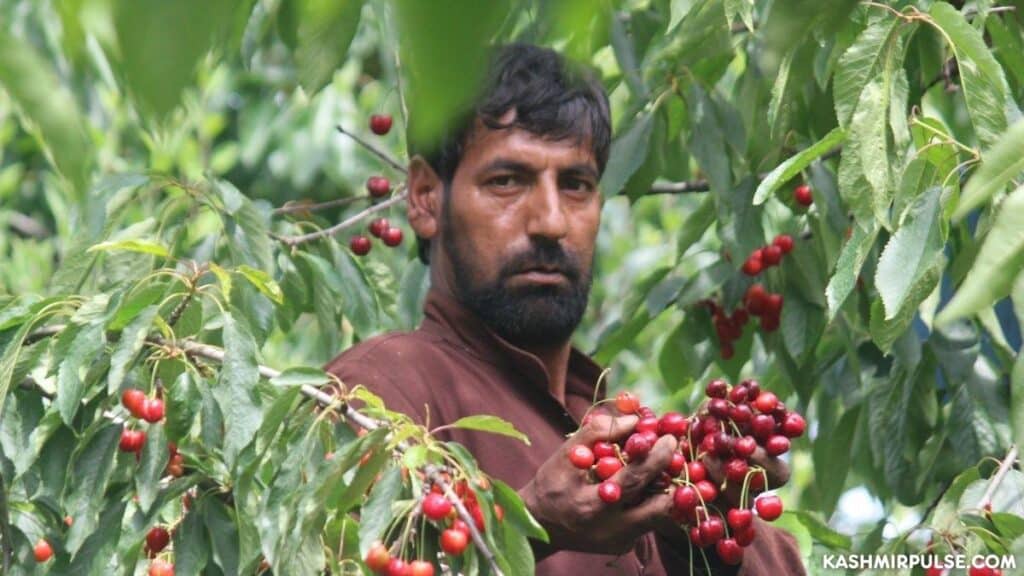


PULWAMA — In south Kashmir’s Pulwama district, where apples and other fruits are cultivated on a large scale, there are thousands of canals in the district where only almonds are cultivated. The people of these areas are associated with almond cultivation for centuries. But due to the lack of attention by the Horticulture department, almond cultivation is on the verge of decline.


Locals from the district said that nobody from the authorities is willing to accept the contribution of this industry. As a result, the almond industry is vanishing from the map of Jammu and Kashmir.


“Wild animals have created havoc, damaged all these almond trees, but nobody cares and comes forward,” said a local from Trichal village of the south Kashmir district. "Instead of focusing on this industry, different types of plants are introduced."


The local residents from Newa, Parigam, Zadoora and Rahmoo said that wild animals have completely damaged their almond trees. “This land is good for almond cultivation and a little bit of attention from the government can flourish this industry,” said Abdul Gagar.


The locals accused the Horticulture department of negligence, saying not a single officer visited these villages where the almond industry can flourish.


This post first appeared on The Kashmir Pulse
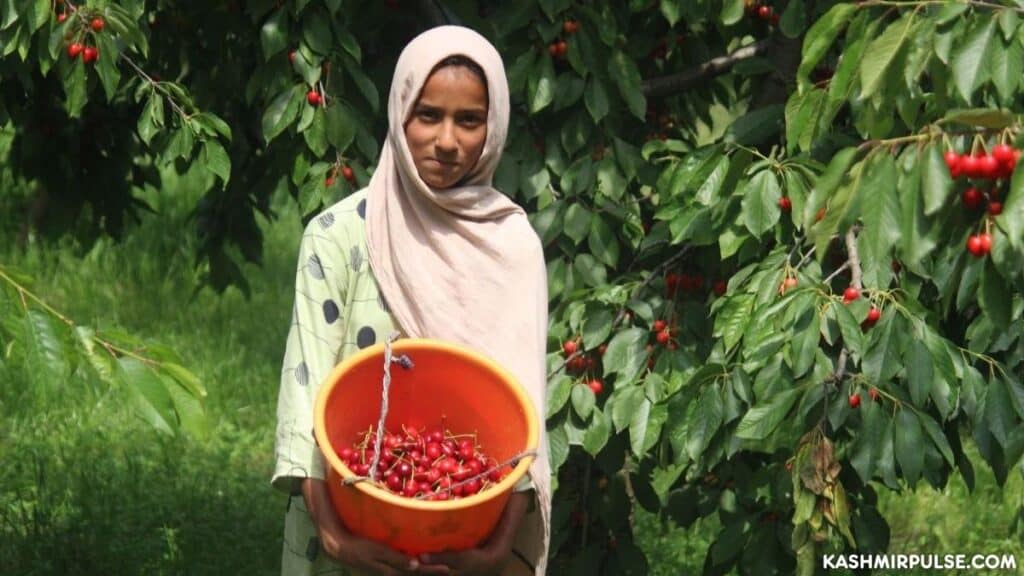
SRINAGAR — Despite the bumper cherry crop this year, very low rates of the produce are marring the hopes of growers across the Kashmir Valley.

Growers told news agency Kashmir News Observer (KNO) that the harvesting of the cherry crop in Kashmir is underway and despite early hot weather, the farmers are pleased with the produce. However, the prevalent low prices have become a cause of concern for farmers.

Despite bumper crop, low demand mars hopes of cherry growers in Kashmir

Mohammad Yousuf, a grower from Shopian, told KNO that the crop is at an all time low and farmers aren't even fetching the amount they spent on spraying and fertilizers.

“Despite COVID-19 last year, we were selling a cherry box containing 2 kg cherry for Rs 300 but this year the same box with better quality cherry is fetching just 90 to 100 rupees,” he said.

Despite bumper crop, low demand mars hopes of cherry growers in Kashmir

Bashir Ahmad Basheer, chairman Kashmir Valley Fruit Growers and Dealers Union, while talking to KNO, said that this year due to hot weather in spring, cherry ripened a month early and produce was ready when there was bulk produce of cherry in Himachal Pradesh.

Despite bumper crop, low demand mars hopes of cherry growers in Kashmir

“Everything depends on supply and demand but cherry from both Himachal and Kashmir reached the market at the same time, so there was very less demand and rates are around 60 to 70 percent lower than last year,” he said.

Despite bumper crop, low demand mars hopes of cherry growers in Kashmir

Moreover, hailstorms, rains and windstorms during evening times every day and cherries coming from Italy and other countries are lowering the demand thereby affecting farmers, he said.

Despite bumper crop, low demand mars hopes of cherry growers in Kashmir

“We have good consumption of cherry this year in the Valley due to good tourism flow but it isn't helping farmers in increasing the rates of cherry,” he added.

This post first appeared on The Kashmir Pulse

SRINAGAR — In wake of the deficient rainfall across Jammu and Kashmir in the past over one month, the experts here have suggested the farmers take all the necessary steps to ensure that their crops are not damaged, which would lead to huge losses to them.

According to the news agency Kashmir News Observer (KNO), the orchardists have been advised to take all the necessary measures for both the crops including standing crops as well as Kharif crops.

A top official in the Agriculture department told KNO that so far there has been no damage to the crops due to the deficient rainfall, but still, the advisory has been issued to ensure there is no damage to the crops in case the dry spell persists.

A meeting of experts was held recently under the chairmanship of Vice-Chancellor of Sher-e-Kashmir University of Agricultural Sciences and Technology (SKUAST-K) to formulate an advisory for agriculture and horticulture in view of the current prevailing above normal temperatures and rainfall deficit.

“For oil seeds (Mustard), stage Siliquae (Pod) formation, light irrigation in case of availability of irrigation, in case of showers, no irrigation is required,” the document, a copy of which lies with KNO reads, adding that for Oat in the vegetative stage, apply light irrigation if the available application of a top dose of nitrogen at the rate of 4.25kg/kanal where sufficient rainfall is received or irrigation is available and for flower initiation stage, the orchardists have been asked to apply light irrigation on priority.

For wheat in the stage of booting/flowering, apply zinc at the rate of 2kg in 400 litres of water for 20 kanals or Boron at the rate of 600gm in 400 litres of water for 20 kanals, it said, adding that for peas in the stage of flowering/pod formation, the orchardists have been asked to wait for the shower or give light irrigation, if available, with weeds to be cut and put in place as mulch.

For vegetable crops, cole crops and root crops in stage flowering/seed/formation, they have been asked to do light irrigation.

For horticultural crops (Apple) in the petal fall stage, the growers have been asked to start drip irrigation in HDP for half an hour in the morning and evening hours. Organic mulching of individual trees, spraying of fungicide at petal fall stage before rains or immediately after rains and also apply calcium chloride 0.3% in orchards at the fruitlet stage.

This post first appeared on The Kashmir Pulse
Powered by Blogger.