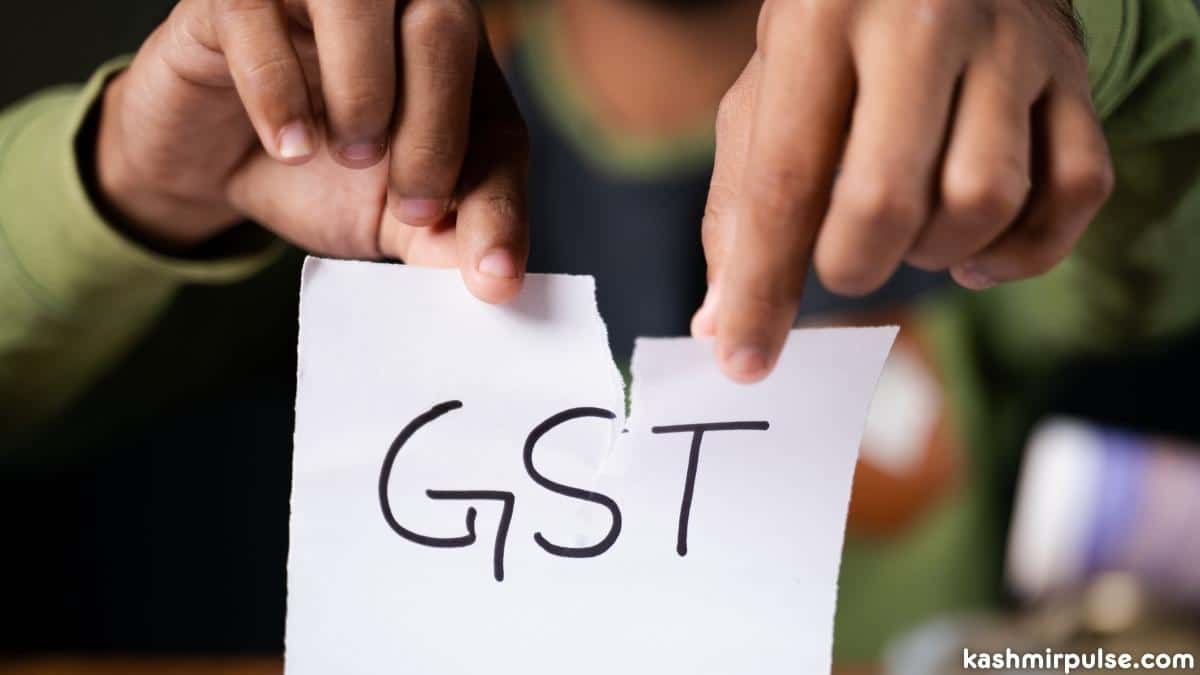
JAMMU — The Administrative Council (AC), which met here under the chairmanship of Lieutenant Governor, Manoj Sinha, approved a proposal of the Finance Department for granting amnesty for the settlement of Tax arrears about pre-GST regime.

Rajeev Rai Bhatnagar, Advisor to the Lieutenant Governor; Atal Dulloo, Chief Secretary; Mandeep Kumar Bhandari, Principal Secretary to the Lieutenant Governor attended the meeting.

This step is going to provide relief to the tax-payers in the form of waiver of interest and penalty besides recovery of the blocked revenue to the government.

Earlier, all dealers could not take benefit of the erstwhile amnesty scheme issued vide Government Order No. 39-FD of 2018; Dated 05-02-2018 due to various reasons including the COVID-19 pandemic.

As such, a large number of representations were received from the trade/industry sector for granting a one-time opportunity to the dealers for settlement of the outstanding arrears under the pre-GST tax legislation. The amnesty scheme provides relief to dealers on:

i) 100% waiver of penalty and interest under J&K General Sales Tax Act, 1962, and Central Sales Tax Act, 1956, for assessment/re-assessment up to 2017-18 (07-07-2017 for all and 31-08-2017 for liquor dealers);

ii) 100% waiver of penalty and interest under J&K Value Added Tax Act, 2005, and Central Sales Tax Act, 1956, for assessments up to 2017-18 (07-07-2017);

iii) Waiver of interest and penalty in (i) and (ii) subject to 100% payment of principal tax in the manner and within the prescribed time as per the scheme to be notified by the Government;

iv) Settlement of demands for Industrial Units under repealed J&K Value Added Tax Act, 2005 (up to 2017-18) (upto 07-07-2017), J&K General Sales Tax Act, 1962 (up to 07-07-2017 and 31-08-2017 for liquor-dealing units), and Central Sales Tax Act, 1956, in respect of assessed/re-assessed demands including yet to be assessed cases with certain conditions to be notified in the scheme.

This decision on the part of the government will result in minimising tax dispute cases and winding up pre-GST cases etc. The time limit for receiving the applications for this amnesty will not be more than six months from the date an order is issued in this regard.

This post first appeared on The Kashmir Pulse

SRINAGAR — The fresh directive that has imposed five per cent Goods and Services Tax (GST) on general items has left the common people fuming with traders, consumers, fruit and vegetable merchants demanding immediate rollback of GST on daily-use items.

The people including traders, consumers as well as fruit and vegetable growers, as per the news agency KNO, said that the decision is unfair to the people, especially to those who belong to the downtrodden section of society.

Sheikh Ashiq, a businessman, who is also heading one of the trade bodies, said that the public opinion about the general and consumable commodities with regard to the levying of GST on such stuff should be addressed.

“There was a thought behind when the taxes on general commodities were exempted. The decision is expected to lead to the sufferings of poor people and thus the government should consider exempting the GST on consumable commodities,” he said.

He further said that by exempting the GST on consumable commodities, poor people would be able to get foodstuff at low rates.

Bashir Ahmad Bashir, who is heading Fruit Growers and Dealers Association in Kashmir, said that both rich and poor consume the foodstuff including the fruits and such a decision would impact everyone including the fruit growers as well.

“Levying GST on general items would affect the fruit business badly. We want the government not to levy GST on the general items,” he said.

Aamir Ahmad, one of the consumers, said that as the ration being provided by the government is already low, he buys rice from local shops every month and unfortunately by the fresh directive, he would be forced to get ration at an exorbitant rate.

The consumable items should be exempted from the GST so that the people here could heave a sigh of relief. “The rates of consumable commodities are already high and the poor people are finding it difficult to buy the foodstuff. However, the fresh decision at the same time is all set to push the downtrodden section to the wall,” he said.

The consumer further added that even from fruits to vegetables, rice to wheat, the prices are all set to rise soon after the decision of levying GST on general items is implemented. “There is a need to understand the sufferings of people and the decision in this regard should be taken at the earliest so that the people would get some respite,” he said.

This post first appeared on The Kashmir Pulse

The Directorate of Advertising and Visual Publicity (DAVP), the Government of India's official agency for advertising by various Ministries and organizations, has introduced new regulations for awarding advertisements to print media. In this context, there are many newspapers which have not been getting ads and have been running at losses.

Earlier, there was no Goods and Services Tax (GST) on newspapers but the ruling government also made GST applicable for the print media.

In this connection, there is a lot of financial burden on the print media, including newspapers, magazines and periodicals. So, we explore five alternate sources of income for print media to lessen their dependence on government-sponsored advertisements.

1. Subscription-based model

The print media needs to work on exclusive news from its regional areas so that the local people can find it informative. By publishing news that is exclusive, the newspapers can find a mention in the conversation of the local people and see its popularity graph increase.

This will allow the newspaper, magazine or periodical to set a higher price than others and earn higher profits from the sale of its copies.

Also, the yearly subscription-based model should be implemented to earn a good revenue just from the sale of printed copies by offering some discount on the same. For instance, if a copy of a newspaper is priced at Rs 15 and there are 5000 subscribers for the same, the print media house can earn anywhere between 25 to 30 lakh rupees, without any ads.

However, the print media needs to analyze whether its content is of such a quality, that can lure the people to pay for its subscription. This is also applicable in the bid to attract local businesses for offering advertisements.

2. Online news portal

Another alternative way of income can be an online news portal, which can also help the print media to capture a new audience on the online platform.

However, the news website needs to be designed by a professional company like Adroit Cyber World which has specialized knowledge and skills in news websites.

There are multiple sources of revenue for websites including Adsense Ads and Ads on YouTube Channel.

3. Tutoring classes

Although this might seem to be out of context as far as print media is concerned, it is a reality in today's world that people want to learn about the things that matter to them and the first medium is either Google or YouTube.

If you can share your experience in the form of video lectures or offline classes, like photography classes, it would not only fetch you a good revenue but will also attract a young population to the profession.

4. Coffee table book

The prospect of a coffee table book can also be a source of revenue for the publishers in print media.

A coffee table book, also known as a cocktail table book, is a large, generally hard-covered book designed to be displayed on a table in an area where visitors are entertained and from where it may be used to spark discussion or pass the time.

To gain some understanding of the potential earnings from a coffee table book, let us assume that you make a book on "Top 50 doctors in India", you can ask for a publishing fee from the doctors who will be featured in the book.

This post first appeared on The Kashmir Pulse
Powered by Blogger.