India's G20 presidency provides a pivotal moment for the nation to embark on a transformative journey towards modernization. While India grapples with a myriad of challenges, recent years have witnessed significant changes across all sectors of society. However, there remains much work to be done, particularly in the realms of economic equality and healthcare, demanding a comprehensive overhaul. By addressing these critical areas, the doors to India's overall development can be flung wide open.

It is an undeniable fact that in a country where economic inequality is minimized, the likelihood of lawlessness diminishes. Violence often emerges when a select few amass wealth at the expense of the majority. The G20 presidency presents an opportunity to combat the menace of economic insecurity and the burden of out-of-pocket healthcare expenditures.

Unfortunately, the majority of the population remains unable to access quality healthcare services. The G20 events hold the potential to make the healthcare sector more affordable and accessible to all, drawing inspiration from nations where even the poorest individuals can afford essential medicines. To effectively address these challenges and various others, it is imperative to strategize how this rare presidency can eradicate the aforementioned problems.

Firstly, investing in infrastructure development, such as roads, electricity, and buildings, is essential for sustaining economic growth. Such investments do not lead to inflation but rather facilitate the circulation of money within the country. By ensuring that the majority of the population can meet their basic needs of food, clothing, and shelter, a level of economic equality can be attained, fostering social stability.

Additionally, streamlining tax systems and holding tax evaders accountable are crucial steps towards maintaining a thriving economy. Instead of squandering funds on unnecessary projects, the government should invest in ventures that generate human resources and economic prosperity. This approach not only fuels economic growth but also utilizes untapped resources for the overall development of the country.

Furthermore, fugitives must be brought to justice, and stringent measures should prevent others from following suit. Encouraging wealthy individuals to invest in domestic industries rather than foreign enterprises can bolster economic growth and national prosperity.

Secondly, increasing budgetary allocation for the healthcare sector is of utmost importance. Presently, India allocates an insufficient portion of its budget to healthcare, leaving the poor vulnerable and unable to access essential services, resulting in unnecessary loss of lives. By directing more funds towards medicines and healthcare infrastructure, sustainability can be achieved, enabling the underprivileged to receive crucial services while minimizing the reliance on self-medication.

Constructing top-tier hospitals in rural areas and expanding the capacity of medical colleges would significantly enhance healthcare accessibility. The introduction of initiatives like the Ayushman Bharat Golden Cards has already transformed the lives of many, enabling previously marginalized individuals to seek treatment from premier hospitals and expert healthcare providers.

Thirdly, accountability emerges as the pressing need of the hour. Both the people and the government must be held responsible for their actions. A collective commitment to working tirelessly for the betterment of India should be the foremost priority of every citizen. Personal gains at the expense of the nation's progress prove detrimental to all. It is essential for every Indian to prioritize the nation's interests above all else.

In conclusion, India must strive for modernization in every sphere, aiming to lead the way in various domains of life. India's consistent dedication to building a sustainable world has started to yield promising results, and the G20 presidency serves as a symbol of this commitment. The international community has recognized India's potential in fostering a sustainable global environment. It is our collective hope that India will continue to receive further opportunities of this nature, as we eagerly anticipate the nation's ascent to a position of global leadership.

This post first appeared on The Kashmir Pulse

SRINAGAR — Jammu and Kashmir’s Lieutenant Governor (LG) Manoj Sinha on Friday said that the government is all set to make 129 Health and Wellness centers operational by March 24.

According to the news agency KNO, Sinha said, “By next year in March, 129 Health and Wellness centers will be made operational.”

The LG also said that under the Centrally-sponsored scheme, 17 new Ayush dispensaries have been made operational and from the ongoing fiscal, 17 more dispensaries will be made functional.

Sinha said, “In five districts of Jammu and Kashmir including Kulgam, Kuthua, Kupwara, Kishtwar and Samba, we are establishing 50-bedded integrated Ayush hospitals each.”

“From 2020 after the outbreak of COVID-19, at least half of the population of Jammu and Kashmir have been given Ayush immunity booster and support medicines,” he said.

Speaking about the recent Y20 event meets at University of Kashmir, Sinha said, “After a long time or I can say that for the first time, University of Kashmir (KU) has got a chance to hold an international event in which people of Kashmir took part by leaps and bounds.”

The LG said that the Y20 was a grand success and has become the talk of the town not only in India but in other countries too. “As such it was a meeting of the tourism working group and the main event will be held in Goa,” he said.

Sinha also said, “In terms of participation, I will say that Srinagar participated most in the Y20 meet.”

He appreciated the Vice Chancellor of KU, it’s faculty and students for preparing the ground to make this grand event successful.

“Yesterday, ‘World Milk Day’ was celebrated in India. You will be happy to know that the Government of India (GoI) has decided to commence it in Srinagar,” Sinha said.

The LG informed that ministers of 16 states of India were here in Kashmir. “I believe that whenever we are holding such big events here, people feel of having more faith and trust in the government,” he said.

Speaking about the Ayushman Bharat Digital Mission which was started here, Sinha said, “It is my pleasure to say that Jammu and Kashmir from antiquity has remained the center of the health sector of Ayurveda and from the ancient times, we had an Ayurvedic and Unani hospitals.”

He said that in order to strengthen the Ayurveda medicals, the Health and Medical Education department has worked hard and started Government Ayurvedic Medical College in Akhnoor and Hospital with an intake capacity of 35 seats for the learners.

“Similarly, a Government Unani Medical College and Hospital was established in Ganderbal wherein besides treating the patients, it will produce 60 doctors annually,” Sinha said.

The LG also said that the tourism sector of Jammu and Kashmir has achieved milestones. “Last year, nearly 1.8 crore tourists visited Kashmir. I have already stated that during the G-20 presidency, Jammu and Kashmir is making its place in global tourism.”

This post first appeared on The Kashmir Pulse
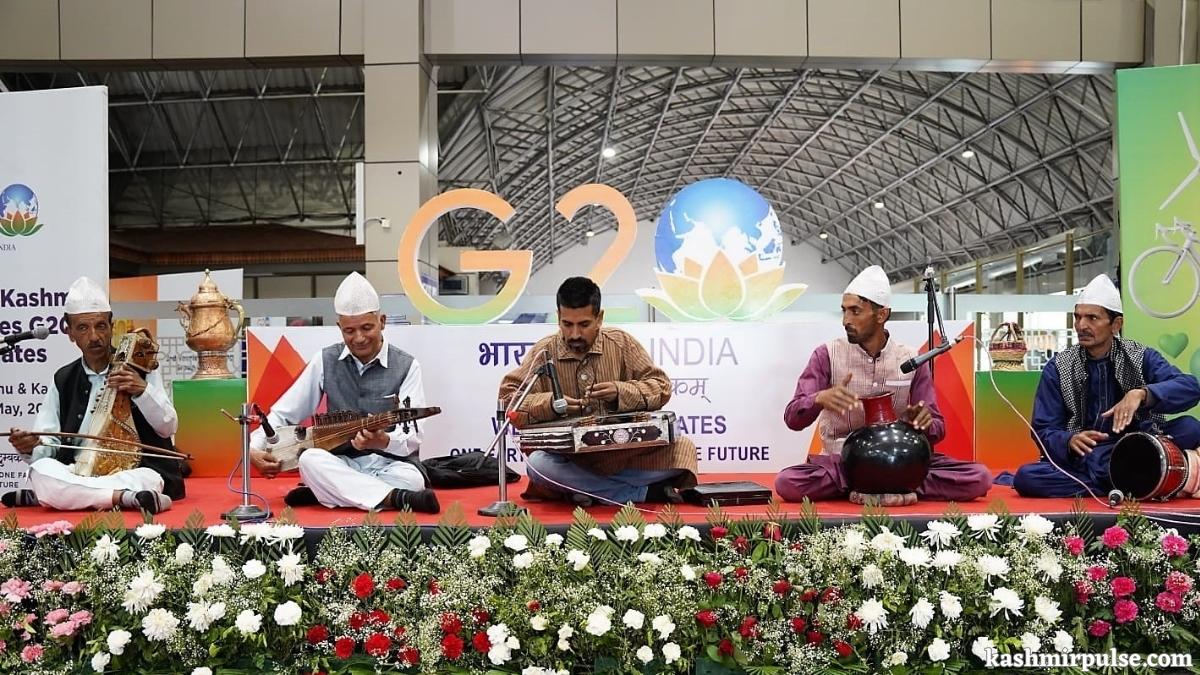
The G20 is a group of 19 countries and the European Union. It took birth in 1999. After the Asian financial crisis in 1997, which destabilized Asia first and the world later, world leaders felt the need for a comprehensive world group that would tackle global economic problems.

India became a member of G20 in 1999. It took the G20 presidency from Indonesia on December 1, 2022. Since then, India has been busy in preparing itself for the unprecedented event that will have a long-lasting impact. It is an opportunity for India to take lead in the global affairs.

When multilateralism is in constant fluctuation, India’s entry into the global arena can change the overall picture and overhaul all institutions like the UNSC. Being the largest democracy in the world and the champion of multilateralism, it has got the platform to take the initiative of sustainable development goals to its logical end.

When the world is recovering from COVID-19 and the challenges thrown in the wake of the Russia-Ukraine war, India can take the world out of the snares of territorial and ideological wars. Moreover, India has been continuously highlighting the issue of climate change. It firmly believes that climate change is a global problem. It needs the foresight to mitigate its impact.

Apart from these issues, women empowerment and gender equality are areas that have recently been taken into account. India is constantly trying to empower women and use their energies for the overall development of society.

Last but not least, India is investing in the modern educational and health sectors. In the age of AI, Machine Learning, Cloud Computing, the Internet of Things, et cetera, world-class education and health are not the privilege of some but rather the privilege of all.

Overall, it is a moment of happiness that the world leaders are visiting one of the ancient civilizations of the world that is proud of its diversity and composite culture. The presidency should act as a wake-up call for both India and the world to rise above selfish agendas and strive for world peace.

The world cannot afford to go to another war. It will wipe the whole of humanity from the earth. Let us resort to common sense and abstain from provocative statements and ultimatums. Overall, the future belongs to all.

This post first appeared on The Kashmir Pulse
SRINAGAR — On the second day of the meeting, the delegates of G20 Tourism Working Group (TWG) meeting will complete their session, then they are expected to visit a few tourist locations in Srinagar.

An official said that they are expected to visit locations including Nishat Garden, Cheshma Shahi, Pari Mahal, Kashmir Arts Emporium and Polo View Market. "At the end of the day, a grand dinner will also be hosted," he said.

Notably, the second Trade and Investment Working Group meeting under India's G20 presidency will start in Bengaluru on Tuesday.

This post first appeared on The Kashmir Pulse

SRINAGAR — The first convoy of G20 delegates arrived in central Kashmir's Srinagar city under strict security measures to participate in the highly anticipated third Tourism Working Group Meeting on Monday, officials said here.

As preparations for the three-day G20 Summit are underway, Kashmir has implemented an extensive three-tier security grid, which includes aerial surveillance and drone monitoring.

"To ensure the safety of all participants, the National Security Guard (NSG) and MARCOS commandos have been strategically deployed around the venue. The J&K Police's special operation group (SOG) will be stationed at various locations to provide security cover and mitigate the risk of potential terrorist incidents," an official said.

"Upon arrival at the airport, the delegates were greeted with a grand and traditional welcome, showcasing the local culture and hospitality," he said. The delegates later went to the Sher-i-Kashmir International Conference Centre (SKICC), where the G20 meeting will take place.

He further said that the summit aims to address critical global tourism issues, including sustainable practices, cultural exchange, and economic development. "Experts will have the opportunity to share their knowledge and collaborate towards strengthening the tourism industry worldwide," he added.

By hosting this summit, the official said that Kashmir intends to showcase its natural beauty and warm hospitality to the world, acknowledging the region's potential as a popular tourist destination.

He also said that the outcomes of the discussions at the SKICC are expected to have a significant impact on the future of tourism, fostering collaboration among nations and promoting responsible and sustainable tourism practices.

This post first appeared on The Kashmir Pulse

It is a fact that whatever the causes, the beautiful Valley of Kashmir has been going through the toughest times since 1989. A lot of people are dead and many more are disabled for their whole lives. Everywhere, there was a sign of violence. Three decades have taken a heavy toll on our lives.

To alleviate our position, many steps have been taken in this regard in the past to improve our condition and put a healing balm on our wounds. The government has been trying its best to heal the scarred souls. However, some wounds are so profound that it needs a long time to heal up.

We are thankful to the government that their efforts have begun to bear fruits. Youth have been engaged in fruitful activities to help them avoid the path of destruction. Industrial growth has been given a fillip so that the regional resources are fully utilized. Moreover, women have been made self-sufficient in some respects to act as a catalyst in promoting sustainability.

Against this backdrop, the G20 presidency is an opportunity to lift Kashmir to the heights it deserves. This region, as we all know, is a store of natural resources and mesmerizing beauty. The G20 nations from the different corners of the world can explore Kashmir through their eyes. The heads of the nations can act as ambassadors of peace, cooperation, tourism and optimism. What is here for the G20 nations is briefly discussed in the following lines.

The first is hospitality. It is a fact that Kashmiris are known for their hospitality throughout the world. The G20 leaders have an occasion to see how the Kashmiris welcome the guests, regardless of their origin and religion. Our composite culture is a prominent thing to be observed and taken back to their respective countries. It will remove many doubts regarding Kashmir.

The second is tourism. As said earlier, Kashmir is a unique tourist place in the world. Its temperate climate soothes the nerves. Beautiful landscapes and the gushing rivers tempt people to immerse themselves in the ecstasy of happiness and feel themselves in a trance. This tourist aspect can be harnessed into a contributing factor to the SGDP. It will provide jobs to a number of unemployed people and result in the cultural exchange that is the need of the hour. The government has been trying to utilize the opportunities provided by the aesthetic beauty of Kashmir into a sustainable economy.

The third is the historical importance of the geo-strategically located place of the world. Kashmir has many salient features. It is the hub of religious coexistence. Since time immemorial, it has spread the messages of tolerance and humanity throughout the world. It has healed those who were wounded brutally. From the famous Silk Route to the spreading of Buddhism, it has welcomed Islam in its wings. Christian Missionaries have left their indelible mark in the nook and corner of the Valley. So, it is an opportunity to cherish these long-lasting traditions and make the world once again a global family.

The fourth is to take full advantage of the wealth of the intellectuals of Kashmir. Kashmir has produced marvelous brains that have proved their mettle on the international level. The cherished principles of a finer civilization are found in the nook and corner of the Valley and their influence is the talk of the town.

In short, the G20 event in Kashmir is a moment of happiness for all. As a youngster, I was enthusiastic to welcome delegates from different countries in this remote area of India. Though difficulties are many and grievances are in bulk, we are still hoping against hope that the event will heal our wounds a bit. It will bring us into the limelight of the world. Let us keep our fingers crossed and take this event as the icing on the cake.

I congratulate LG Manoj Sinha and his team for preparing the stage for this unique event. His tireless efforts in improving the condition of Kashmiris are praiseworthy. He is devoted to his job and leaves no stone unturned in exploiting every moment for the betterment of the citizens.

This post first appeared on The Kashmir Pulse

BARAMULLA — A junior commissioned officer of the Indian Army was injured as an infiltration bid was foiled along the Line of Control in Uri sector of north Kashmir's Baramulla district on Saturday.

An official told the news agency KNO the army foiled an infiltration bid along the Line of Control in Gowhalla sector in Uri today early morning.

He said that during the exchange of fire between militants and the army, a junior commissioned officer (JCO) was also injured. "During the exchange of fire, the Pakistan side also tried to fly a quadcopter but the alert troops fired at it and pushed it back," he said.

"The injured JCO has been evacuated to 92 base hospital in Srinagar, where his condition is said to be stable," he said and added that a massive search operation is underway in the area.

Infiltration bid Pakistan's 'desperate' attempt to disrupt G20: Indian Army

The Indian Army on Saturday said that the "failed infiltration bid by terrorists is another attempt by Pakistan" to disrupt the G20 Summit and create disturbance in the Valley.

In a statement, issued to the news agency KNO, Srinagar-based Defence spokesperson said "an infiltration bid by terrorists across the Line of Control in Uri sector of Jammu and Kashmir was foiled" by the army early morning today.

He said that "a group of armed terrorists, while attempting to cross the Line of Control, were engaged in an exchange of fire with the alert troops, resulting in a failed attempt to intrude into Kashmir Valley."

"A quadcopter flown by the Pakistan Army to aid the terrorists was also spotted across the Line of Control, and was fired at, causing it to withdraw," the statement said.

He said that this "desperate action by the terrorists, duly abetted by Pakistan Army, is yet another failed attempt to disrupt the G20 Summit" and create disturbance in the Valley.

The spokesperson said that extensive search operations are underway in the densely forested area.

This post first appeared on The Kashmir Pulse
SRINAGAR — Taking a firsthand review of ongoing works under G-20 Summit, the Divisional Commissioner (Div Com) Kashmir, Vijay Kumar Bidhuri on Tuesday issued clear-cut directions to all officers, officials and contractors associated with these works to complete them within set timelines.

The Div Com issued this direction during a high-level meeting held here to take a review of works completed, and ongoing works under G-20 Summit.

Among others, the meeting was attended by Deputy Commissioner Srinagar, Commissioner SMC/CEO Srinagar Smart City Limited, VC LC&MA, Director Floriculture, Labour Commissioner J&K, SSP Security, SSP Traffic City, CEs of PW (R&B), PHE (Jal Shakti), I&FC (Jal Shakti), KPDCL Kashmir and other officers and officials besides contractors of works going on under G-20 Summit.

At the outset, the Div Com said that the works are for the people and should be completed at an earliest for their convenience. He sought feedback from the participants regarding the needs and requirements vis a vis meeting work completion deadlines.

During the meeting, the Div Com took detailed work-wise status from the concerned officers and contractors involved in the respective works. The officers and contractors briefed the Div Com about the status of the works in hand and also presented timelines for finishing the works.

The Div Com gave a deadline of 10 days to most of the works including concrete works, footpaths, tiling works, drainage works, underground works, landscaping and turfing that are still going on including the blacktopping works and installation of signages.

He instructed the concerned to check if there is a need for labour components and directed the Labour Commissioner J&K to provide labour to them to meet the demand. He also directed them to start parallel works to ensure the timely completion of all works.

The Div Com gave a deadline of up to Eid to complete the blacktopping works. He also reprimanded some of the officers and contractors for the slow pace of work and cautioned them against proceeding with such an attitude vis a vis completion of work. He made clear that action shall follow against negligent ones.

This post first appeared on The Kashmir Pulse


SRINAGAR — Jammu and Kashmir Lieutenant Governor Manoj Sinha on Tuesday said that Srinagar is all set to host the G20 Summit in which over 150 delegates are expected to participate.


“Srinagar will host G20 Summit in which participation of over 150 delegates is expected. All delegates will stay in Srinagar, so I am hopeful about better mobile connectivity and internet services during the summit,” the LG said after launching the Jio 5G services in Srinagar, as per the news agency KNO.


Speaking on the occasion, the LG said that the 5G technology for the common man will realize the Prime Minister’s vision of Digital India and give a boost to growth opportunities in tourism, e-governance, agriculture, education, healthcare, information technology, and small & micro-enterprises.


“The latest 5G technology and enhanced connectivity will bridge the rural-urban divide, improve productivity, generate more employment and it will ensure the growth of grassroots enterprises, self-help groups, and knowledge connectivity for rural schools,” he said.


Pertinently, Jio has made an investment of Rs 6529 crores in the UT to give a fillip to the vision of Digital J&K and has created 36000 direct and indirect employment. More than 1230 crores investment is in progress and by December end, Jio will connect every block and tehsil of J&K.


This post first appeared on The Kashmir Pulse

SRINAGAR — Jammu and Kashmir Government on Friday ordered the constitution of a Union Territory-level health committee for ensuring medical care arrangements and advance operationalization of medical services for various G20 events “to be held” across Jammu and Kashmir.

Headed by Financial Commissioner (Additional Chief Secretary), Home Department, the five-member committee comprises of Administrative Secretary, Health and Medical Education Department, Administrative Secretary, General Administration Department, representatives of G20 working groups (if any), and Additional Secretary to the Government, Health and Medical Education Department (Convener), according to a government order issued here.

The terms of reference of the UT level G20 health committees among others are to work with relevant stakeholders to oversee and ensure suitable adoption and adaptation of SOPs for medical care arrangements for India's forthcoming G20 Presidency; inspection and need assessment of all medical care arrangements at identified international and domestic airports, G20 meeting venues, hotels, excursion sites, etc. as part of planned official itinerary; formation of dedicated Medical Task Force at UT and District(s) level, with identified Nodal Medical Officer(s) for provision of medical services at the various host city venues; identification and earmarking of the hospital(s) with requisite specialties and services (including blood bank services) at the host city and reserving of hospital beds at these facilities for the duration of G20 event in the city.

Besides, the committee has been tasked with ensuring the placement of mobile ambulances with necessary medical equipment as per international standards or protocols to cater to any emergency, provisioning of Air Ambulance services, for medical evacuation, wherever deemed to be required, particularly in far-flung and difficult to reach areas, according to the order.

The other terms of reference include training/orientation of deployed medical personnel and support staff; promulgation of COVID-19 protocols and testing facility as per protocols; sharing of operational plans and details of key stakeholders with G20 (security), Ministry of External Affairs and coordination with the Home Department for antecedent verification of deployed medical personnel/support staff in conjunction with local police.

“The committee shall be serviced by the Health and Medical Education Department,” the order added.

This post first appeared on The Kashmir Pulse
Powered by Blogger.