SRINAGAR — The ongoing dry spell and heatwave in Kashmir have left fruit growers deeply concerned, who fear severe impacts on the region's horticulture sector. The sector, which is a vital source of income for many in Kashmir, is experiencing stress due to the lack of rainfall and high temperatures.

Speaking to the news agency KNO, growers expressed their worries about the prolonged dry weather's effects.

Mohammad Shaban Dar, an orchardist from Shopian, said the intense sunlight with the absence of rain over the past two months is adversely affecting fruit trees and their produce. He said that the lack of moisture is causing heavy fruit fall and affecting the quality and shine of the fruit. “This hampers its competitiveness in the market against apples from other countries,” he said.

Javid Ahmad, a horticulture expert, explained that the high temperatures and lack of rainfall are stressing the fruit trees, especially apple orchards, which are crucial to the local economy. “This could lead to smaller fruit sizes, sunburnt produce and an overall reduction in yield,” Ahmad said, adding that the lack of soil moisture could lower the quality of the fruit, which could lead to a decline in market prices and profitability for growers.

Experts are also concerned about the long-term health of the orchards if the current weather conditions continue, as most of the orchards in the region are rain-fed and lack proper irrigation facilities.

Bashir Ahmad Basheer, chairman of the Kashmir Valley Fruit Growers Cum Dealers Union, said the prolonged dry spell is likely to impact the horticulture sector negatively. “This will lead to losses due to reduced fruit quality,” he said.

Director Horticulture Kashmir, Zahoor Ahmad Bhat said that around 60 percent of orchards in Kashmir are rain-fed, and the ongoing dry conditions could result in undersized fruit, heavy fruit fall and a decline in quality.

“Such conditions not only affect the current season's yield but can also reduce the fruit-bearing capacity of trees in future seasons, which damages the apple trees that growers work hard to maintain,” he said.

The horticulture sector is a significant contributor to the State Gross Domestic Product (SGDP) of Jammu and Kashmir, with a share of about 9.5 percent. It also generates approximately 8.50 crore man-days of employment annually.

The average apple production in Kashmir ranges from 20 to 25 lakh metric tonnes per year, with half of Kashmir's population directly or indirectly dependent on the apple industry, according to the 2017 economic survey in J&K.

This post first appeared on The Kashmir Pulse
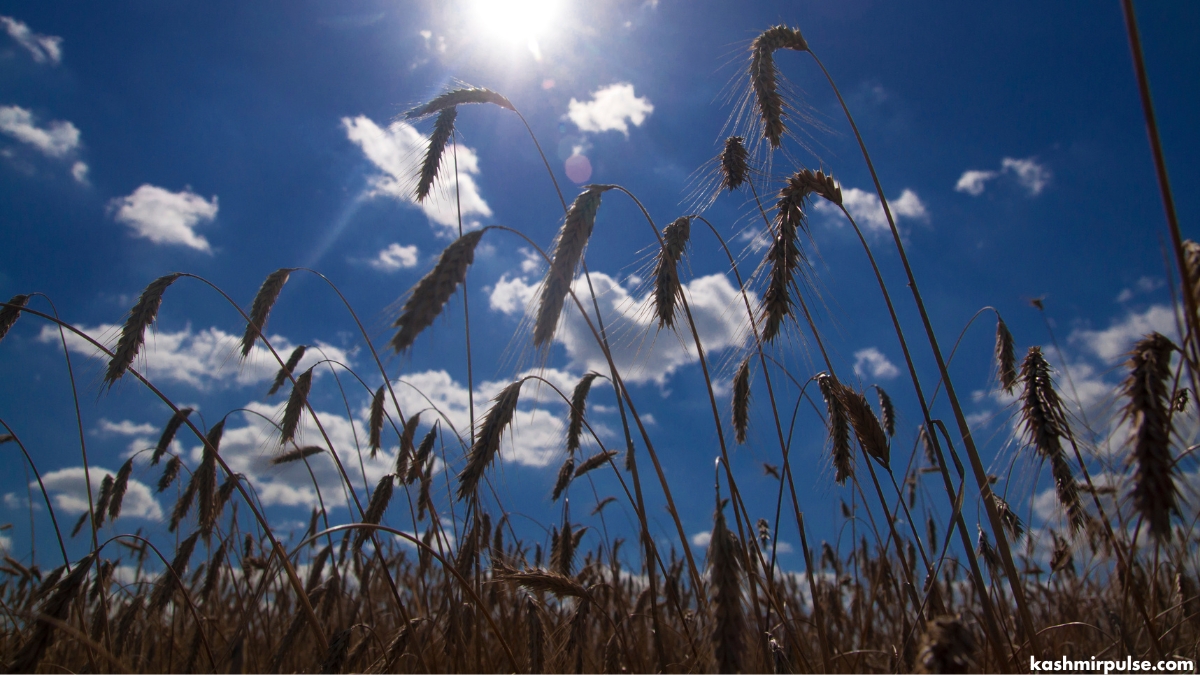
SRINAGAR — The ongoing prolonged dry spell this summer is causing immense distress among valley farmers, raising concerns about its severe impact on crop growth and overall productivity.

Officials from the Irrigation and Flood Control (I&FC) Department informed the news agency KNO that due to the extended dry weather and decreasing water levels in the Jhelum River, approximately 10% of irrigation agriculture schemes are being affected.

"We are currently witnessing a significant reduction in the water level of the Jhelum River due to prolonged dry weather conditions. The decreased water level has adversely affected lift irrigation," an official said.

The official further said that the overall water capacity of the Jhelum has decreased by 30% from normal levels, resulting in a 10% impact on irrigation schemes.

Meanwhile, Director Agriculture Kashmir, Choudhary Mohammad Iqbal, said, “Currently, there is moisture in the ground, but if there is no rainfall by next week, both paddy and vegetable crops will be negatively affected.”

“For the growth of paddy and vegetable crops, rainwater is crucial. Presently, there is some moisture in the ground, but without rainfall within the next week or so, adverse effects on both vegetable and paddy fields are anticipated,” Director Iqbal said.

Professor Dr Raihana, Chief Scientist at the Faculty of Agriculture, Sher-i-Kashmir University of Agriculture Science and Technology (SKUAST) Kashmir, said the prolonged dry spell had stressed plants, resulting in stunted growth in both paddy and vegetable crops.

“The extended dry spell has caused the tips of paddy crops to burn, while leaves of vegetables have become dry,” she explained. Dr Raihana added that the high temperatures coupled with the prolonged dry period have led to reduced crop yields, with stunted growth and leaf weathering in vegetable plants.

A considerable portion of the Jhelum River in Srinagar is visibly drying up, with surface patches becoming evident at various points along its stretch.

Another official from the I&FC Department said that over 40% of the Jhelum River in Srinagar has begun to dry up at multiple locations due to the extended dry spell.

“The ongoing dry spell is impacting water bodies. In Srinagar, approximately 40% of the Jhelum River has dried up, with surface patches visible at numerous locations,” the official said.

Farmers said the lack of precipitation and above-average temperatures have severely affected crop growth and development, dealing a significant blow to the region’s agricultural economy.

Several videos circulating on social media purportedly show farmers displaying their dry paddy fields, with young paddy plants also withering due to the dry conditions.

Farmers are anxiously awaiting relief from the dry and hot weather conditions as the prolonged spell continues to challenge their livelihoods and the overall agricultural economy.

This post first appeared on The Kashmir Pulse

SRINAGAR — Apple growers in several areas of southern Kashmir are increasingly concerned as a leaf miner pest continues to infect their orchards for the fourth consecutive year.

The farmers told the news agency KNO that the pest has wreaked havoc in their orchards over the past three years. “Wherever the pest was found in the last three years, the produce was less shiny and smaller in size, as this insect sucks all the nutrients from the trees,” they said.

Zahoor Ahmad, a fruit grower from the Dachnipora area of Anantnag, described how the pest lays web layers from one branch to another, even reaching the trunk and fruit. “This pest, numbering in millions, is sucking all nutrients from the tree, causing the fruit to remain small. It damages leaves and trees as well,” he said, adding that visitors to the pest-affected orchards have complained of allergies and other issues with their throats and nose.

Initially found in Shopian’s Zainapora, the pest has spread to Zainapora, Litter, Watchi, Yaripora, Lassipora, Tahab and Bijbehara areas over the years. This season, orchardists from various parts of south Kashmir have raised alarms about the pest, despite following horticulture advisories to combat it.

The growers have called for urgent attention from the horticulture department and experts to prevent further damage. “Even after spraying insecticides several times every year, these pests keep reappearing,” they said, adding that the affected orchards have reported premature fruit fall, along with reduced fruit quality and size.

Senior scientists from Sher-e-Kashmir University of Agriculture Science and Technology-Kashmir (SKUAST-K) have identified the pest as a “leaf miner” – an invasive insect that likely arrived four or five years ago. They said that while leaf miners were reported some time ago, their presence has significantly increased in the past two years. Despite this, the pest is manageable if growers consistently follow advisories, they added.

The horticulture department has called for a collective approach to managing the pest and advised spraying insecticides across all affected orchards to prevent any residual population from serving as a source of infestation the following year.

Recommendations for farmers include installing sticky traps 10 meters apart for monitoring and surveillance of the apple leaf blotch miner (ALBM), maintaining proper sanitation practices within and around the orchards, and installing pheromone-baited traps at a density of 8-10 traps per hectare.

They should spray one of the following insecticides at the recommended dosage: Thiamethoxam 25 WG (50g per 100 litres of water), Flubendiamide 39.35 SC (40ml per 100 litres of water), Chlorantraniliprole 18.5 SC (100ml per 100 litres of water), Thiacloprid 21.7 SC (60ml per 100 litres of water), Lambda Cyhalothrin 5 EC (50ml per 100 litres of water), Pre-mix formulation of Thiamethoxam 12.6 + Lambda Cyhalothrin 9.5 ZC (50ml per 100 litres of water), and pre-mix formulation of Imidacloprid 6 + Lambda Cyhalothrin 4 SL (50ml per 100 litres of water).

The department has advised farmers not to mix insecticides with any other plant protection chemicals or plant nutrients.

This post first appeared on The Kashmir Pulse

SRINAGAR — Not all is well between fruit growers and Controlled Atmosphere (CA) and cold storage owners with the former alleging the facility owners for charging them exorbitant rates for various services.

Fruit growers and dealers accused the owners of charging exorbitant rates for various services, including cardboard boxes, storage fees, tape charges, and bin/crate charges.

“Exorbitant rates are charged by CA/cold store owners for cardboard boxes, which are quite inferior. In fact, a good quality type of cardboard material is available in the open market, which is 30 per cent cheaper than the ones sold by the CA/cold store owners,” Chairman, Kashmir Valley Fruit Growers (KVFG) Union, Bashir Ahmad Bashir told the news agency KNO.

“The CA/cold store owners do not allow us to procure cardboard boxes and other packing material from the open market. They force us to buy from them at exorbitant rates, which is unfair and exploitative,” he added.

The fruit growers and dealers also alleged that the Jammu and Kashmir Procedure and Instructions for Controlled Atmosphere Stores (JKPICCA) owners are “engaging in arbitrary practices when it comes to storage charges for apple crops.”

“The apple produce of a single party is kept in different chambers of the CA/cold store. We are compelled to store our consignments for a period of five months at a time,” Bashir said.

The KVFG claims to have held several meetings with the managing body of JKPICCA, headed by its president, seeking the execution of a fresh agreement to fix norms and uniform rates in the interest of the horticulture industry and fruit growers/dealers. “However, despite commitments, JKPICCA has failed to respond or execute any such agreement.”

The KVFG has appealed to the government to intervene and address their grievances. They demanded that the excessive rates of Rs. 30-40 per box collected by JKPICCA owners from valley-based fruit growers/dealers for the storage of apple crops during the 2023-24 fruit season be returned.

The union has sought the constitution of a regulatory committee comprising representatives from KVFG Union, JKPICCA and independent experts nominated by the government to determine fair and uniform cold storage rates, ensuring transparency and preventing exploitation.

“We urge the government to ensure an open option for valley-based fruit growers/dealers to procure cardboard material and other packing charges from sources of their choice, without being forced to purchase from JKPICCA at inflated rates,” Bashir said.

This post first appeared on The Kashmir Pulse
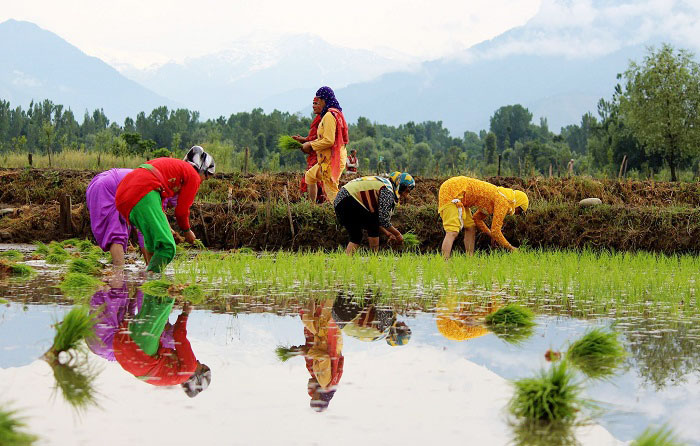
PULWAMA — The apple growers and traders in Kashmir are grappling with heavy losses due to continuous low demand in various markets. Typically, cold storage units are cleared by the end of April, but this year, a large percentage of apples remains stored due to the sluggish market demand.

Speaking to the local news agency KNO, growers and traders expressed concern over the situation. They said that based on current trends, Controlled Atmosphere (CA) units might continue to store last year's apples until mid-July. “The prices have drastically decreased compared to the rates during the main apple season in October-November 2023,” they lamented.

“The increasing presence of South African apples in retail supermarkets and on e-commerce platforms across the country has exacerbated the situation. This influx has further reduced demand for Kashmiri apples, driving prices down and causing substantial losses for growers and traders,” they said.

Sameer Ahmad, a grower, said that in previous years, they received around Rs 1500-2000 per apple box in Indian markets during spring. However, this year, there is almost no demand, and prices are declining daily, leading to significant losses, he said, adding that while there was good demand during October-November last year, the current year has seen a sharp decline.

Growers also criticised the government's slogan of "Sab Ka Sath, Sab Ka Vikas" (Together With All, Development For All), claiming that despite promises to ban apple imports, the ground reality remains unchanged. They urged the government to take immediate steps to address the issue.

Experts say there are multiple reasons for the down market. "The import of apples from various countries, including Africa and Iran, is a major factor,” they said, adding that there is a need for strategic interventions to support apple growers during this critical period.

CA unit holders said they are also facing challenges as their stores remain occupied. They said that with the upcoming harvest of peaches, cherries, and other products, they need to clear the apple produce to make space.

“Currently, around 25-30 per cent of the produce is still in cold storage units. We hope for an increase in demand to fetch better returns. However, the market remains very low,” said one of the CA unit holders, wishing anonymity.

Notably, approximately three lakh metric tons of apples are stored in different CA storages across Kashmir. On average, Kashmir produces over 20 lakh metric tonnes of apples annually, sometimes reaching up to 25 lakh metric tonnes.

According to the 2017 economic survey in J&K, half of Kashmir’s population is directly or indirectly dependent on the apple industry, with over 3.5 lakh hectares under apple cultivation.

This post first appeared on The Kashmir Pulse

PULWAMA — The unavailability of proper irrigation facilities at Pahoo area of southern Kashmir's Pulwama district have delayed the paddy sapling plantation season in the area.

The residents of Rakh-e-Pahoo area told the local news agency KNO that their land was dependent on Bulbul Nag in Hakripora area for irrigation purposes but that spring was tapped for drinking water supply.

They said that since spring was tapped for the drinking water supply scheme, farmers of around five villages have been suffering for the want of irrigation facilities.

Jamshed Ahmad, a local resident, said that they usually used to complete paddy plantation by May 15 in the area but this year due to the unavailability of proper irrigation facilities, they have yet to plant paddy saplings.

He said that locals have put in water pumps on their own and other facilities in service to irrigate their land so as to plant paddy.

Shabir Ahmad, another local, said that farmers of around five villages have been suffering in absence of proper irrigation facilities as authorities have used springs for providing drinking water facilities.

He said that before tapping the spring for the drinking water supply scheme, authorities should have made arrangements for irrigation facilities on the land on which hundreds of families are dependent.

Locals said that they have informed authorities several times to look into the matter and make arrangements for irrigation facilities but nothing has been done so far. They said that most people in the area are dependent on agricultural land for livelihood and this issue must be taken seriously.

They urged the higher-ups ups, especially Deputy Commissioner Pulwama, to look into the matter personally and direct the concerned authorities to take immediate steps in this regard.

This post first appeared on The Kashmir Pulse

PULWAMA — The fruit growers and traders in Kashmir who had kept their produce in cold storage units said they are facing huge losses as rates have plummeted to an all-time low.

Speaking to the news agency KNO, the growers and traders said they have been facing huge losses as rates have been going down with each passing day. They said currently apple boxes are being sold at Rs 300-400 per box while the rates of C-grade apples in the main season were more than that.

Mudasir Ahmad, a fruit trader, said that he had purchased around 10 thousand apple crates at around Rs 1000-1500 per crate and kept them in cold storage units in Lassipora Pulwama. He said currently his apple crates are fetching just around Rs 300-400 only due to which he faces a loss of Rs 1000-1200 per crate which is around one crore rupees of loss.

"I have been doing fruit business for the last 10 years but have earned just a few lakhs in the last 10 years as I have been facing a loss in crores which has left me and my family in depression," Mudasir said, adding that same is the case of other fruit traders who have purchased and kept their produce in CA stores.

Traders said they stopped packing their produce for some time but are aware that they can't keep it there for a long time. "Six to seven months have already passed since we kept it there," they said.

"Even the C-grade apples fetched more returns in the main season and this is an all-time low rate of produce kept in cold storage units," they said. "This is because apples in bulk quantity have been reaching Indian markets from different countries, thereby denting local apples."

Meanwhile, cold unit holders sought the government's intervention under these conditions. "Otherwise, this may have a negative impact on cold storage units," they said.

Anjum Abrar, a manager of one such unit, said there is a positive impact of cold storage units that they maintain the supply and demand chain, which benefits growers by ensuring favourable returns. "If the produce kept in cold storage units won't fetch good returns, then how will people prefer to keep their produce in CA stores?" he asked.

"The government must intervene in stopping the import of apples so that Kashmiri growers and traders fetch good returns," Abrar said.

He said that the cold storage units have been employing thousands of people. "Neglecting this sector would impact the livelihoods of thousands of workers," he said.

This post first appeared on The Kashmir Pulse

SRINAGAR — A remarkable trend is unfolding in Kashmir with farmers and horticulturists embracing exotic apple plant varieties over traditional ones. As per the news agency KNO, this surge in interest is reshaping the agricultural landscape of the region, known for its traditional apple cultivation.

In recent years, there has been a noticeable shift towards cultivating exotic varieties of apples, spurred by changing consumer preferences and evolving market dynamics.

Varieties including Red Velox, Pink Lady, Redlum Gala, Scarlet II, Golden Delicious and Jeromine are ruling the roost in Kashmir these days. These varieties, known for their distinctive flavours, textures, and extended shelf life, are increasingly finding favour among consumers both domestically and internationally.

Aarif Bhat, a progressive farmer from Baramulla district, shares his experience, "I have been cultivating traditional apple varieties for decades, but I decided to diversify my orchard by introducing exotic varieties. The response has been overwhelming, with buyers showing great interest in these apples."

The shift towards exotic apple varieties is not only driven by consumer demand but also by economic factors. Farmers are recognizing the potential for higher returns associated with cultivating these premium varieties.

“A box of Red Velox apples costs almost 30 per cent more than the traditional variety. So, growers are increasingly shifting from traditional to exotic varieties to make more money,” said Mohammad Shahbaz, an apple dealer.

As such various entrepreneurs have emerged in the valley who grow the nurseries of such varieties to sell to growers during the season.

“We grow varieties of apple plants in the nursery. For the last five years, we have been associated with the farming of these varieties and growers come from various districts to buy saplings from our nursery,” said Abdul Quyoom Bhat, an entrepreneur.

Pertinently, the government too is encouraging and promoting the high-density apple plantation in Kashmir to grow the income of farmers.

The Department of Horticulture has set a target to bring 5500 hectares of land under the Modified High-Density Plantation Scheme in Jammu and Kashmir by 2026.

According to government figures, Kashmir exports more than 20 lakh metric tonnes of apples every year, and the horticulture industry is pegged to be worth around 9,000 to 10,000 crore including the employment it generates. Kashmir produces 75 per cent of the total apple production in the country.

This post first appeared on The Kashmir Pulse

PULWAMA — Mohammad Yaqoob Bhat, an orchard owner in southern Kashmir's Pulwama district, expressed dismay on Wednesday as thieves ravaged his high-density apple orchard in a daring overnight raid.

Situated in Pirpora area of Arihal village, Bhat reported that approximately 30 to 35 high-density apple trees, planted two years ago and already yielding produce, were forcibly uprooted with shovels during the dark hours between Monday and Tuesday.

The financial blow is severe for Bhat and his family, who invested heavily in the orchard using proceeds from his wife's jewellery. He estimated the loss to exceed one lakh rupees, undermining their hopes for a better quality of life.

Expressing suspicion, Bhat suggested the involvement of local drug addicts, citing the audacity required for such a brazen act under the cover of night.

In a plea for assistance, Bhat called upon district authorities and law enforcement to take swift action, urging the police to apprehend the perpetrators and seek justice for the theft.

The incident resonates beyond Bhat's personal loss, signalling a broader concern in southern Kashmir, where many farmers have transitioned to high-density apple cultivation.

Following the introduction of high-density plantations in 2015-2016, the region has witnessed a shift away from traditional apple varieties to more modern cultivars from around the world.

This post first appeared on The Kashmir Pulse

PULWAMA — Saffron growers in south Kashmir’s Pulwama district are worried as porcupines continue to damage their saffron corms.

Speaking to the news agency KNO, the distressed farmers from Pampore, Lethpora and neighbouring areas said that porcupines have been causing extensive damage to saffron beds, impacting their livelihoods.

Shabir Ahmad, a saffron grower, expressed concern over the severe damage caused by porcupines. He said the production of saffron is directly affected when corms are damaged. “The economic well-being of saffron growers is at stake due to this menace,” he said.

Yasir Ahmad, another grower, said that despite efforts to deter porcupines using lights and horns, the nocturnal activity of these animals remains a serious issue. If immediate measures are not taken, saffron corms may be entirely depleted in the coming years, he warned.

Unlike other orchardists who have various methods to protect their crops, saffron growers said they face unique challenges.

“Other orchardists have options like covering the trunks of trees, but no such option is available to protect saffron fields from the attacks of porcupines,” Yasir said, adding, “The government must at least consult the technical persons and experts who can guide us on how to get rid of the menace.”

The saffron growers said they have brought this issue to the notice of concerned authorities but no concrete steps have been taken in this regard.

An official from the Agriculture Department suggested the use of a repellent that emits an odour and deters porcupines for approximately seven days when applied.

The use of lethal methods is prohibited by wildlife regulations, the official said, adding that only humane and non-lethal solutions can be applied to protect saffron crops from porcupine attacks.

This post first appeared on The Kashmir Pulse

SRINAGAR — The famed Nadru production in Kashmir is witnessing a decline, with growers attributing it to water pollution stemming from drains flowing into water bodies.

Those associated with the business informed the news agency KNO that widespread pollution and the deterioration of water quality have significantly impacted Nadru production across various water bodies.

Growers said that each passing year sees a further decrease in production as the water quality is worsening due to heightened pollution levels.

Mohammad Maqbool, 60, a seasoned Nadru grower from Sangam Srinagar, expressed concern over the continuous decline in production over the past 16-18 years. “Both the public and the government are responsible for this negligence,” he said.

He said that drains constantly discharge into water bodies, contaminating the water and contributing to the decline in Nadru production. “Water bodies such as Dal Lake are the source of livelihood for thousands of families, and Nadru has faced a sharp decline in production since the devastating floods of 2014. We used to harvest hundreds of kilograms of Nadru from the lake before the floods. Since then, we have been struggling,” he said.

The grower said the production has continued to decline over the past few years due to rampant pollution, degrading water quality, and encroachments in the lake. He expressed apprehension that Nadru faces the risk of disappearing from the lake entirely unless substantial measures are taken to restore the water bodies.

Growers also expressed concern over the dilapidated condition of available boats – required to extract Nadru from water bodies – and the unavailability of deodar timber for (boat) repairs, which add to their challenges.

Other cultivators highlighted the impact of excessive water levels, due to which lotus stems remain submerged for extended periods, which weakens the plants and reduces yields.

Deteriorating water quality in Dal Lake and other water bodies, a result of both excess water and pollution, has exposed Nadru plants to diseases and fungal growth, rendering them unsuitable for consumption, they said.

The declining Nadru production is a concern not only for local farmers but also for the flourishing Kashmiri food industry. The unique texture and flavour of lotus stems are crucial to various Kashmiri dishes, including Nadru Monje and Nadru Yakhni.

Meanwhile, officials said the government is committed to the revival of Nadru. They said large-scale cleaning initiatives in water bodies are underway, and appealed to the public to refrain from littering and discarding waste materials into the lakes.

This post first appeared on The Kashmir Pulse

PULWAMA — The farmers in several areas of south Kashmir’s Pulwama district have complained of heavy loss due to the rice blast disease.

The distressed farmers told the news agency—Kashmir News Observer (KNO) that they are worried due to the disease as around 50 percent of their crop gets damaged every year. They lamented that no steps have been taken by the concerned authorities to reduce the damage.

The disease, as per the farmers, has hit the crops in parts of Rakh, Zahidbagh, Niloora, Nowpora and other adjacent areas in the Litter tehsil of Pulwama.

“We suffered losses due to the disease in paddy, and are very much worried as it will reduce rice production in the area this year,” Tariq Ahmed, a farmer from Litter, said.

“Last year, we complained before the concerned authorities about this disease and asked them to conduct soil testing programmes in our area. However, despite assurance, not a single official or representative came,” he said.

The farmers said the disease is affecting their livelihoods as they don't have any other source of income.

Gul Mohammad Bhat, a farmer from Zahidbagh, said despite spraying as recommended by the authorities, the paddy on around six kanals of land has suffered damage due to the rice blast. He said more damage is on around two kanals.

The government must take cognisance of the issue and provide compensation to the affected farmers accordingly, he said.

An officer of the Agriculture Department told KNO that the rice blast affects the old varieties of paddy only while the varieties provided by the department have been giving bumper crops every year.

Despite organising awareness camps, the farmers still resort to traditional varieties and then blame the department, the official said, adding that the farmers must work in cooperation with the department so that the disease can be eliminated once and for all.

Those farmers who have been covered under Pradhan Mantri Fasal Bima Yojna will get the insurance amount while the details of those who have not registered under the scheme will be compiled and it will be forwarded to higher officials for consideration of compensation.

The official requested the farmers to avoid sowing traditional varieties and implant disease-resistant varieties like SR2 and SR4.

This post first appeared on The Kashmir Pulse

KULGAM — Jammu and Kashmir’s Lieutenant Governor Manoj Sinha on Monday made a big announcement, stating that the government will take care of poor man’s power bills but those having palatial houses, iPhones with 5G internet service and other gadgets have to pay power tariff as per their usage.

“Let me announce today that the government will take care of the poor who can’t afford to pay bills. But those who have palatial houses, iPhones with 5G internet data and other gadgets will have to pay power bills as per their usage. They shouldn’t at least make excuses in paying the power bills,” the LG said while addressing a gathering at Mini Secretariat in southern district of Kulgam, as per the news agency KNO. He, however, did not elaborate further on this.

He said that in the last 70 years, 3400 MW of power was generated locally in J&K and in the next three years, equal MWs will be produced.

The LG said that wherever a feeder is 100 per cent metered, power disruption won’t be just for a minute, let alone an hour or so. “I urge people to cooperate with us in getting the smart meter installation process completed as soon as possible,” he said.

The LG said that J&K people are getting the cheapest electricity compared to other states. “We have borrowed Rs 20,000 crore worth of electricity from outside in the past three to four years. This won’t do. People must pay as per usage,” he said.

“Given the J&K’s topography and snowfall, some projects get delayed. Delay in completion of projects has been given to us in legacy and we are trying to break this tradition of delay in projects’ completion,” he said.

About farmers, he said that at present J&K farmers’ income is at number five across the country and time is not far when “our farmers’ income will be number one.”

This post first appeared on The Kashmir Pulse

SRINAGAR — The recent hailstorm has devastated the farmers of Dhobijan area of Shopian in south Kashmir as their entire crop has been destroyed, leaving them in financial distress.

"Advance payments from apple traders have been halted, exacerbating their challenges. The farmers now face an uncertain future, unsure of how to survive this economic crisis without any viable crops," the farmers told the news agency KNS.

The farmers, plagued by shattered hope, are now placing their expectations on the mercy of the government. They fervently appeal to the authorities, urging them to provide necessary compensation for their losses.

JK Kisan leader, Ab Rashid Pandith visited the hailstorm-affected area, passionately appealing to the government.

He urged them to consider waiving off the loans of the farmers and providing free ration for the upcoming season.

This post first appeared on The Kashmir Pulse

SRINAGAR — The recent hailstorm has devastated the farmers of Dhobijan area of Shopian in south Kashmir as their entire crop has been destroyed, leaving them in financial distress.

"Advance payments from apple traders have been halted, exacerbating their challenges. The farmers now face an uncertain future, unsure of how to survive this economic crisis without any viable crops," the farmers told the news agency KNS.

The farmers, plagued by shattered hope, are now placing their expectations on the mercy of the government. They fervently appeal to the authorities, urging them to provide necessary compensation for their losses.

JK Kisan leader, Ab Rashid Pandith visited the hailstorm-affected area, passionately appealing to the government.

He urged them to consider waiving off the loans of the farmers and providing free ration for the upcoming season.

This post first appeared on The Kashmir Pulse


PULWAMA — A mega lift irrigation scheme in Chakoora village of Litter Tehsil in south Kashmir's Pulwama district is awaiting completion even as land donors are waiting for compensation.


Locals told the news agency KNO that after repeated pleas, a scheme was approved for the area, and soon, work on said scheme was started. However, since then around a decade has passed but they are yet to witness any positive signs in this regard.


They said that around 80 percent of the work was completed but it has been suspended for the past three years due to unknown reasons. “We don't have any irrigation facilities available to our orchards due to which we are suffering in the summer season and have to rely on rainwater only,” said Zahoor Ahmad, a local resident.


He said that after work on the scheme was started, many growers cut down their almond orchards which require less water, and planted apple trees as they expected the scheme will provide them irrigation facilities but that did not happen. "Orchardists were earning their livelihood from almonds but after planting apple trees, they are suffering due to the shortfall of rains," he added.


Locals said that due to the unavailability of irrigation, trees are drying up and production remains very low besides being less delicious and small in size. “We provided land at a very low cost for the scheme but the compensation too was not paid so far,” they said, adding that they brought the issue to the notice of the concerned several times to no avail.


They requested concerned authorities to look into the matter and complete the scheme so that farmers won't suffer in the coming summer.


Meanwhile, an unnamed official was quoted by the news agency as having said that the scheme awaits completion because of some issues with land donors about compensation.


He said that around 80 percent of the work on the scheme is complete and the revised DPR for pending work and compensation component has been submitted to the higher-ups. "We are expecting that work on the project will be re-started soon," he said.


This post first appeared on The Kashmir Pulse

SRINAGAR — A man drove on a tractor all the way from Uttar Pradesh's Jhansi city and reached Srinagar on Sunday to participate in Bharat Jodo Yatra and support Congress leader and Member of Parliament, Rahul Gandhi.

The man, while speaking to The Kashmir Pulse, identified himself as Suraj Matey and said that he is an ordinary farmer. "I support Congress and have come here to take part in Bharat Jodo Yatra."

He hailed the hospitality of Kashmiris and said that he was offered tea and breakfast minutes after he parked his tractor at a local taxi stand in Srinagar.

While speaking of the impact of the Bharat Jodo Yatra, Suraj said that the businessman Gautam Adani's shares were continuing the bloodbath. "This is just a hint of the huge impact that Bharat Jodo Yatra has achieved," he said and went on to give reference to Hindenburg Research, an investment research firm.

"There were many attempts to break the country on the basis of religion, caste, and creed before as well. However, the sacrifices of leaders like Mahatma Gandhi, Indira Gandhi, and Rajiv Gandhi kept the country united and the government in the Centre won't also be able to achieve its designs," he said while accusing Bhartiya Janata Party (BJP) of spreading hatred.

Another Yatri, Tufail Ahmad Khan, identified himself as the Vice-Chairman of the Uttar Pradesh Congress Committee and said that he had come with his associates from Kanpur.

Tufail Ahmad said that the message of Rahul Gandhi through the Bharat Jodo Yatra was very important for the progress of the country at par with the rest of the world. "The BJP has been bringing disrepute to the nation through its policies and people throughout the country are now realizing the same and siding with the Congress leader."

Referring to the policies of the BJP in Jammu and Kashmir, the UP Congress vice-president said that BJP has been sowing the seeds of hatred in the Valley of Kashmir as well and in contrast, Rahul Gandhi's march brought the message of love and brotherhood.

This post first appeared on The Kashmir Pulse

NEW DELHI — Agriculture and Farmers Welfare Minister Narendra Singh Tomar has said that the farmers are getting more money directly in their accounts through the Direct Benefit Transfer scheme.

He said the use of technology has eliminated the middlemen, brought transparency, and benefited the farmers. He said expenditure on Minimum Support Price has increased manifold in recent years which directly benefited the farmers.

Briefing media in New Delhi today, Tomar highlighted the measures taken by the government to ensure food availability, create robust mechanisms for the procurement of foodgrains, and effective implementation of the 'One Nation One Ration' card initiative in the country. The Minister said three lakh 81 thousand crore rupees have reached the accounts of farmers through the DBT scheme.

He said 80 crore people have been provided free foodgrains which helped the poor to deal with the effects of the Covid pandemic. He said three lakh 90 thousand crore rupees have been spent on Pradhan Mantri Garib Kalyan Ann Yojana.

On MSP’s expenditure, Tomar said, one lakh six thousand crore rupees have been spent in 2014-15 which subsequently increased to two lakh 75 thousand crore rupees in 2021-22.

The Minister said more than one lakh 14 thousand crore rupees dues of sugarcane farmers have been cleared out of the total dues of more than one lakh 18 thousand crore rupees for the season 2021-22.

He informed that India has become the largest producer and exporter of sugar. He said the export of sugar has subsequently increased in recent years. He said the total export was 6.8 lakh metric tonnes in 2017-18 which reached 110 lakh metric tonnes in 2021-22.

On the procurement of millets, Tomar said, seven states have made the procurement of 13 lakh tonnes.

This post first appeared on The Kashmir Pulse

SRINAGAR — In a major setback to Kashmir's most vital industry horticulture, the prices of packing material of apples have increased abruptly due to which apple growers fear losses.

Growers across Kashmir, while talking to the news agency KNO, said that the cost of packing material has increased by around 30 to 40 per cent in Kashmir in the last few days only due to which growers are fearing losses.

Fayaz Ahmad, an apple grower from Shopian, said, "Usually, we were purchasing wooden apple boxes at Rs 70 to 80 but this time the same boxes are being sold at Rs 110 to 130." He said that they were getting cardboard boxes at Rs 35 to 40 but the same boxes are being sold for around Rs 50 this year.

Other growers also echoed the same voice and said that cost of apple boxes, papers and other things besides the labour rate has also increased due to which growers are fearing losses this year.

They said that rates have increased abruptly and it will prove disastrous for the growers as growers have suffered huge losses due to COVID-19, untimely snowfall, hailstorms and other things in the last few years.

They requested the government to look into the matter and take steps to check the reasons behind the abrupt price hike.

President of Kashmir Valley Fruit Growers and Dealers Association and New Kashmir Fruit Association, Bashir Ahmad Bashir told KNO that the price of packing material has increased sharply in Kashmir and rates of almost every fruit have remained low this year.

He said that the price hike is of around 30 to 40 per cent this year and government must intervene at the earliest, otherwise, growers will face losses.

This post first appeared on The Kashmir Pulse

SRINAGAR — Apple growers in south Kashmir are very much concerned about the outbreak of Alternaria leaf blotch in orchards, causing huge scars on the leaves of trees.

According to apple growers, the disease became evident on the leaves and trees spread over vast tracts of land after recent incessant rains.

Aafaq Ahmad, a grower from Pulwama, said that trees are shedding leaves and it could hit the yield of fruits. “We have sprayed different types of insecticides but still the disease is spreading rapidly,” he said, as per news agency Kashmir News Observer.

Meanwhile, authorities have issued an advisory, asking orchardists to ensure proper orchard sanitation.

"In view of the recent rains followed by prevailing hot and dry weather conditions, most of the apple plantations are experiencing physiological stress, giving rise to Necrotic Leaf Blotch/Apple Lenticle Blotch/Yellowing of seaves and minor incidences of Alternaria Leaf Blotch as well,” reads an advisory.

It added, "All the apple farmers are advised to adopt measures to check the adverse effects of prevailing weather conditions which includes ensuring proper orchard sanitation, ensuring removal of green grass/weeds growing in their orchards, especially under the tree canopy, ensuring proper basin management and mulching with straw/grass/mulching film under the tree canopy for soil moisture conservation and addition to this, ensure spray of any one of the fungicides during early morning hours before any fresh rains are received."

The recommended fungicides as per advisory includes Metiram 55% + Pyraclostrobin 5% 60WG: 100gm per 100 litres of water, Zineb 68% + Hexaconazole 4% 72WP 150gm, Mancozeb-75WP 300gm, Zineb-75WP 300gm and Propineb-70WP 300gm per 100 hundred litres of water.

This post first appeared on The Kashmir Pulse
Powered by Blogger.