SRINAGAR — An encounter has started between militants and security forces in Arihal in South Kashmir’s Pulwama district on Thursday.

A senior police officer told GNS that a team of Police and security forces launched a cordon and search operation in Arihal on a very specific input.

As the joint team approached towards the suspected area, the hiding militants fired upon the joint party, leading to an encounter, officer added.

Till this report was being filed intermittent exchange of fire was going on.

This post first appeared on The Kashmir Pulse

SRINAGAR — J&K's first genome sequencing lab has been made functional at SKIMS Soura. Dr. Bashir Ahmad Fomda, Head of Department Microbiology at SKIMS Soura told the news agency KNO that the genome sequencing lab has been made functional at SKIMS Soura and has started receiving batches of samples.

"The lab will, as of now, take care of the requirement of genome sequencing for the whole UT as samples from Jammu will also be tested here,” he said.

He said that it will take around a week in receiving, testing, and analysis of the samples.

A Health official said that they no longer need to wait for months to get results from genome sequencing lab outside J&K. "Now, the lab has been made functional in SKIMS Soura and we can get confirmation of circulating variant in about a week," he said.

He said that making the lab functional will help the authorities to improve the capacity of surveillance efforts in J&K.

The official said that when they will get information about the circulating variants in time, the authorities can take steps accordingly. He said that getting the results of samples sent for genome sequencing late was hampering their efforts to track the spread of new variants.

“As of now, samples will be sent for genome sequencing to SKIMS. If their reports would come around a week, it would be easy to find contacts of the person in whose sample new variant was detected,” he said.

“But we are getting reports of the Omicron after two or three weeks when patients had already recovered from the disease, it then was difficult to find contacts of the person found positive for new variant especially when the variant is highly transmissible,” the official said.

J&K had no whole genome sequencing labs due to which tests were being sent to NCDC Delhi from where reports were coming very late.

Following the second wave of COVID-19 in J&K, the government had planned to set up two genome sequencing labs, one each in Srinagar and Jammu, but as of now, labs haven't been functional anywhere yet.

The samples were sent to the Centre for Disease Control (NCDC) Delhi for genome sequencing.

This post first appeared on The Kashmir Pulse

SRINAGAR — With the surge in COVID-19 cases in various countries, Doctors' Association Kashmir (DAK) on Thursday said there is no need to panic as most people in Kashmir have hybrid immunity because of a combination of widespread natural infection and vaccination.

“Hybrid immunity offers robust and long-lasting protection against COVID-19,” said DAK President and Influenza expert Dr. Nisar ul Hassan in a statement issued to the news agency GNS.

Dr. Hassan said that according to a new study, people with hybrid immunity developed by both vaccination and previous infections have significant protection against future Covid infections. “The research has found that a major and durable immune response occurs if a person has been both vaccinated and got infected with the virus,” he said.

The DAK President said more than 90 percent population in Kashmir is vaccinated and people have contracted the virus more than once during three COVID-19 waves that were witnessed since the beginning of the pandemic.

“The third wave was caused by omicron and its subvariants which are responsible for COVID-19 cases globally even now. We have been exposed to almost all of them over the last few months without there being any sign of a surge in cases or hospitalization. And, we don’t see this trend changing soon,” he said.

“So there is no need to panic over Covid rise in China and other countries as Kashmiris have excellent protection against currently circulating variants,” said Dr. Nisar. He added, “However, we need to enhance genome sequencing of COVID-19 to look for newer variants.”

“There is an urgent need to set up a genetic testing lab in Kashmir to detect and track COVID-19 variants,” he added.

This post first appeared on The Kashmir Pulse

Ask the right questions during a job interview to find out about the organizational culture and not only about their scores at the live dealer casino Canada. In fact, job satisfaction is strongly related to company culture. How to gauge it and what warning signs indicate a poisoned company culture, here's a brief explanatory report.

An international study by the U.S. company Heidrick & Struggles surveyed large companies. Almost 82 percent of the CEOs stated that they had focused on corporate culture in recent years. As per them, this is increasingly an important success factor for the company.

According to the report, some companies are said to have recognized even before the pandemic that a good corporate culture provides a key competitive advantage. Reasons for focusing on culture, according to executives, included:

  • The company's financial situation,
  • An increase in employee engagement,
  • And, promoting diversity and inclusion.

The upcoming challenges

Even when leaders strive to create a positively framed corporate culture, they don't always succeed in practice. For employees, this is a reason to take a closer look - especially before committing to a job. For employees, the corporate culture as a unit determines their overall satisfaction with a new job, for example. After all, they spend a lot of precious lifetimes at work. As the Federal Statistical Office has found, Germans are working more and more. Depending on the industry and the job, it can be more than 40 hours a week.

What significance does corporate culture have for employees?

That makes the environment in which you spend your time all the more significant. Company culture includes, among other things:

  • The company's values and norms,
  • The mission statement,
  • The framework conditions (e.g. working hours, dress code, salary, promotion of health),
  • The behavior and the way of communicating with each other,
  • How mistakes are dealt with,
  • The feedback culture of the company,
  • The importance of work-life balance,
  • How superiors and teammates treat you,
  • And, the way leadership takes place and is exemplified.

As a first step, be clear about what your own wishes are regarding your new job. Values, norms, and communication style often play a significant role in the decision. If your needs do not match a potential employer's interpretation of the company's culture, there is little point in taking the job.

Ask the right questions during your job interview to find out about the organizational culture:

Tolerance of mistakes

Missteps on the job happen. However, it is often not the mistakes that matter, but how leaders and teams within the company handle them. A high level of fault tolerance speaks for a positive corporate culture.

If there is a quick threat of punishment or if people prefer to keep quiet about how mistakes are handled during the job interview, mistakes may be less tolerated. The consequences for employees are fear of consequences and the feeling of being under pressure to deliver "perfectly".

Recognition of the employees

Recognition and appreciation are decisive aspects when it comes to employee satisfaction - according to the results of a study by the Institute of the German Economy (IW). According to the study, the following are important:

  • Recognition in the form of praise
  • The opportunity to move up in the job
  • Financial reward

How have the work environment and the team developed in recent years?

Especially during the pandemic, the work environment, the issue of safety, and how to deal with flexible work schedules have come into focus. How the team handled and developed, as well as how it progressed, provides insight into how an employer handles crisis situations.

If there was room for innovation and employees were able to contribute their ideas, the company scores well in terms of organizational culture.

This post first appeared on The Kashmir Pulse

Ask the right questions during a job interview to find out about the organizational culture and not only about their scores at the live dealer casino Canada. In fact, job satisfaction is strongly related to company culture. How to gauge it and what warning signs indicate a poisoned company culture, here's a brief explanatory report.

An international study by the U.S. company Heidrick & Struggles surveyed large companies. Almost 82 percent of the CEOs stated that they had focused on corporate culture in recent years. As per them, this is increasingly an important success factor for the company.

According to the report, some companies are said to have recognized even before the pandemic that a good corporate culture provides a key competitive advantage. Reasons for focusing on culture, according to executives, included:

  • The company's financial situation,
  • An increase in employee engagement,
  • And, promoting diversity and inclusion.

The upcoming challenges

Even when leaders strive to create a positively framed corporate culture, they don't always succeed in practice. For employees, this is a reason to take a closer look - especially before committing to a job. For employees, the corporate culture as a unit determines their overall satisfaction with a new job, for example. After all, they spend a lot of precious lifetimes at work. As the Federal Statistical Office has found, Germans are working more and more. Depending on the industry and the job, it can be more than 40 hours a week.

What significance does corporate culture have for employees?

That makes the environment in which you spend your time all the more significant. Company culture includes, among other things:

  • The company's values and norms,
  • The mission statement,
  • The framework conditions (e.g. working hours, dress code, salary, promotion of health),
  • The behavior and the way of communicating with each other,
  • How mistakes are dealt with,
  • The feedback culture of the company,
  • The importance of work-life balance,
  • How superiors and teammates treat you,
  • And, the way leadership takes place and is exemplified.

As a first step, be clear about what your own wishes are regarding your new job. Values, norms, and communication style often play a significant role in the decision. If your needs do not match a potential employer's interpretation of the company's culture, there is little point in taking the job.

Ask the right questions during your job interview to find out about the organizational culture:

Tolerance of mistakes

Missteps on the job happen. However, it is often not the mistakes that matter, but how leaders and teams within the company handle them. A high level of fault tolerance speaks for a positive corporate culture.

If there is a quick threat of punishment or if people prefer to keep quiet about how mistakes are handled during the job interview, mistakes may be less tolerated. The consequences for employees are fear of consequences and the feeling of being under pressure to deliver "perfectly".

Recognition of the employees

Recognition and appreciation are decisive aspects when it comes to employee satisfaction - according to the results of a study by the Institute of the German Economy (IW). According to the study, the following are important:

  • Recognition in the form of praise
  • The opportunity to move up in the job
  • Financial reward

How have the work environment and the team developed in recent years?

Especially during the pandemic, the work environment, the issue of safety, and how to deal with flexible work schedules have come into focus. How the team handled and developed, as well as how it progressed, provides insight into how an employer handles crisis situations.

If there was room for innovation and employees were able to contribute their ideas, the company scores well in terms of organizational culture.

This post first appeared on The Kashmir Pulse

SRINAGAR — As COVID-19 has taken a toll on people’s lives, at least 1.20 lakh children with disabilities suffer silently in Jammu and Kashmir.

Life has been disturbed across the world due to Covid. At the same time, at least 1.20 lakh children with disabilities in Jammu and Kashmir are facing tough times.

A senior official of the Education Department said there are 1 lakh 20 thousand children with disabilities in J&K. “Presently more than 40,000 children with disabilities are enrolled in schools in Kashmir whose education has been badly hit for the last over two years,” he said.

He said most disabled children belong to poor families and can’t afford an android mobile phone and their education had been badly hit as schools remained almost shut for months.

Bashir Ahmad has a disabled son studying in Class 7th. He is speech and hearing impaired.

“My child was not able to join online classes because he can’t hear what his teachers are saying. He understands sign language but there is no sign language interpreter for such students,” he said, who hails from Anantnag.

This is not an isolated case. There are hundreds of such children with disabilities whose education was badly hit by back-to-back lockdowns first after the abrogation of Article 370 and then due to COVID-19 in Kashmir.

Ali Mohammad has a daughter suffering from visual problems. “I even sold some land for her treatment, but doctors said she has least chances to see through her eyes,” he said.

“My daughter who is studying in Class 6th used to have classes in Braille language. Her education has been badly hit since August 2019,” he said.

This post first appeared on The Kashmir Pulse

Abrupt shutdowns and distressing situations created havoc in the world which would take years to recoup. It shattered young and old, rich and poor equally. It dwindled the social strata psychologically, socially and economically and reduced the human race to a stage of haplessness and helplessness.

Fear psychosis travelled fiercely, thereby disturbing the human peace at large. It followed no absolute protocol but made the human race bend its knees and filled the hospital chambers with the infected population. Roads and streets were thrown to dogs and it seemed that the world was handed over to ghosts.

The human civilization was under an unwanted siege and more so, bigger questions started backfiring the claims made by medical science and the questions are still looming large before the gods of the medical world and are still to be answered.

The union territory of Jammu and Kashmir was not an exception to all this. The sons of Adam living on the banks of Tawi and Jhelum too got bigger blows. Among the sobs, cries, sighs and suffocation, the people lost jobs and businesses were shut and even roadside vendors were put at God's mercy.

The education sector was the worst hit, though it was not felt so when the education and allied concerns got closed. The corridors of schools and their premises no more presented colourful scenes of colourful students wearing colourful uniforms. Morning assembly roars were replaced by ambulance honks on the road.

The only uniform visible on the ground was the PPE Kits used by medical, paramedical staff and volunteers. Online classes became the order of the day. In India only, about 250 million students were affected by the closure of the schools at the onset of the lockdown induced by COVID 19.

However, we are back on track with the new normal. The students are back in school. We could see flocks of satchel-wearing students in and around schools. But in the overall scheme of things, we have forgotten the damage within the little fragile body frames of these students.

Have we ever pondered over the fact that our kids have received shocks that they were not prone to and the damage caused cannot be ignored? We can see class work and activities back on track but how far are we successful in getting them out of the depression and disengagement they have been victims of? These bigger notes of interrogation put us all in the domain of exclamations. Be it parents or teachers, we have to build up on it in a very serious way and address this unaddressed issue which could prove very detrimental to our future.

In this situation of chaos and confusion, we could see a ray of hope from the suburbs of Pulwama area, where an educational initiative — Reading Room Classes (RRC) — has been doing miracles. The initiative was started by some young vibrant minds who were all brilliant but unemployed. They choose this initiative to help the student community in particular.

The working zeal of these RRCians speaks loud as right in the midst of the COVID-19 outbreak, they were preparing handwritten notes and were delivering it to the needy students while following COVID protocol on bikes or at times going by foot to their doorsteps. On seeing large demand from the student community, they founded this initiative to start with more enthusiasm. Later, they started community classes in and outside Pulwama town.

These enthusiastic young men were mentored and motivated by a young KAS officer from Pulwama who is helping students for the last 10 years and guides them free of cost for different competitive examinations like IAS, KAS and JKSSB.

The story doesn’t end here. The group of these young teachers moved from pillar to post to get a rental building where they can teach the students and finally succeeded to establish it at Ahad’s Towers near District Hospital Pulwama.

They achieved one more milestone and created history by conducting "Habba Khatoon Talent Hunt Test" in Pulwama town in which a record 1000 students enrolled themselves and became part of the overall process of mentorship, guidance and classes. By their dint and hard work, they conducted this historic and the first of its kind test in district Pulwama which hitherto was a farther dream for the students.

This way, students got their reading rhythm back through the Reading Room Classes initiative. These unsung heroes are working day in and day out to help students through motivation and the kids they have mentored are jubilant enough that their motivation levels have touched the skies.

The undaunted energy of these young messiahs doesn’t end here. More recently, they have started another unique initiative which they named "Anti-COVID Capsule by RRC Pulwama" — a new educational innovation. Through this initiative, they are now going to give free compensatory-cum-mentorship classes to all the students of Class 8th, 9th, 10th, 11th and 12th.

In this initiative, they are already conducting free special sessions, counselling sessions, motivational classes, one-to-one mentorship sessions, doubt clearance sessions, recreational curricular sessions and much more, thereby creating an environment of motivation which would lead the student community back on track.

It surely and undoubtedly is a pioneering step towards the overall development of students. These young men need to be appreciated and their commendable work needs to be celebrated so that this model is replicated in other districts and states and becomes torch bearer for others so that more such initiatives are taken up by other people too. Great applause to RRC and its team and their mentor!

This post first appeared on The Kashmir Pulse

SRINAGAR — Administration in Srinagar and Ganderbal besides Bandipora has made use of face masks mandatory in public places with immediate effect.

In an order, Deputy Commissioner Srinagar underlined that it has become imperative to ensure strict implementation of all the preventive measures such as the usage of face masks and maintenance of the social distance in all public places to minimize the spread of COVID-19.

Subsequently, Deputy Commissioner Srinagar Mohammad Aijaz has ordered the use of face masks compulsory in all public places in Srinagar with immediate effect.

The administration in Ganderbal also made the use of face masks in public places mandatory. “In the interest of Health and Wellbeing of the general public, I, Farooq Ahmad Baba, JKAS, CEO, District Disaster Management Authority / Additional District Magistrate, Ganderbal, in the exercise of powers vested in me under Section-34 of Disaster Management Act, 2005, do hereby order that the use of masks shall be compulsory at public places in District Ganderbal, with immediate effect, till further orders,” Baba said in an order, as per news agency GNS.

The order further said, “Moreover, all District/Sectoral Officers shall ensure the usage of masks by all officers/officials in the offices.”

A similar order was issued by the District Magistrate Bandipora.

This post first appeared on The Kashmir Pulse

It was a moment of happiness when schools began to function again in March 2022. All were happy that after two-and-a-half years, students were going to school. Sitting in their homes has cost them a lot. Physically, socially, emotionally, mentally, ethically, etc., they were affected to the extreme limits. So, in the hour of pessimism, it was a ray of hope. However, there is no silver lining to the cloud.

As a private school teacher, I have been observing students for two months and have come to conclude that students are receding into oblivion. It is a matter of concern that a Class 10th student doesn’t know what 'granddaughter' means. A Class 7th student is unable to read the Class 5th textbook. A Class 9th student doesn’t know the spelling of the word “April”.

Students are not to blame. Circumstances made them be like they are. There are some apparent causes responsible for this situation. Let us discuss some of them.

The first is COVID-19 induced lockdown. COVID-19 acted as the last nail in the coffin of the wayward educational system. In December 2019, when the pandemic struck the world in general and Kashmir in particular, there was a shutdown already in place. COVID-19 brought another wave of lockdowns, which apart from affecting everything, threw the educational sector to the winds.

Shifting to online education was innovative in nature. However, it made a mockery of education. Students were unprepared for this shift. It has many shortcomings like connectivity, recharge, smartphone unavailability, etc. In this way, the basic learning skills of the students were compromised and the result is that students have become addicted to smartphones. From a kid to the old man, everyone is seen with a smartphone in his hand.

The second is outdated syllabi. In the age of AI, Machine Learning, Cloud Computing, etc., we still tread the path of a bygone era. The present syllabi are incompatible with the present needs. Times have changed. With the changing times, approaches change. However, in this part of the world, the status quo is the order of the day.

Students are forced to learn the things that have no sanctity in the society and the result is that students are not in a position to clear the basics; not to talk about creativity and the world-class research.

The third is materialism. Students are told to learn those very things, which are job-oriented. Education has become a source of piling up wealth. A student, from the beginning, is advised to go for some readymade things of so-called education and begin to earn as early as possible. If memorizing facts means education, why go for creativity and critical thinking. Critical thinking is time-consuming, while mugging up means a clear path to success, i.e., materialism.

The last is our indifferent approach. We ourselves are to blame. At the important moments, we are unable to make decisions. Two-and-a-half years were enough for us to get awakened from our deep slumber. We must have done a lot at the local level. Islamic Institutions must have acted as the places for imparting every kind of education. We spend crores on senseless rituals. We must have spent in this sector. However, we swam with the current of the river and the situation is so bad that we cannot think of our future.

So, the need of the hour is to bring back students to the original track. It will need a lot of energy and resources. Moreover, it requires counselling, which, according to me, has taken the front position in the present situation.

Everyone has to come forward in this and has to contribute his or her bit. We cannot lose our generations in the name of education. Let us pledge that we will try our best to rescue our future.

This post first appeared on The Kashmir Pulse

SRINAGAR — Divisional Commissioner, Kashmir, PK Pole on Wednesday said that the inquiry into the killing of two civilians in Pulwama was on and if the slain duo is found innocent, the government will provide jobs to the next of kin (NoK) of both the civilians under SRO 43.

According to the news agency Kashmir News Observer (KNO), he also said that the service-related issues of the agitating Kashmiri Pandit employees will be resolved soon and nearly 2100 backlog surgeries have been conducted in the past week during the medical camp organized by the Rotary International in northern and central Kashmir districts.

Addressing a news conference, Pole, who was accompanied by Director Health Services, Kashmir, Dr Mushtaq Ahmad and Dr Rajiv Pradhan, Chief, Rotary Club here said that the magisterial enquiry into the civilian killings in Pulwama is already underway. “The civilian involvement is being probed and if their involvement is not found, all the relief measures and SRO43 benefits will be provided to their families,” Pole said.

About the Kashmiri Pandit employees, he said that he chaired a meeting today with HoDs, Chief Engineers and Directors and they were asked that the positing of these employees should be given close to the towns and district headquarters so that the vulnerable areas will be avoided and the sense of security is ensured to the Kashmiri Pandits.

“All the service-related issues including duties in far-off places, transfers of couples at the same place and other related issues falling under my jurisdiction will be completed soon and implemented on the ground,” Pole said.

Asked about the fire incident at the Traffic headquarters building at midnight, Pole said that these incidents occur especially due to the wooden roof. “Fire and Emergency Service department will visit all the major offices of government departments and conduct a fire audit there. The fire extinguishers will be made available to prevent such incidents in the future,” he said.

Sharing details of a medical health camp organized by Rotary International, Pole said that the backlog surgeries that were postponed due to the three Covid waves were conducted. “Nearly 2100 surgeries have been conducted at almost 14-15 operation theatres, working from the last one week, which start functioning from morning 7 AM to evening 8 PM,” he said.

The surgeries were conducted in northern and central districts of Kashmir, he said, adding that on the request of Lieutenant Governor, Manoj Sinha, the camp will be organized in south Kashmir as well.

Dr Rajeev Pradhan, International Rotary Governor, said that the club has been working in different countries to ensure better health for the people. "After northern and central Kashmir, the camp will be organized in south Kashmir on the request by Lieutenant Governor in coming days," he said.

Director Health Services, Kashmir, Dr Mushtaq Ahmad said that there were nearly 8000 backlog surgeries due to the third wave of COVID-19 and in the last week, over 2100 major surgeries were conducted.

“We have already received directions from the Divisional Commissioner to clear the backlog surgeries. We will do that at the earliest,” he said, as per KNO correspondent.

About the heart transplantation surgeries, he said that a survey will be conducted to identify the patients, whose registration will be done following which the procedure will be carried out.

This post first appeared on The Kashmir Pulse

SRINAGAR — Hundreds of families from the Bakarwal community along with their livestock returned to the high-altitude meadows of Kashmir after a break of two years due to the Covid pandemic.

The annual migration of the pastoral community was affected because of the pandemic. In April, they travel by foot for weeks together along with their livestock through mountains to reach the upper reaches of the Valley. Similarly, they return from the meadows to the plains in Jammu for winters.

Qasim Khan, a nomad from Pir Panjal region, says they are happy and excited that they are moving freely after two years. He said while many have already entered the Valley but many are still on the way.

Another nomad Mohammad Hussain Poswal said that locals welcomed them everywhere upon their arrival. "We have a lot of friends here who used to come to us often," he said.

Another nomadic caravan, while on the way to Gurez valley, said that they migrate to the Valley every year except for the last two years.

Tasleema, a woman who accompanied the caravan, hopes they will not be harassed by locals here as she lost one of his relatives here last year while fighting with the locals.

This post first appeared on The Kashmir Pulse

SRINAGAR — Jammu and Kashmir has recorded an impressive improvement of sex ratio at birth from 923 to 976 while neonatal mortality rate and infant mortality rate are on the decline.

According to the annual report 2020-21 of the Ministry of Home Affairs (MHA), a copy of which is with the news agency Kashmir News Observer (KNO), the Jammu & Kashmir Health Scheme has been approved for the UT of J&K in convergence with Ayushman Bharat-Pradhan Mantri Jani Arogya Yojana (AB-PMJAY) to provide free of cost insurance cover up to 25 lakhs per household per year.

"In order to meet the additional requirement of Medical Oxygen facilities in the prevailing situation of COVID-19, the Government of Jammu and Kashmir has started installation of Oxygen Generation Plants/Manifold Gas Pipeline system in 37 COVID dedicated Health institutions at a cost of 2223.80 crores under Capital Expenditure (CAPEX) Budget 2020-21,” said the report.

"Besides, the Ministry of Health & Family Welfare, Gol has provided 908 additional ventilators for various hospitals of the UT in view of the COVID-19 pandemic," it added.

"A multipronged strategy was adopted by the Government of Jammu & Kashmir for revamping the health sector by way of improving health care delivery services, up-gradation of health infrastructure, improvement in supply chain mechanism and reforms in Medical and Nursing Education. This has led to the overall improvement of the key health indicators of the UT of J&K over the years,” it said.

It added, "The Neonatal Mortality Rate (NNMR) of J&K has reached single digit at 9.8 per 1000 live births, recording a 13.3 points decrease and Infant Mortality Rate (IMR) has declined to 16.3 with a decrease of 16 points.”

"Under-Five Mortality Rate (U5MR) has declined to 18.5 with a decrease of 19 points and Sex Ratio at birth has also recorded an improvement from 923 to 976,” it said.

"Antenatal Check-ups (ANC) of pregnant mothers in the first trimester have increased from 76.7% to 86.6% and Institutional births have increased from 85.5% to 92.4%,” it added.

"Percentage of fully immunized children (12-23 months) against vaccine-preventable diseases has increased to 96.5% which is the second-highest in the country and Life Expectancy at Birth in J&K has reached 74 years, which is highest in the country after Kerala and Delhi, while the national average is 69.4 years,” it said.

This post first appeared on The Kashmir Pulse

SRINAGAR — The Saudi Arabia government on Friday announced the final Hajj 2022, stating that this year 55164 aspirants will perform the pilgrimage from India of which 5196 people will perform the sacred journey from Jammu and Kashmir UT.

The quota was announced after a long wait as the Saudi government allowed Hajj 2022 after a gap of two years. For years 2020 and 2021, Hajj remained suspended for foreign travellers due to the Covid pandemic. The Saudi government also announced that one million people will perform Hajj this year.

Talking to news agency Kashmir News Observer (KNO) from New Delhi, Central Haj Committee member Engineer Aijaz Hussain said that this year 5196 people from J&K will perform Hajj. “In entire India, 55164 aspirants are entitled to leave for the holy pilgrimage,” he said.

He said Uttar Pradesh has got the highest quota where over 8000 people will leave for the Hajj journey.

“First Hajj flight from J&K will leave on May 31 this year,” he said, adding that in every State and UT including J&K, all the arrangements are in place for facilitating Hajis from the Hajj House to Srinagar International Airport.

He said a meeting was held in Delhi where the arrangements for Zone 1 States/UTs were discussed and final shape was given to the arrangements. “All measures are being put in place for the smooth departure of Hajj flights from J&K and the rest of the Indian States,” said Er Aijaz, who was recently appointed as a member of the Central Hajj Committee of India.

Pertinently, the Saudi government this year has put an age bar for the pilgrims and only those below 65 years of age are entitled to the Hajj 2022.

J&K Hajj Committee had extended the date after the age-bar announcement from the Saudi government and April 22 was fixed as the last date for submission of Hajj 2022 forms.

State Executive Committee Officer, Dr Abdul Salaam Mir said that in total, 10,000 applications have been received by them and all the aspirants are below 65 years of age. “Now that only 5196 people are entitled to Hajj as per the quota announced, we have no choice other than to go for draws,” he said.

“Draws will be held after April 26 after which the list of those selected will be put on the Hajj Committee website,” he said, adding the money to be submitted by the Hajj pilgrims will be announced separately, shortly.

This post first appeared on The Kashmir Pulse

SRINAGAR — With the resumption of offline classes at the schools amid a decline in COVID-19 cases, the J&K Board of School Education (BOSE) has withdrawn the relaxation provided to the students in the annual Board examinations of classes 10th, 11th and 12th over the past few years.

The relaxation was given to the students for appearing in their examination during COVID-19 pandemic for the last two years when educational institutions faced prolonged closure.

A notification issued by Director Academics in J&K Board of School Education, Dr Farooq Ahmad Peer confirmed that the concessions and relaxations which were being given to students due to COVID-19 for sitting in various board examinations had been withdrawn, the daily Greater Kashmir reported.

The Board has informed the students that henceforth all the examinations will be conducted as per the actual scheme of examination, without any relaxation of whatsoever nature.

This post first appeared on The Kashmir Pulse

SRINAGAR — Jammu and Kashmir registered zero COVID-19 cases and deaths related to it on Monday.

A day after Kashmir valley logged 30 fresh COVID-19 cases, there was no case reported today for the first time in more than two years. Jammu division had no case for the sixth consecutive day, officials told GNS.

So far 453889—166273 in Jammu and 287616 in Kashmir—tested positive for COVID-19 in J&K, they said.

There was no death reported in the last 24 hours, they said. So far 4750 persons have succumbed to the virus—2327 in Jammu and 2423 in Kashmir.

Besides, they said, 13 COVID-19 patients recovered during the time with one from Jammu and 12 from the Valley. So far 449060 people have recovered, leaving the active case tally at 79—one in Jammu and 78 in Kashmir.

The officials told GNS there was no new confirmed case of mucormycosis (black fungus) reported today. So far 51 black fungus cases have been confirmed in J&K, the officials said.

They also informed that 17771 doses of the COVID-19 vaccine were administered during the time in J&K.

This post first appeared on The Kashmir Pulse

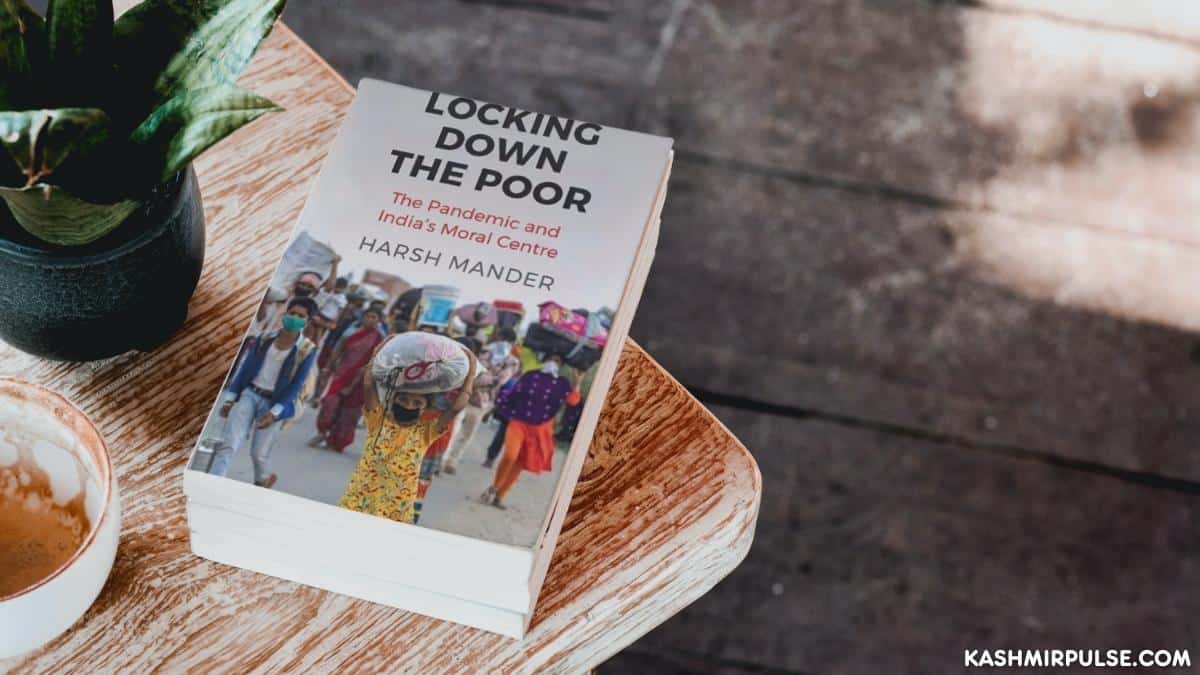
Locking Down The Poor is merely evidence of the biggest humanitarian crisis after partition by their own government which failed to tackle the situation and plunged a population of 1.3 billion into nationwide lockdown within less than four hours of notice.

Harsh Mander is one of India’s most trusted and courageous social justice and human rights activists. He also has served as Special Commissioner to the Supreme Court of India in the Right of Food campaign. Mander is also the author of several acclaimed books on contemporary India including Looking Away: Inequality, Prejudice and Indifference in New India; Partitions of the Heart: Unmaking the Idea of India etc.

On the night of March 24, 2020, the country’s Prime Minister announced a nationwide lockdown due to COVID-19, giving the population of over 1.3 billion less than four hours notice and imposing the world’s longest and most stringent lockdown with no or smallest relief packages and pushed them to the brink of starvation.

Locking Down The Poor: A result of Mander’s groundwork with “Karvan-e-Mohabbat”

Mander’s groundwork with “Karvan-e-Mohabbat” helped him to write tragic incidents which he witnessed himself while working with a vulnerable group of people during and after lockdown.

Mander in his book brings us accounts of out-of-work daily wagers and informal workers, the homeless and the destitute, all overwhelmed by hunger, helplessness, humiliation and dread: from the highways and the overcrowded quarantine centres and stories of migrant workers who walked hundreds of kilometres to reach their homes.

Mander's Locking Down The Poor - The Pandemic and India’s Moral Centre is written in lucid language so one can understand easily the callousness of the government policies. The book includes 12 chapters that all depict the ground realities in a well-articulated and organized manner.

Mander combines the hard data and life stories he went through during his excellent work on the ground as a social worker of his NGO "Karvan-e-Mohabbat" who facilitated lakhs of people with mid-day meals and other facilities when the government couldn’t provide relief to the poor people and the destitute ones. It’s merely a joke to maintain social distancing where people live in slums, shanties and where families of five to six members live in one room and do not have separate washrooms as well.

He writes, “A young woman with listlessness baby at her hip speaks into the camera held by my young colleagues who are interviewing people affected by the lockdown. She addresses Prime Minister Modi and Chief Minister Kejriwal. 'Is this the state you want to reduce us to?' she asks them piercingly. Another woman says, 'We fear we are fated to die. They say this Corona illness will go on for a year. They will later say we died of Corona, but actually would have died of hunger.'"

"Residents of both settlements tell us that as summer is peaking, drinking water is becoming as scarce as food. There has never been a water supply of any kind in either settlement or public tap. In Majnu ka Tila, they usually carry water in plastic containers from outside an apartment building a kilometre away, and in Tughlakabad, they beg the driver of the tanker that comes to water the trees lining the main avenue for some water. This has become near impossible now; the police chase them back, often thrashing them with their lathis for violating 'Modi ji's curfew'. Bathing even occasionally has become a challenge, and washing hands frequently, of course, was out of the question even before the lockdown."

While reading the book, tears flow from my eyes, and heartwrenching incidents are mentioned in the book. To wash your hands properly, you need at least two litres of water. Where there is a scarcity of water to drink, how could you wash your hands with water? People couldn’t afford soap, how they could buy handwash and sanitisers?

The Muslim community also was targeted by the government as they allegedly spread the infections of Corona in India. Mander writes, “The flames of hate against Muslims lit by the tenor of official briefings, amplified by hysterical media reports and biased television debates, then engulfed the entire country, their spread aided by the loyal trolls of social media including members of the infamous BJP IT Cell."

"A flood of fake videos was unleashed on the internet, depicting Muslims deliberately smearing vegetables and fruits with their saliva, spitting into the food served in restaurants and coughing into the faces of other people, all with the intent of infecting non-Muslims. 166 Hashtags like #CoronaJihad, #BioJihad and #TablighiJamaatVirus began to circulate and trend."

"Two researchers, Soundarya Iyer of the French Institute of Pondicherry and Shoibal Chakravarty of the Divecha Centre for Climate Change at the Indian Institute of Science found 11,074 stories published from 271 media sources with the term "Tablighi Jamaat' from March 20, 2020, to April 20, 2020. Their analysis noted that the words that frequently appeared alongside 'Tablighi' and 'Jamaat' were 'Coronavirus', 'Delhi', 'lockdown', 'violating', 'crime', 'spitting', 'terrorist' and 'jihad'. Even a leading newspaper like the Times of India, the country's largest-selling English daily, carried as many as 1863 stories of the Tablighi Jamaat in these five weeks, which were shared 3,19, 921 times on Facebook."

"These stories fed into an epidemic of Islamophobic fake news and hate speech," they wrote in The Hindu BusinessLine. This was 'exploited for the production of misinformation and hate'.

This book is a critique of the callousness approach of the government and its unequal approach to society. Locking Down The Poor is a poignant book written in lucid language, which is absolutely a good read.

The flap of the book is well-designed and somewhat unique. The book looks good but the paper quality could have been better at the price this book is selling for.


Book: Locking Down The Poor

Genre: Non-fiction/Current Affairs

Author: Harsh Mander

Publisher: Speaking Tiger Books

Year of Publication: 2021

ISBN: 978-9389958751

Pages: 240

Price: ₹399 / $5.30 (Approx.)

This post first appeared on The Kashmir Pulse
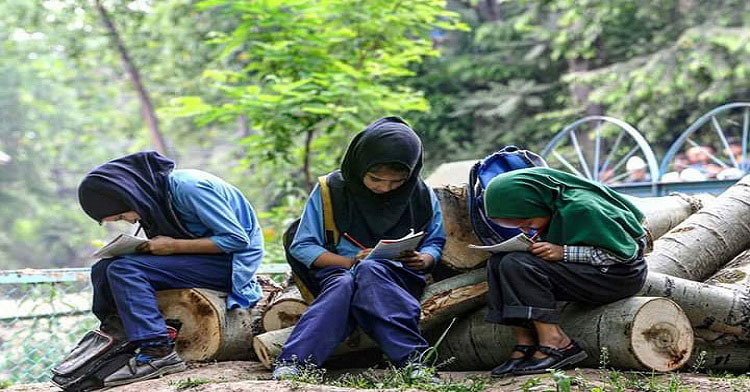
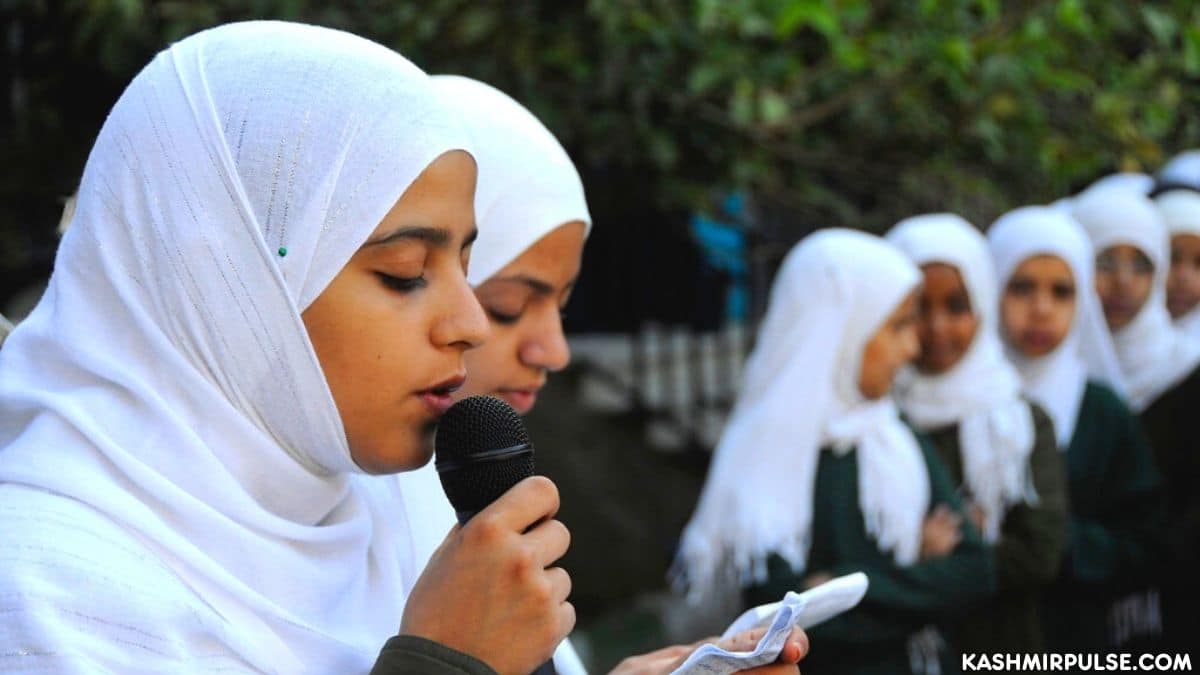
SRINAGAR — Schools in Kashmir have reopened after nearly three years of home-learning forced by back-to-back lockdowns. Initially closed after the abrogation of Article 370 in 2019, the schools were shut again after the Coronavirus was declared as a pandemic in March 2020.

The government schools resumed offline classwork from primary to higher secondary level while in private schools the classwork was resumed from middle to higher secondary level classes. The routine schooling for kindergarten and primary classes in private schools will resume a week later.

As the schools resumed physical class work of students, the government has advised the schools to ensure a smooth transition of students from home-based lockdown to formal schooling besides providing them support on school reopening.

Students were seen arranging their school bags and uniforms and making their black shoes shine. The joy of meeting old friends and teachers was easily seen on their faces.

"It's really a joy for me. I have attended school when I was in 7th standard and now am in Class 9th. I am excited to meet my friends and teachers. It's altogether a different experience to study in a school classroom rather than in my home, attending an online class," said Maliha, a student.

Her friend Imamah said, "I have so much to share with friends. I missed them a lot. I hope schools will now remain open throughout the year.”

She added that physical attendance in the school is very important and it will definitely change the mental ability and agility of the students at the same time. "No doubt we have gone through stress, sitting at home for a long period now but now we need to come out of our homes."

Meanwhile, the school heads have been asked to ensure the emotional well-being of students and teachers as well. The parents and the stakeholders have also called for the adoption of a play-way method of teaching in schools for the children.

The schools in government, as well as the private sector, have made all the preparations for reopening the schools by ensuring cleanliness and sanitisation of the school premises.

The teachers in government schools, as per the directions of the concerned Chief Education Officers (CEOs), attended their schools from February 24 to make preparations for the reopening of the schools. The private schools have also made all the preparations for the reopening of the schools across the Valley.

The Director School Education in Kashmir (DSEK) has conveyed to the staff to ensure that children are made to celebrate their return to schools by decorating the premises for them with balloons and offering them sweets.

“Create an air of festivity in our schools. Let us break the ice and pass on a message that this week it will be more play, more fun. We should make small groups of children so that they share the experiences of long pauses, the woes, the happiness, the stress while keeping Covid Appropriate Behaviour (CAB) in mind,” the DSEK said in his message.

The schools have been asked to organise one-to-one counselling with students, each child getting around 10 minutes. “Talk to them, listen to their difficulties and reassure them,” the message reads.

The Private Schools Association of Jammu and Kashmir (PSAJK) has also stated that the first week of reopening of schools will be celebrated as a week of happiness and sharing of experiences to enable students to start the session in a stress-free environment.

“There should be no assignments or tests during the first two weeks, no mandatory uniform. The students should get a stress-free atmosphere,” said President PSAJK G N Var.

“We have a whole year for education and let us celebrate the first week of reopening of schools as a big festival,” he said.

This post first appeared on The Kashmir Pulse
SRINAGAR — As the schools in Kashmir valley are all set to reopen for physical academic activities from Wednesday, authorities on Tuesday said that it will credit the uniform charges into the bank accounts of students soon.

Top officials of Jammu and Kashmir School Education Department informed the news agency Kashmir News Observer (KNO) that it will credit the uniform charges directly into the bank accounts of students or their guardians.

“For first few weeks, it is not necessary for all students to don a uniform, and in case any student who has not got the uniform can come to school in a casual dress,” the officials said, adding, "In the coming weeks, we will credit the uniform and stitching charges in the bank accounts of the students so that no eligible students are left-out without uniform."

Pertinently, barring a few weeks, the schools in Kashmir division will reopen for regular academic activities from Wednesday after a gap of nearly one year.

Till 2021, the students of Kashmir valley for the third consecutive year could not attend the regular classes during the academic year 2020-2021 except for around one month.

In 2021, the schools reopened on February 26 following the winter vacations of nearly three months but hardly after one month, they were closed again on April 4 following the surge in COVID-19 cases.

In the meantime, the teachers at government-run schools said that during the academic year 2020-2021, the schools have witnessed a maximum of 30-35 regular academic activities.

This post first appeared on The Kashmir Pulse
Powered by Blogger.