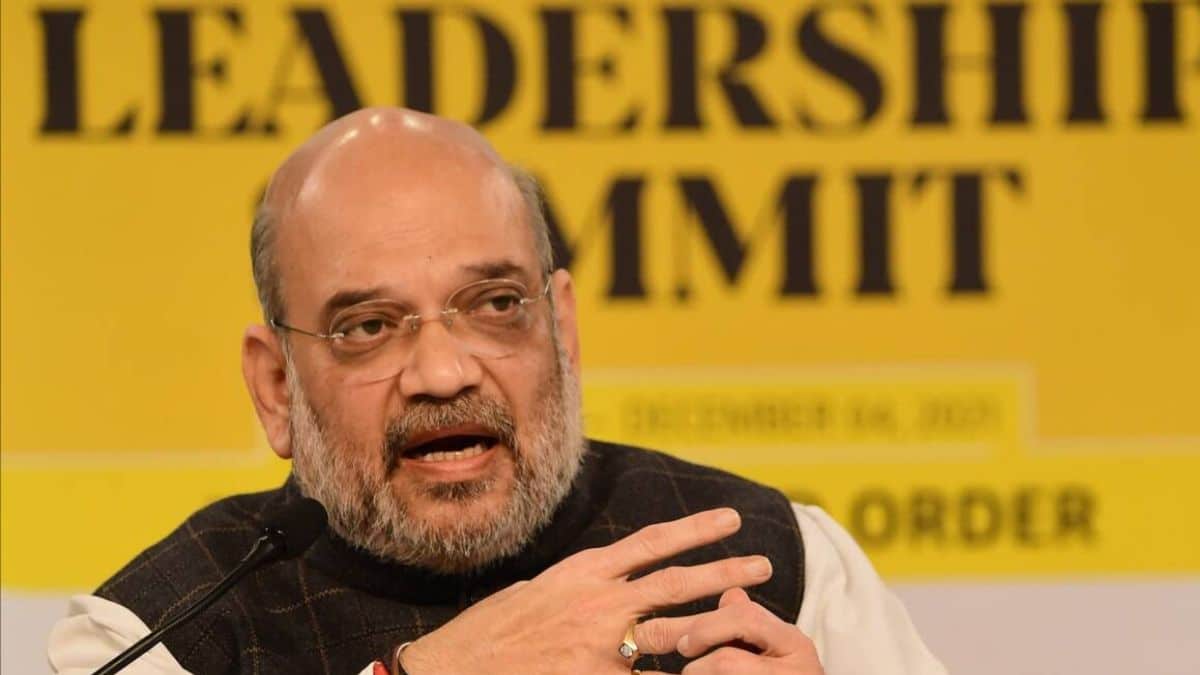
SRINAGAR — Expressing ‘regrets’ of sorts for not contesting on three crucial Kashmir Lok Sabha seats, Union Home Minister Amit Shah on Thursday said that the BJP unit of J&K must gear up to contest on all seats in the upcoming Assembly elections slated for September this year.

Shah stated this while interacting with the BJP delegation at The Lalit Palace in Srinagar. The Home Minister arrived in Srinagar this evening amid tight security cover.

As per the news agency KNO, he met several delegations including Gujjars, Bakerwals, Paharis and Sikhs. In the end, he met the BJP delegation that included BJP’s General Secretary and J&K Affairs Incharge Sunil Sharma and other leaders—Darakshan Andrabi, Hina Bhat, Sofi Yousuf, Altaf Thakur, Dr GM Mir, Ali Muhammad and Bilal Parray. BJP’s national General Secretary Tarun Chug was also present at the meeting.

A source privy to the meeting said that Shah in his opening remarks stated that he has worked very hard to strengthen the BJP at the grassroots level in every nook and corner of the country. “At the onset, Shah expressed a regret of sorts about BJP not contesting the elections on three crucial Lok Sabha seats but maintained that some battles are not fought to defeat the enemy but to check, strengthen and to reinforce the own cadre,” the source revealed.

He said the Union Home Minister stressed the rank and file of BJP to ensure dynasty rule of National Conference, PDP and Congress is wiped out and for that, “you all must vote against these parties in the upcoming Lok Sabha polls for Baramulla constituency and Anantnag-Rajouri Parliamentary seat on May 13 and May 25.”

Shah, according to the source, directed the party men to ensure that the vote of every single BJP worker, leader and activist goes against NC, PDP and Congress.

The source said that during the meeting, Shah made a big announcement that BJP will contest all seats of J&K in the upcoming Assembly polls slated in September this year. The Supreme Court of India had directed the Centre to hold Assembly polls by September this year.

The Election Commission of India (ECI) had cited security reasons and the ‘NO’ from the J&K administration for not holding Lok Sabha and Assembly polls simultaneously.

A BJP leader, wishing not to be named, said that Shah asked the BJP unit of J&K to gear up and prepare for the upcoming Assembly polls as the party would “contest on all Assembly seats.”

In a rally at Jammu recently, Shah had stated that BJP was not in a hurry to see Lotus bloom in J&K in Parliamentary polls. The party contested two seats of Jammu and Udhampur LS by fielding incumbent Members of Parliament (MPs)—Jugal Kishore Sharma and Dr Jitendera Singh.

It may be recalled after delimitation, the total seats in the assembly rose to 114 seats, of which 24 seats are designated for areas that fall under Pakistan-occupied Kashmir (PoK). Out of the remaining 90 seats, 43 seats are in the Jammu division and 47 seats are in the Kashmir division.

Shah's Kashmir visit came just a day after Jamaat-e-Islami expressed its willingness to join the electoral politics again after 1987 subject to the condition that the Centre revokes the ban imposed on it in 2019 under the Unlawful Activities and Prevention Act (UAPA). There was a buzz that a JeI delegation was also likely to meet the Home Minister, however, there was no confirmation of the same till late evening (Thursday).

Sources privy to Shah’s visit said that the Home Minister will air-dash to New Delhi at 10 am on Friday.

Union Home Minister gets feedback about post Article 370 situation from delegations

As the Union Home Minister Amit Shah arrived in Srinagar on Thursday evening, several delegations of Gujjar-Bakarwals, Paharis and Sikh communities here met him at SKICC, where the communities raised their demands with regard to the jobs, reservations and other related things.

Talking exclusively with the news agency KNO, the participants said that the delegations called on Amit Shah and discussed several issues in a cordial atmosphere.

A member from Gujjar-Bakerwal community from South Kashmir, Ahmad Bin Bumla said that the Union Home Minister sought feedback from them about the post-Article 370 situation. “We also discussed several issues and put forth our demands,” he said, adding that the issue of development, Scheduled Tribe status given to Paharis and other issues were also discussed during the meeting.

Shahbaz Peer, another member of the delegation, said that three delegations comprising 150 members from the community have met the Union Home Minister, adding that they put forth the demands like special recruitment for ST community, the spread of the private sector to ensure more jobs for the youth from the community. “We were assured that all the issues and demands raised by us will be looked into,” Peer said.

A member from the Sikh community, Engineer Nirmal Singh, said that a delegation comprising nearly 60 members met the Union Home Minister this evening and raised several demands.

“We demanded a special package for employment like the way minorities have been given here. Besides, we also demanded the establishment of a minority commission and also ST status for the community,” Singh said, adding that they have been told that the demands will be looked into, but the Home Minister has sought some time, according to him, for redressing their grievances and fulfilling their demands.

In a meeting with Home Minister Amit Shah, one of the members of Gujjar-Bakerwal delegation from north Kashmir, Ghulam Mohammad Khatana said that they discussed only the Schedule Tribe (ST) issue.

“People belonging to ST were unhappy earlier for cutting off their reservation and giving it to Paharis. However, the delegations of Gujjar-Bakarwals were assured that the 10 per cent reservation for them hasn’t been fiddled with,” he said.

Khatana said that HM assured that Paharis were given different reservation quotas and the reservation for Gujjar-Bakerwal was still there. “Besides, the Gujjar-Bakerwal delegation was told that they can elect their own Member of Legislative Assembly (MLA) in the upcoming assembly elections,” he said.

In the meeting with HM, the Gujjar-Bakerwal delegation further informed HM that the community was facing electricity and other basic issues.

Meanwhile, one of the members of the Pahari delegation from north Kashmir, Mohd Younis Sheikh said that the community thanked HM for the reservation to the community. “In the meeting, we thanked Home Minister Amit Shah for his support to the Pahari community. This was the main agenda of our delegation,” he said.

The Pahari community members from South Kashmir also stated that they thanked the Union Home Minister for resolving their long pending issue. “The issue that continued to linger for the last seven decades has been resolved for which we thanked him and also told him that the community is indebted to the government for resolving this grave issue,” Syed Akhter Hussain, a member from South Kashmir’s Pahari community delegation, said.

“The way our demands have been respected, we are ready to respect the government by following its every decision,” he said.

Pertinently, Amit Shah arrived in Srinagar amid tight security arrangements this evening and met several delegations. The Union Home Minister is scheduled to spend a night here only and will be leaving early tomorrow.

This post first appeared on The Kashmir Pulse

PULWAMA — In a significant electoral moment, Kashmir witnessed its first major polls after the abrogation of Article 370, with hopeful residents expressing their aspirations for robust parliamentary representation.

Speaking to The Kashmir Pulse, citizens voiced optimism about electing deserving candidates who would echo their aspirations in the Parliament. Many first-time voters emphasized the importance of having a voice in the Parliament that resonates with their dreams and concerns.

Moreover, there's a palpable desire among Kashmiris for the conduct of assembly elections by the Election Commission of India, enabling the establishment of a local government for addressing grassroots issues.

The Election Commission reported a voter turnout of approximately 36.58% in Srinagar, one of Kashmir's three parliamentary constituencies, by 8 pm on May 13. This turnout is a notable increase compared to previous elections, marking a potential shift in the region's political engagement.

Srinagar, encompassing volatile areas of the city and surrounding districts, has historically struggled with low voter participation. However, Monday's turnout of 36.58% is the highest recorded since 1996, signalling a significant shift in civic participation.

The Lok Sabha Elections 2024 mark a pivotal moment for Kashmir since the BJP-led government's controversial decision to revoke Article 370 in August 2019, altering the region's constitutional status and dividing it into Union Territories.

In this election, the absence of boycott calls is noteworthy, reflecting a renewed sense of political participation among Kashmiris. Srinagar, a bastion of the Jammu and Kashmir National Conference (JKNC), has witnessed keen competition among candidates, including Aga Ruhullah of NC, Waheed-ur-Rehman Para of the Peoples Democratic Party (PDP), and Mohammad Ashraf Mir of the J&K Apni Party (AP) backed by J&K People’s Conference (PC).

The 2024 general election signals a potential turning point in Kashmir's electoral turf, offering residents an opportunity to shape their political future amidst evolving circumstances. With Baramulla and Anantnag-Rajouri set to vote in subsequent rounds, Kashmir's political journey continues to unfold in the post-Article 370 era.

This post first appeared on The Kashmir Pulse

PULWAMA — In the fourth phase of the Lok Sabha elections in Jammu and Kashmir on Monday, voting for the Srinagar parliamentary seat marked a significant milestone since the abrogation of Article 370, as hundreds of young voters exercised their right to vote for the first time.

Dr Talat Majeed, a former member of Jamaat-e-Islami (JeI) in southern Kashmir's Pulwama district, who recently joined Altaf Bukhari's political party (Apni Party), participated in the election process by casting his vote.

Following his vote, Dr Majeed emphasized the importance of the election in showcasing the Kashmiri people's commitment to democracy. "This election process will answer those people who were claiming that the future of Kashmiris was not secure with India," he stated, noting the significant shift in the political landscape post the Article 370 abrogation.

Dr Majeed highlighted the increased participation of youth in the democratic process, a departure from previous trends where they were often sidelined. He expressed optimism for future elections, anticipating even higher voter turnout.

Responding to queries about the increased election frequency, Dr Majeed explained, "Compared to the assembly elections, the voting rate is generally lower in the parliamentary elections, but this time, the percentage of voting has increased in these parliamentary elections," suggesting a positive trend for upcoming assembly elections.

As the political scenario continues to evolve in Kashmir, Dr Majeed's remarks highlight the growing engagement of Kashmiri youth in shaping the region's democratic future.

This post first appeared on The Kashmir Pulse

SRINAGAR — Land revenues have seen a remarkable rise from Rs 291 crore in the fiscal year 2019-20 to an impressive Rs 544 crore in 2022-23, following the registration system’s complete modernization and integration with the National Generic Document Registration System (NGDRS). Linking this system with Aadhaar has not only enhanced transparency and credibility but has also resulted in a notable increase in government income.

As per the reports received by the news agency KNO, in the wake of the abrogation of Article 370, rural areas of the Union Territory of Jammu and Kashmir are witnessing a remarkable surge in property registrations, marking a significant four-fold increase over the past two years. According to recent data, the number of registrations skyrocketed from 21,293 in 2020-21 to an impressive 80,128 in 2022-23.

The introduction of a digital system for property registration has revolutionized the traditional approach, liberating citizens from the cumbersome process of engaging Katibs (registry scribes).

Historically, land registration in Jammu and Kashmir was exclusive to the courts, dating back to 1889 when Maharaja Pratap entrusted this responsibility to the judicial system based on the Jammu and Kashmir Registration Act of 1977 Vikram Samvat. However, according to a senior Revenue official, with the repeal of Article 370 on August 5, 2019, and the subsequent formation of a dedicated land registration department under the Revenue Department, a paradigm shift has occurred.

This overhaul, as per the reports, led to the establishment of 77 registrars and sub-registrars who now operate under the purview of the Central Law Registration Act of 1908, replacing 153 state laws with 106 Central laws.

The transition to digitalization has particularly benefited rural areas, offering enhanced facilities such as SMS alerts for registration updates, mandatory thumb impressions, and the convenience of home-based and online registrations. This has proven especially advantageous for the elderly, disabled, and those unable to visit government offices.

Furthermore, reports inform that the integration of the registration system with the National Generic Document Registration System and Aadhaar has significantly bolstered transparency and credibility in the registration process. As a result, government revenues have witnessed a substantial increase, with income surging from Rs 291 crore in 2019-20 to a noteworthy Rs 544 crore in 2022-23.

This post first appeared on The Kashmir Pulse

SRINAGAR — With the 2024 Lok Sabha elections inching closer, Jammu and Kashmir's political arena is poised for significant transformations following the abrogation of Article 370, setting the stage for a riveting electoral contest.

Over the past five years, the region has witnessed a notable shift in political dynamics, with emerging contenders affiliated with non-traditional political entities challenging established family-based parties. Three newly registered parties have surfaced, signalling a departure from conventional politics, while numerous leaders, former ministers, and ex-MLAs are expected to play pivotal roles in the evolving political landscape.

The initial political upheaval post-Article 370 revocation saw senior leaders distancing themselves from established parties. Notably, former minister Syed Altaf Bukhari, once aligned with the People's Democratic Party (PDP), founded the Jammu and Kashmir Apni Party. The party's commendable performance in the inaugural District Development Council (DDC) elections challenged the dominance of its parent party.

Similarly, influential leader Ghulam Nabi Azad's formation of the Democratic Progressive Azad Party (DPAP) stirred commotion within the Congress, leading to defections of former ministers and MLAs. DPAP is actively exploring electoral prospects across various constituencies, including Jammu, Udhampur, and Anantnag-Rajouri, while the Apni Party is considering alliance possibilities in Kashmir.

The National Conference (NC) faced setbacks in the Jammu division, with key figures defecting to the BJP in 2022, followed by more recent defections after the hills were granted Scheduled Tribe (ST) reservation status.

Furthermore, several notable figures, including Imran Raza Ansari, Basharat Bukhari, and former Deputy Chief Minister Muzaffar Baig, have severed ties with the PDP, causing friction within the party.

As the electoral landscape continues to evolve, alliances and defections are reshaping political equations, with NC stating its reluctance to engage in seat-sharing agreements with the PDP.

Amidst these developments, the 2024 Lok Sabha elections in Jammu and Kashmir are anticipated to be a litmus test for the altered political landscape, setting the stage for a captivating electoral battle.

This post first appeared on The Kashmir Pulse

SRINAGAR — Prime Minister Narendra Modi's visit to Srinagar stirred a flurry of political rhetoric, economic pledges, and expressions of discontent from opposition parties, highlighting the complex dynamics at play in the region.

In a mega rally at Bakshi Stadium, PM Modi touted the abolition of Article 370 as a catalyst for Jammu and Kashmir's progress, asserting that the region is now "breathing freely" without the former legal constraint.

He declared, "This is the new Jammu and Kashmir for which Dr Shyama Prasad Mukherjee sacrificed his life," underscoring the significance of the governmental action. Amid accusations against the Congress for perpetuating dynastic politics and impeding development, Modi emphasized equal rights and opportunities for all.

However, the opposition didn't mince words in criticizing Modi's address. Jammu and Kashmir National Conference General Secretary Ali Muhammad Sagar lamented the absence of substantial announcements, including the restoration of statehood and solutions for unemployment. Sagar accused the Prime Minister of rehashing old promises and exploiting young entrepreneurs for political gains.

Echoing similar sentiments, the Congress criticized Modi for sidestepping crucial issues such as the restoration of democracy and job creation, accusing him of delivering a pre-election rally aimed at discrediting opposition parties.

Amidst the political theatre, PM Modi engaged with young entrepreneurs, symbolizing the complexities of governance in the region. Entrepreneurs like Nazim Nazir from Pulwama showcased their success stories, attributing their achievements to government support post-Article 370 abrogation. Modi lauded their efforts and encouraged further innovation, reflecting on the transformative potential of grassroots initiatives.

In his speech, Modi hailed Jammu and Kashmir's progress in tourism and economic sectors, announcing initiatives worth billions aimed at bolstering the region's agri-economy. He extended Ramadan greetings and emphasized the region's importance as a tourist hub.

Security measures were heightened during Modi's visit, underscoring the delicate security situation in the region. Despite the anticipation surrounding the Prime Minister's speech, traffic remained largely unaffected, with stringent security arrangements in place.

This post first appeared on The Kashmir Pulse

SRINAGAR — The withdrawal of support from the PDP-led coalition government in Jammu and Kashmir by the BJP was part of the great game plan aimed at the removal of special status, reveals the recently released Bollywood movie titled Article 370.

The movie that hit the theatres across the country on February 23 this year is directed by Aditya Suhas Jambhale and produced by Uri fame Aditya Dhar.

The film showcases the perturbed Kashmir situation post the killing of militancy poster boy Burhan Wani on July 8, 2016, revealing how meticulously the Central government planned the abrogation of Article 370 while addressing all the legal hurdles involved in the entire process.

The film, though via the changed names of the main characters, shows PDP Chief Mehbooba Mufti as Parveena Andrabi and NC patriarch Dr Farooq Abdullah as Abdali.

One of the main plots of the movie reveals how under the compulsive circumstances the BJP-led Central government had to join hands with the Peoples Democratic Party and why in June 2018, the BJP had to withdraw support from the coalition government.

The movie depicts that the withdrawal of the support from the PDP was part of the greater game plan to remove the special status of Jammu and Kashmir and pave the way for the imposition of Governor’s rule.

According to the news agency KNO, the movie also highlights how the Central government meticulously addressed the legal loopholes involved in the process and ensured that the mission was kept absolute secret.

It also showcases Prime Minister Modi giving slip to the press and going to meet the President in a lone white car with no security and no bulletproof vehicles to get the order pertaining to the removal of Article 370 signed.

Pertinently, on August 5, 2019, the President of India utilized the authority vested in Article 370 to issue an order that superseded the existing 1954 Presidential Order, effectively nullifying the autonomy provisions granted to the state.

Simultaneously, the Home Minister presented a Reorganisation Bill in the Indian Parliament, proposing the division of the state into two union territories. These territories would be administered by a Lieutenant Governor and governed by a unicameral legislature.

The resolution aimed at revoking the temporary special status under Article 370 and the bill for the state's reorganisation were deliberated upon and approved by the Rajya Sabha, India's upper house of Parliament, on 5 August 2019. The following day, on 6 August, the Lok Sabha, India's lower house of Parliament, discussed and endorsed the reorganisation bill and the resolution recommending the revocation.

This post first appeared on The Kashmir Pulse

SRINAGAR — As the country gears up for the Lok Sabha elections scheduled for April-May 2024, preparations are in full swing in the Union Territory of Jammu and Kashmir, including the Union Territory of Ladakh.

With Jammu and Kashmir having five Lok Sabha seats and Ladakh having one, the electoral landscape is poised for significant political activity.

In the preceding 2019 General Election, the Bharatiya Janata Party (BJP) clinched victory in two seats, whereas the National Conference emerged triumphant in three. However, the Congress party did not secure any seats, whereas the BJP emerged victorious in the Lok Sabha elections in Ladakh.

This year's election marks the first Lok Sabha polls in Jammu and Kashmir after the Central government's decision to abrogate Article 370.

Traditionally, elections in Jammu and Kashmir are conducted in multiple phases. In 2019, the process spanned five phases. The upcoming election is anticipated to follow a similar pattern, with the Election Commission of India expected to announce the election schedule in the coming weeks.

To ensure the smooth conduct of elections and assess the security situation, the reports said that the full Election Commission of India is set to chair two high-level security review meetings in Jammu and Kashmir.

These meetings will involve interactions with political parties, stakeholders, as well as administrative and law enforcement authorities. During their visit, the Commission plans to hold comprehensive meetings with all 20 Deputy Commissioners and Senior Superintendents of Police. Additionally, separate meetings are scheduled with Chief Secretary Atal Dulloo and Director General of Police R R Swain.

These discussions aim to strategize security measures and evaluate the feasibility of conducting assembly polls alongside the Lok Sabha elections. The Election Commission is committed to ensuring foolproof security arrangements to facilitate violence-free and transparent elections. With the shadow of cross-border militant activities looming, stringent measures are imperative to uphold the democratic process.

In light of security concerns, the Election Commission has approved the deployment of 635 paramilitary companies in Jammu and Kashmir. This significant presence underscores the commitment to maintaining law and order and safeguarding the electoral process.

Furthermore, the Commission will engage with senior leaders of major national and regional political parties, as well as other stakeholders, to solicit their input and address any concerns. Their participation is crucial in fostering an environment conducive to free and fair elections.

As the nation awaits the announcement of the election schedule, all eyes are on Jammu and Kashmir as it braces for an electoral exercise amid heightened security measures and evolving political dynamics, especially after the abrogation of Article 370.

Meanwhile, the Union Territory Government of Jammu and Kashmir and the Ladakh administration have commenced preparations to ensure the smooth conduct of polls with utmost security. With five Lok Sabha seats at stake in the Jammu and Kashmir region, comprehensive measures will be put in place to safeguard the electoral process and maintain law and order.

The government is committed to providing full security coverage to polling booths, election personnel, and voters to facilitate a seamless voting experience.

Under the guidance of the Election Commission of India, the UT administration will coordinate with law enforcement agencies to bolster security arrangements across the region. Focus areas include the deployment of security personnel, surveillance mechanisms, and preemptive measures to counter any potential threats.

With the support of the local administration and law enforcement agencies, the Ladakh UT Government aims to uphold the integrity of the electoral process and ensure a peaceful environment conducive to democratic participation.

This post first appeared on The Kashmir Pulse

SRINAGAR — Prime Minister Narendra Modi, during his visit to Jammu, made significant announcements and inaugurated numerous development projects on Tuesday, emphasizing the transformation underway in Jammu and Kashmir.

Addressing a massive public rally at MA stadium in Jammu, PM Modi highlighted the BJP-led government's efforts to remove Article 370, which he termed as the primary obstacle hindering the region's progress. He assured that the Union Territory is now on the path of development, promising infrastructure that rivals renowned destinations like Switzerland.

PM Modi underscored the government's commitment to eradicating dynastic politics, corruption, and appeasement politics, aiming to provide equal opportunities for all communities. He pledged to continue working towards fulfilling the aspirations of the people of Jammu and Kashmir.

Among the unveiled projects, PM Modi inaugurated the first Electric Train in J&K, aiming to reduce pollution and improve transportation. Additionally, he launched various initiatives in education, railway, aviation, and road sectors, totalling over Rs 32,000 crore in investment.

During his visit, PM Modi distributed appointment orders to approximately 1,500 new government recruits and laid the foundation stone for a new terminal building at Jammu Airport. He also dedicated several rail projects, including the new rail line between Banihal-Khari-Sumber-Sangaldan and the electrified Baramulla-Sringar-Banihal-Sangaldan section.

The Prime Minister's visit received appreciation from Jammu and Kashmir LG Manoj Sinha, who hailed the initiatives as crucial steps toward the region's progress.

This post first appeared on The Kashmir Pulse

NEW DELHI — Union Home Minister Amit Shah asserted on Sunday that the revocation of Article 370 in Kashmir by the PM Modi-led government was imperative, citing that over 40,000 people lost their lives and terrorism, as well as separatism, thrived in the region under its shadow.

Speaking at the BJP National Convention in New Delhi, Shah emphasized the consequences of Article 370, which granted special status to Jammu and Kashmir, stating that it provided a breeding ground for terrorism and separatism while hindering development.

He highlighted the long-standing promise of its eventual repeal, noting the failure of previous administrations to act due to what he termed as "appeasement politics."

"Due to Article 370, terrorism and separatism increased in Kashmir, Pakistan got a chance to enter Kashmir, and over 40,000 people lost their lives," Shah declared during his address to thousands of BJP delegates and leaders gathered for the two-day convention, held in preparation for the upcoming Lok Sabha elections.

Shah underscored the significance of the Modi government's decision to nullify Article 370 on August 5, 2019, asserting that it was a historic step toward restoring peace and fostering development in the region. He credited the mandate given by the people of India for the government's ability to effect this change.

"The people of the country gave a majority to the PM Modi-led government for the second time, and on August 5, 2019, PM Modi struck down Article 370 once and for all," Shah affirmed, emphasizing the transformative impact of the decision on the development trajectory of Kashmir.

This post first appeared on The Kashmir Pulse

SRINAGAR — Jammu and Kashmir's Lieutenant Governor, Manoj Sinha, declared at the ET Now Global Business Summit 2024 that a total of 154 government employees have been dismissed from service due to their involvement in militancy activities. He affirmed that actions against such individuals will persist.

Attributing militancy and separatism in the region to Article 370, Sinha criticized previous administrations for plunging Jammu and Kashmir into turmoil. He highlighted the transition from past unrest, such as stone pelting and strikes 'orchestrated by Pakistan', to the present scenario where the youth are proudly hoisting the national flag.

Sinha noted significant milestones achieved under the leadership of Prime Minister Narendra Modi, notably the abrogation of Article 370. He emphasized the transformation in Jammu and Kashmir, including the reopening of cinema halls after three decades and a vibrant revival of markets.

"The transformation in Jammu and Kashmir is credited to Prime Minister Narendra Modi, achieving once deemed impossible targets, notably the Article 370 abrogation. Stone pelting and Pakistan-backed strikes are history, with the region now progressing akin to other parts of India, witnessing the revival of nightlife and cinema halls," Sinha said as he affirmed his administration's firm stance against Pakistan supporters, prioritizing the restoration of law and order.

This post first appeared on The Kashmir Pulse

SRINAGAR — In a noteworthy acknowledgement of their valour and dedication to maintaining peace in the Kashmir valley post the abrogation of Article 370, 72 officers of the Jammu and Kashmir Police have been honoured with the prestigious Medal for Gallantry (GM) on Republic Day.

The gallantry awards extend beyond Jammu and Kashmir, with 65 personnel from the Central Reserve Police Force (CRPF), 26 from Chhattisgarh, 23 from Jharkhand, 18 from Maharashtra, 15 from Odisha, 8 from Delhi, and 21 from the Sashastra Seema Bal (SSB) also receiving the Medal for Gallantry (GM).

Breaking down the 277 Gallantry Awards, 133 personnel hail from Jammu & Kashmir, 119 from Left Wing Extremism affected areas, and 25 from other regions. Additionally, two Police Medals for Gallantry (PMG) have been awarded to BSF personnel serving in the United Nations Organisation Stabilisation Mission in the Democratic Republic of Congo (MONUSCO).

Adding to the honour list, a senior official of the Ministry of Home Affairs posted in Jammu and Kashmir has been awarded the President's Medal for Distinguished Service for their key role in multiple 'Anti-Terror Operations' in the Jammu region.

Out of the 102 President's Medals for Distinguished Service (PSM), 94 have been awarded to the Police Service, four to the Fire Service, and four to Civil Defence & Home Guard Service. Additionally, out of the 753 Medals for Meritorious Service (MSM), 667 have been awarded to the Police Service, 32 to the Fire Service, 27 to Civil Defence & Home Guard Service, and 27 to the Correctional Service.

The gallantry awards also extend to 12 Deputy Superintendents of Police (DSPs) for their operations in the Kashmir valley, with a majority recognized for their efforts during the abrogation of Article 370 and 35A. Notable awardees include Mohd Rafee Rather, Dr Shammi Kumar, Sajad Ahmad Malik, Qazi Shamas-Ul-Muzaffar Amin, Rohit Kumar, Mohd Ashraf, Mohan Lal, Faizan Ali, Mumtaz Ali, Sumit Kumar Sharma, Zafar Mahdi, and Nissar Ahmad Darzi.

A senior official emphasized that many of the awardees played pivotal roles in maintaining control in the region post the abrogation of Article 370, contributing significantly to the success of 'Anti-Terror Operations'.

These accolades particularly recognize the efforts of officials engaged in 'Counter-Terror Operations' in Jammu and Kashmir, especially in the valley, where they displayed conspicuous acts of gallantry to save lives and avert threats to the nation, often at the risk of their own lives.

Among the recipients are IPS officers Sudhansu Verma (2015 batch) and Tanushree (2017 batch), who served as district chiefs in Kashmir, showcasing exemplary courage and leadership.

This post first appeared on The Kashmir Pulse

SRINAGAR — A review petition has been filed in the Supreme Court against its verdict upholding the abrogation of Article 370.

The review petition was filed in the top court by Muzaffar Iqbal Khan, one of the petitioners in the Article 370 case.

Speaking with the news agency KNO, Khan said he filed the petition today.

On December 11, a 5-judge Constitution Bench led by Chief Justice DY Chandrachud upheld the legal validity of the abrogation of Article 370 by the President of India in August 2019.

The Supreme had also asked the Centre to restore J&K's statehood as soon as possible and hold elections to the J&K Assembly before September 30, 2024.

This post first appeared on The Kashmir Pulse
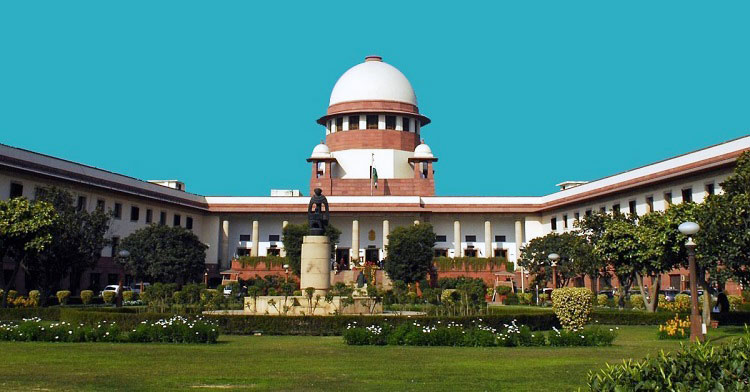
SRINAGAR — Petitioners, who had petitioned against the abrogation of Article 370, are mulling to file a review petition in the Supreme Court.

On December 11 this month, the Supreme Court upheld the Government of India’s decision to scrap the provisions of Article 370 of the Constitution, which had granted special status to the erstwhile state of Jammu and Kashmir.

People’s Alliance for Gupkar Declaration (PAGD) and senior CPIM leader Muhammad Yousuf Tarigami told the news agency KNT that all the petitioners and those who backed them are in discussion and hopefully, a review petition will be lodged in the Supreme Court against its recent verdict.

In response to a question, Tarigami said, “It’s not only about the PAGD leaders but also about those who were petitioners and who had petitioned against the Centre’s action. Everything is being evaluated and hopefully, a review petition will be filed in the apex court,” he said.

“We are seeking justice and want the apex court to reconsider its decision. The abrogation of the special status of Jammu and Kashmir was an assault on the people of the region,” he said.

Tarigami said that after discussing the matter with legal luminaries, it was felt that there is room for a review petition before the apex court.

People can differ but judgment was unanimous: Justice SK Kaul

The unanimous judgment on Kashmir was the opinion of five judges and people can differ, Justice (Retd) SK Kaul, who was part of the constitution bench that delivered the verdict, has said.

While talking to a media outlet, he said, "I believe that if five judges have taken a unanimous decision, then at least it is the opinion of these judges that what was done was correct and in accordance with the law.”

The verdict of the five-judge bench led by Chief Justice of India DY Chandrachud earlier this month, had disappointed in Kashmir Valley.

Speaking about the issue, which he insisted deserved to be put to rest, Justice Kaul, who retired on December 25, said the issues which came before the bench could be broadly divided into two questions -- whether Article 370 was a temporary provision and whether the Centre had stuck to the correct legal procedure.

Whether the "shell" of the "slightly different procedure" used to assimilate Jammu and Kashmir to India should stay or go was a political decision, Justice Kaul said. Now the decision for full assimilation has been taken, it was the "correct legal position," he said.

"On the question of process, the court took its call looking at the ground reality -- that there was no state assembly at the time and the power rested with the Centre. The people are entitled to a different opinion of it, so what," he said.

On whether it was a temporary position, all five judges had agreed it was, going by the incorporation and the chapter where it was made.

Asked how he felt about the situation since he felt the pain of Kashmiri Pandits -- the judge is from the erstwhile state -- he said it was essential to acknowledge that "there is something wrong".

Citing the South African model, based not on retribution or revenge but an acknowledgement of wrongdoing and a system of apology, he said it was what people needed to move on.

"There is a legal aspect and a societal aspect. There should be an end to this conflict. 4.5 lakh people were compelled to migrate. Their story was never told. If we have to proceed further, it is necessary to acknowledge there is something wrong. A person who has felt the pain 30 years ago, should feel that someone recognises their pain," Justice Kaul said.

On December 11, the Supreme Court, in a unanimous judgment, upheld the Centre's decision to scrap the provisions of Article 370 of the Constitution, which had granted special status to the erstwhile state of Jammu and Kashmir.

This post first appeared on The Kashmir Pulse

SRINAGAR — Political parties in Jammu and Kashmir on Monday expressed disappointment over the Supreme Court's verdict upholding the constitutional validity of the Centre's August 05, 2019 move to abrogate provisions of Article 370 and bifurcate the erstwhile state into two Union Territories.

As per the news agency KNO, the five-judge Constitution Bench, led by Chief Justice of India DY Chandrachud, on Monday ruled that the provisions of Article 370 were temporary, and there were no issues with the exercise of power under Article 370(3) by the President in issuing the August 2019 order.

National Conference

Vice President of the Jammu and Kashmir National Conference, Omar Abdullah while expressing dissatisfaction with the verdict pledged to continue the party's “struggle for the restoration” of Article 370.

During a live stream on X (formerly Twitter), Omar described the decision as unexpected. He apologised to the people for not securing a favourable outcome.

“… We were not expecting such a verdict. We were hoping for justice for the people of Jammu and Kashmir from the highest court of the country. Unfortunately, we could not convince the 5-bench judges of the SC but I can say with certainty that we could not have done more than that. The fact is that our opponents also admitted that the National Conference left no stone unturned to defend the case and we could not have expected our lawyers Kapil Sibal and Gopala Subramaniam to present our case in a better way. In this moment of collective despair, we apologize to the people of Jammu and Kashmir and Ladakh and to those in the country who wanted us to succeed in this fight,” he said.

Despite the setback, the former chief minister said he will continue his “political and constitutional fight within the realm of law”.

“I want to tell the people that the matter does not end here, our efforts will not end here. Apart from the court, our position has always been that this is a political fight, a constitutional fight, a fight within the realm of law,” he added.

People’s Democratic Party

Former Chief Minister and President People's Democratic Party (PDP), Mehbooba Mufti, urged the people not to lose hope, saying the Supreme Court's decision is not the “final destination”. She criticised the government for “betraying” the people and called the verdict a blow to “the idea of India”.

"It is not our failure, but a failure of the idea of India. During the partition, J&K aligned with Gandhi's secular India, so it is the demise of that ideal, not ours," Mehbooba said.

Meanwhile, the PDP in a separate statement said it has suspended all of its political activities for the next one week. “The decision has been taken in order to stand in solidarity with the people of Jammu & Kashmir in the wake of the Supreme Court of India’s judgment on the issue of Article 370,” the party said.

CPI(M)

CPI(M) leader Mohammad Yousuf Tarigami, while criticising the verdict, raised concerns about its impact on the federal structure of the Constitution. Tarigami also alleged that he was not allowed to leave his residence. He said media visits were prohibited, and there was an armoured vehicle stationed outside his gate.

The CPI(M) leader said the verdict implies that Jammu and Kashmir no longer retains any element of sovereignty after the signing of the Instrument of Accession, hence rendering the Constitution of J&K redundant.

He also criticised the verdict for treating J&K like any other state in the Indian Union, thereby depriving it of the special features granted to other regions under various clauses of Article 371.

“The verdict has evaded going into the merits of downgrading the state of J&K into two Union Territories, stating that the Solicitor General has promised the return of statehood. At the same time, the creation of a separate Ladakh Union Territory is upheld as valid. So, the restoration is not for the original state of J&K, but only a part of it and even that remains an assurance on paper,” the party said in a statement.

"Strangely, the Supreme Court directs the Election Commission of India to hold polls in J&K at the earliest not later than September 30, 2024. The verdict, thus, gives the Central government a long rope to retain control over J&K," the CPI(M) added.

Democratic Progressive Azad Party

Chairman Democratic Progressive Azad Party (DPAP) Ghulam Nabi Azad termed the verdict as “sad and unfortunate”, saying the people of J&K are disappointed. “But we have to accept it,” he added.

Congress leader Dr Karan Singh

Congress leader and the son of the last Maharaja of the erstwhile state of Jammu & Kashmir, Dr Karan Singh welcomed the decision. He urged Prime Minister Narendra Modi to restore statehood soon.

He advised those unhappy with the judgment to accept reality and acknowledge that the Supreme Court has validated the action.

"There's no point in unnecessarily hitting their head against the wall," Singh said and suggested redirecting energies towards preparing for the next elections instead of fostering negativity.

People’s Conference

Jammu and Kashmir People’s Conference chairman Sajad Lone expressed disappointment with the SC's decision on Article 370, saying, “The Supreme Court's decision on Article 370 is disheartening. Once again, justice seems out of reach for the people of J&K.”

“Article 370 may be legally erased, but it will always be a part of our political aspirations,” Lone said in a statement.

Regarding the issue of statehood, Sajad said, “The Supreme Court avoided commenting on it, possibly safeguarding the entire country from potential misuse by citing precedence.” However, he expressed hope for “justice” at a “later date”.

Apni Party

Apni Party said the Supreme Court's verdict has saddened the people of Jammu and Kashmir “to the core”. “Over the years and decades, people had been led to believe that this article of the constitution was permanent,” the party said in a statement.

The party said, “The verdict from a five-judge Constitution bench, headed by the Chief Justice of India, has now clarified that the article is gone forever, leaving people deeply disheartened. It is the responsibility of the Central government to come forward and assure the people that they will not be subjected to disempowerment.”

Apni Party has urged the government to bring the domicile law into the constitutional framework in a way that guarantees the exclusive rights of the residents of Jammu and Kashmir to land and jobs.

“Additionally, the government should ensure the immediate restoration of statehood to Jammu and Kashmir and the prompt holding of assembly elections. This will enable the residents to exercise their democratic right of choosing their own representatives,” the party said.

This post first appeared on The Kashmir Pulse

SRINAGAR — Union Home Minister Amit Shah on Monday said that those having a history of stone pelting and any sort of links with terrorism will not get government jobs in Jammu and Kashmir.

Replying to the discussion on J&K Reservation (Amendment) Bill and J&K Re-organisation Bill 2023, in Rajya Sabha, the Home Minister, as per the news agency KNO, said that there will be no sympathy with terrorists and their sympathisers. “Those having the history of stone pelting and any sort of links with the terror and terrorists won’t get government jobs in J&K,” he said, adding that the process of dismissing the government employees having terror links has already started.

Shah said many youths laid down arms and joined the mainstream in the northeast and the Centre will welcome the gun-wielding youth of Kashmir if they lay down their arms and join the mainstream.

The Home Minister said that the Centre has started zero terror and complete area domination plan under which Kashmir will become terror and terrorism free.

He said a terrorist-specific jail will come up in J&K at the cost of Rs 130 crores where only terrorists will be lodged. “There will be jammers and other state-of-the-art facilities to ensure no security breach,” Shah said.

He said that those who have befooled the people of J&K on the pretext that Article 370 was not temporary must been feeling ashamed after the Supreme Court verdict. “We have started to see Kashmir of peace, progress and development,” the Home Minister said, adding that today the souls of Shama Prasad Mukherji and hundreds of those who laid their lives for the nation, must be resting in peace and comfort after SC verdict.

“Shama Prasad Mukheri had resigned from Nehru's cabinet on the pretext that there can’t be two PMs, two constitutions and two flags in one country,” he said.

The Home Minister said that it was after 30 years that J&K saw Muharram procession openly on the road. Stating that not just the BJP but the entire nation welcomes the SC verdict on Article 370, Shah said that J&K has seen a dawn of peace, prosperity and development.

“For 30 years, theatres remained closed and today, three cinemas are functioning and 18 more are coming up. Tourists from Mumbai, Gujarat and Maharashtra are staying in the homes of Kashmiris and so far 10,000 homestays have been recorded,” Shah said, adding that a beginning to see terrorism-free Kashmir has started.

This post first appeared on The Kashmir Pulse

SRINAGAR — In a landmark decision, the Supreme Court has upheld the Central government's move from 2019 to annul the special semi-autonomous status accorded to the erstwhile state of Jammu and Kashmir. The apex court declared that the special status granted to the region was a "temporary provision."

The ruling also emphasized the necessity of placing Jammu and Kashmir on equal footing with other Indian states at the earliest, mandating local elections to be held by September 30, 2024.

Prime Minister Narendra Modi lauded the Supreme Court's verdict through social media on Monday, referring to it as "a beacon of hope, a promise of a brighter future, and a testament to our collective resolve to build a stronger, more united India."

The case revolved around over 20 petitions that contested the contentious abrogation of Article 370 in 2019 by the government at the Centre led by Modi. The petitioners raised concerns about the Indian Parliament's authority to revoke the region’s special status, arguing that only the constituent assembly of Jammu and Kashmir held the right to decide on such matters.

Under Article 370, Jammu and Kashmir, with its Muslim-majority populace, had enjoyed distinct privileges, including limited autonomy, a separate constitution, and inherited protections related to land and employment.

Following the annulment of Article 370, direct governance from New Delhi was imposed on Jammu and Kashmir. The region was bifurcated into two federal territories: Ladakh and Jammu & Kashmir, both administered directly by the Central government without individual legislative assemblies.

The Supreme Court's ruling signifies a significant legal validation of the government's decision, concluding a prolonged legal battle over the revocation of Jammu and Kashmir's special status.

This post first appeared on The Kashmir Pulse

SRINAGAR — Democratic Progressive Azad Party (DPAP) Chairman Ghulam Nabi Azad on Sunday said that he is hopeful that the Supreme Court will pronounce the verdict on Article 370 in favour of Jammu and Kashmir.

He said the people of J&K have been waiting for more than four years for justice from the apex court. “People of J&K were waiting for the last four years for the Supreme Court to pronounce the decision on pleas challenging the decision taken on August 5, 2019 by the Government of India to abrogate the special status of J&K under Article 370 and 35(A). These rights were snatched from us before four years and people have pinned hope on SC to get justice from there,” Azad told reporters here, as per the news agency KNS.

He said the special provision was imperative for Jammu and Kashmir as it was kept intact by Maharaja Hari Singh from his times. “Maharaja Hari Singh kept this provision intact since 1925 with an aim to secure land and employment to domiciles of J&K. Later, this provision was given room in the Constitution of the country and many governments since then kept this law untouched. But unfortunately, BJP tinkered with it and abrogated on August 5, 2019,” he said.

Azad said that common people and politicians of J&K were emotionally attached with Article 370 and 35(A). He reiterated that no political party can return Article 370 and 35(A) back to Jammu and Kashmir except two revered institutions of the country – Parliament and the Supreme Court.

“I have already said that no political party can undo the decisions taken on August 5, 2019. Only Parliament or Supreme Court can return this law back to J&K. There should be 350 seats in the Parliament to restore this law,” Azad added.

He hoped and prayed that a five-member bench headed by Justice DY Chandrachod would pronounce the decision in favour of J&K on December 11.

We trust SC will uphold its constitutional principles: Muzaffar Shah

As the Supreme Court is set to announce its verdict on Monday regarding a series of petitions challenging the abrogation of Article 370 provisions in Jammu and Kashmir, senior leader and vice president of Awami National Conference, Muzaffar Shah stated on Sunday that tomorrow's proceedings are not just about a verdict but also a significant test for the Supreme Court.

In an interview with a national news channel, Shah expressed his views ahead of the constitution bench, led by Chief Justice of India (CJI) D Y Chandrachud, delivering its judgment on Monday, December 11, regarding the challenge to the abrogation of Article 370.

He emphasized that it's not just about the decision; it's a crucial test for the Supreme Court. Shah noted that the government de-operationalized the status of J&K by abrogating Article 370 on August 5, 2019.

"The court has to decide tomorrow whether the action was right or wrong, considering the lack of information and consent from the people. All eyes will be on the top court and its bench as it faces a significant test," he said.

"It's solely a question of whether the government's actions on August 5 were constitutionally right or wrong. We trust that the esteemed top court will uphold its constitutional principles and render a decision in favour of the people of Jammu and Kashmir," he stated.

This post first appeared on The Kashmir Pulse

SRINAGAR — A five-judge constitution bench of the Supreme Court, headed by Chief Justice of India D Y Chandrachud, will deliver one of the most awaited court verdicts on Monday, December 11, when it rules on the constitutionality of abrogation of Article 370 and reorganization of Jammu & Kashmir into two Union Territories.

The five-judge constitution bench, also comprising Justices Sanjay Kishan Kaul, Sanjiv Khanna, BR Gavai, and Surya Kant, is expected to pronounce its verdict on the case on Monday, news agency KNO reported.

In August 2019, the Union Government had abrogated the Article 370 and reorganized Jammu & Kashmir into two UTs.

Several petitions challenging the abrogation of Article 370 were filed in the Supreme Court by different parties. Several political parties including the National Conference and Peoples Conference had also challenged the Centre’s decision.

After hearing the matter for 16 days, the Supreme Court had reserved its verdict in the case on September 05.

This post first appeared on The Kashmir Pulse

PULWAMA — Former Chief Minister Omar Abdullah on Wednesday said no one in the Union Territory of Jammu and Kashmir was happy with the decision to abrogate the special status of the erstwhile State.

As per the news agency KNO, speaking to the media after addressing party workers in Pulwama Town, the National Conference vice president said that the foundation of the relationship between J&K and India was based on the special status provided by Article 370 and 35-A. "With their abrogation, the BJP has harmed this relationship," he said.

“They (BJP) have done it without considering the sentiments of lakhs of people in J&K. The promise made to the people here wasn't made by a single leader; it was made by a country. It was a bond between a country and a State that has been damaged,” he remarked.

Omar said the “real sentiment” of the people would be evident when elections would be conducted. “Let them conduct elections, people will show them whether they are happy with the decision or not, but the truth is that people of J&K and Ladakh aren't happy with the decision. The people of Ladakh have already shown it; the people of J&K also showed it in DDC elections and will prove it again whenever assembly elections are held,” he said.

Abdullah criticised the Central government and the Election Commission (EC), accusing them of playing a fixed game when it comes to elections. “Depriving people of their right to choose their representatives would lead to destruction, as people have been denied this right since 2014,” he said.

“When you ask the government, they say the decision is to be taken by the EC. When the EC is asked about it, they say they need to consult the government first. It is evident that both are hiding behind each other, while the people of J&K have to bear the consequences,” he added.

Omar also mentioned the Prime Minister’s promises of removing distance from Delhi and the hearts of the people, saying no such steps were taken on the ground.

Regarding the remarks of a DMK leader about ‘Gaumutra States’, the former CM suggested that one should not hurt the sentiments of others. “We must respect each other’s religion,” he said.

In his address to the workers, the NC leader said that the BJP has failed to fulfil promises made during the abrogation of Article 370. “They made promises for 24x7 power supply through various types of meters, which have proven ineffective on the ground, especially with frequent power cuts in both urban and rural areas,” he said.

Abdullah also criticised the BJP for “failing to provide jobs to the youth and for not initiating new industries, hospitals, universities or colleges”.

This post first appeared on The Kashmir Pulse
Powered by Blogger.