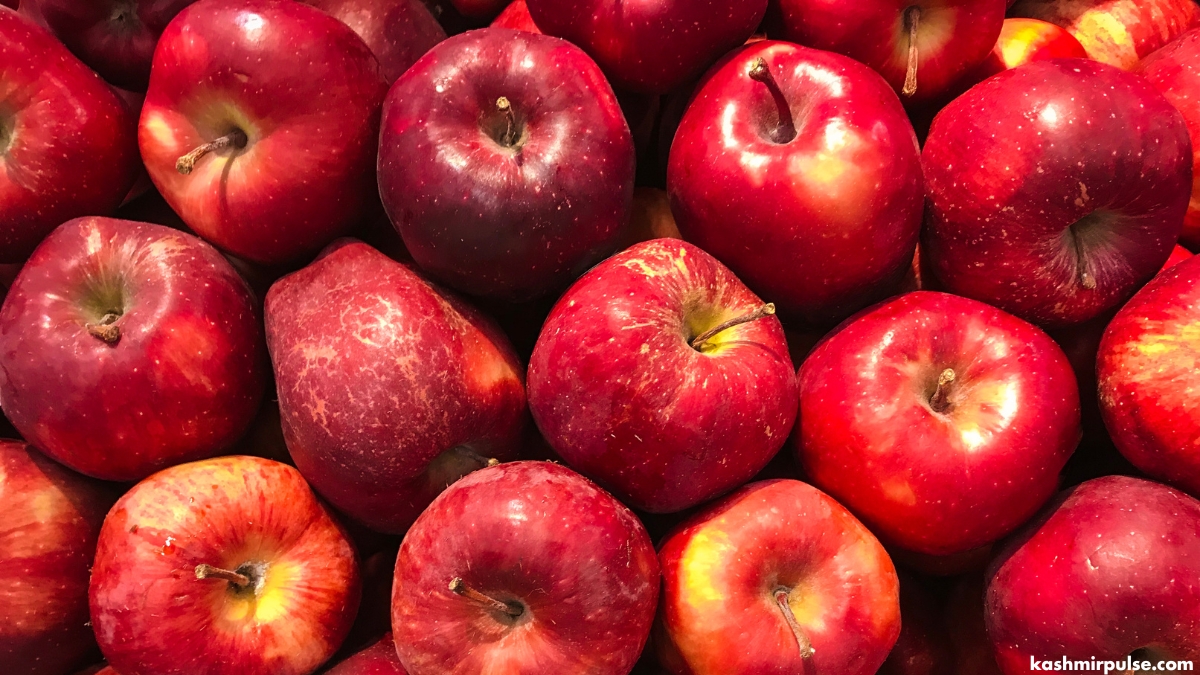
SRINAGAR — With the political situation in Bangladesh showing signs of stabilisation, Kashmir's fruit industry has cautiously resumed its apple exports to the country, particularly the American Apple variety.

The development comes after weeks of uncertainty when unrest in Bangladesh had severely impacted trade, leading to concerns among Kashmiri fruit growers and dealers.

Speaking with the news agency KNO, Shahid Choudhary, a senior member of the fruit growers body in Kashmir said the resumption of apple exports to Bangladesh is a much-needed respite not only for him but for all the growers who work entire year to ensure a quality produce for foreign markets.

“It is a much-needed relief for both dealers and growers. The recent unrest in Bangladesh created uncertainty among all of us. We were unsure of any orders this year,” he said.

Choudhary said the fresh resumption of the apple export trade was a welcome development and has spread happiness among the growers and dealers.

Bashir Ahmad Bashir, the president of the apex fruit body representing Kashmir's fruit growers, said that in recent days, shipments of the American Apple varieties have started reaching Bangladeshi markets.

He, however, noted that while the export market has not yet fully recovered, there was optimism among growers. "We are hopeful that in the coming days, the volume of orders from Bangladeshi buyers will increase," Bashir said.

Notably, during the harvest season in Kashmir, several apple traders from Bangladesh camp in Kashmir to buy and meet the demand for Kashmiri apples in their homeland.

According to Choudhary, Bangladesh is an important market for varieties of apples from Kashmir, especially American Apples.

"We export over 70 percent American Apple variety produce to Bangladeshi markets," he said.

It is pertinent to mention here that after the Union finance ministry ordered the lifting of additional duties on apples, almonds, chickpeas and walnuts in September last year, the Kashmir apple industry is facing an unprecedented crisis and grappling with low demand due to the influx of foreign apples in the Indian markets.

Several mainstream politicians in the region have urged the government to reconsider the decision, saying it impacts the growers in Kashmir.

As apple revenue has been one of the key GDP contributors in J&K, fruit dealers have been urging the government for a long time to slash the export duty on apples, so that they can export the fruit to various countries.

This post first appeared on The Kashmir Pulse

SRINAGAR — The ongoing dry spell and heatwave in Kashmir have left fruit growers deeply concerned, who fear severe impacts on the region's horticulture sector. The sector, which is a vital source of income for many in Kashmir, is experiencing stress due to the lack of rainfall and high temperatures.

Speaking to the news agency KNO, growers expressed their worries about the prolonged dry weather's effects.

Mohammad Shaban Dar, an orchardist from Shopian, said the intense sunlight with the absence of rain over the past two months is adversely affecting fruit trees and their produce. He said that the lack of moisture is causing heavy fruit fall and affecting the quality and shine of the fruit. “This hampers its competitiveness in the market against apples from other countries,” he said.

Javid Ahmad, a horticulture expert, explained that the high temperatures and lack of rainfall are stressing the fruit trees, especially apple orchards, which are crucial to the local economy. “This could lead to smaller fruit sizes, sunburnt produce and an overall reduction in yield,” Ahmad said, adding that the lack of soil moisture could lower the quality of the fruit, which could lead to a decline in market prices and profitability for growers.

Experts are also concerned about the long-term health of the orchards if the current weather conditions continue, as most of the orchards in the region are rain-fed and lack proper irrigation facilities.

Bashir Ahmad Basheer, chairman of the Kashmir Valley Fruit Growers Cum Dealers Union, said the prolonged dry spell is likely to impact the horticulture sector negatively. “This will lead to losses due to reduced fruit quality,” he said.

Director Horticulture Kashmir, Zahoor Ahmad Bhat said that around 60 percent of orchards in Kashmir are rain-fed, and the ongoing dry conditions could result in undersized fruit, heavy fruit fall and a decline in quality.

“Such conditions not only affect the current season's yield but can also reduce the fruit-bearing capacity of trees in future seasons, which damages the apple trees that growers work hard to maintain,” he said.

The horticulture sector is a significant contributor to the State Gross Domestic Product (SGDP) of Jammu and Kashmir, with a share of about 9.5 percent. It also generates approximately 8.50 crore man-days of employment annually.

The average apple production in Kashmir ranges from 20 to 25 lakh metric tonnes per year, with half of Kashmir's population directly or indirectly dependent on the apple industry, according to the 2017 economic survey in J&K.

This post first appeared on The Kashmir Pulse

SRINAGAR — Apple growers in several areas of southern Kashmir are increasingly concerned as a leaf miner pest continues to infect their orchards for the fourth consecutive year.

The farmers told the news agency KNO that the pest has wreaked havoc in their orchards over the past three years. “Wherever the pest was found in the last three years, the produce was less shiny and smaller in size, as this insect sucks all the nutrients from the trees,” they said.

Zahoor Ahmad, a fruit grower from the Dachnipora area of Anantnag, described how the pest lays web layers from one branch to another, even reaching the trunk and fruit. “This pest, numbering in millions, is sucking all nutrients from the tree, causing the fruit to remain small. It damages leaves and trees as well,” he said, adding that visitors to the pest-affected orchards have complained of allergies and other issues with their throats and nose.

Initially found in Shopian’s Zainapora, the pest has spread to Zainapora, Litter, Watchi, Yaripora, Lassipora, Tahab and Bijbehara areas over the years. This season, orchardists from various parts of south Kashmir have raised alarms about the pest, despite following horticulture advisories to combat it.

The growers have called for urgent attention from the horticulture department and experts to prevent further damage. “Even after spraying insecticides several times every year, these pests keep reappearing,” they said, adding that the affected orchards have reported premature fruit fall, along with reduced fruit quality and size.

Senior scientists from Sher-e-Kashmir University of Agriculture Science and Technology-Kashmir (SKUAST-K) have identified the pest as a “leaf miner” – an invasive insect that likely arrived four or five years ago. They said that while leaf miners were reported some time ago, their presence has significantly increased in the past two years. Despite this, the pest is manageable if growers consistently follow advisories, they added.

The horticulture department has called for a collective approach to managing the pest and advised spraying insecticides across all affected orchards to prevent any residual population from serving as a source of infestation the following year.

Recommendations for farmers include installing sticky traps 10 meters apart for monitoring and surveillance of the apple leaf blotch miner (ALBM), maintaining proper sanitation practices within and around the orchards, and installing pheromone-baited traps at a density of 8-10 traps per hectare.

They should spray one of the following insecticides at the recommended dosage: Thiamethoxam 25 WG (50g per 100 litres of water), Flubendiamide 39.35 SC (40ml per 100 litres of water), Chlorantraniliprole 18.5 SC (100ml per 100 litres of water), Thiacloprid 21.7 SC (60ml per 100 litres of water), Lambda Cyhalothrin 5 EC (50ml per 100 litres of water), Pre-mix formulation of Thiamethoxam 12.6 + Lambda Cyhalothrin 9.5 ZC (50ml per 100 litres of water), and pre-mix formulation of Imidacloprid 6 + Lambda Cyhalothrin 4 SL (50ml per 100 litres of water).

The department has advised farmers not to mix insecticides with any other plant protection chemicals or plant nutrients.

This post first appeared on The Kashmir Pulse

SRINAGAR — Not all is well between fruit growers and Controlled Atmosphere (CA) and cold storage owners with the former alleging the facility owners for charging them exorbitant rates for various services.

Fruit growers and dealers accused the owners of charging exorbitant rates for various services, including cardboard boxes, storage fees, tape charges, and bin/crate charges.

“Exorbitant rates are charged by CA/cold store owners for cardboard boxes, which are quite inferior. In fact, a good quality type of cardboard material is available in the open market, which is 30 per cent cheaper than the ones sold by the CA/cold store owners,” Chairman, Kashmir Valley Fruit Growers (KVFG) Union, Bashir Ahmad Bashir told the news agency KNO.

“The CA/cold store owners do not allow us to procure cardboard boxes and other packing material from the open market. They force us to buy from them at exorbitant rates, which is unfair and exploitative,” he added.

The fruit growers and dealers also alleged that the Jammu and Kashmir Procedure and Instructions for Controlled Atmosphere Stores (JKPICCA) owners are “engaging in arbitrary practices when it comes to storage charges for apple crops.”

“The apple produce of a single party is kept in different chambers of the CA/cold store. We are compelled to store our consignments for a period of five months at a time,” Bashir said.

The KVFG claims to have held several meetings with the managing body of JKPICCA, headed by its president, seeking the execution of a fresh agreement to fix norms and uniform rates in the interest of the horticulture industry and fruit growers/dealers. “However, despite commitments, JKPICCA has failed to respond or execute any such agreement.”

The KVFG has appealed to the government to intervene and address their grievances. They demanded that the excessive rates of Rs. 30-40 per box collected by JKPICCA owners from valley-based fruit growers/dealers for the storage of apple crops during the 2023-24 fruit season be returned.

The union has sought the constitution of a regulatory committee comprising representatives from KVFG Union, JKPICCA and independent experts nominated by the government to determine fair and uniform cold storage rates, ensuring transparency and preventing exploitation.

“We urge the government to ensure an open option for valley-based fruit growers/dealers to procure cardboard material and other packing charges from sources of their choice, without being forced to purchase from JKPICCA at inflated rates,” Bashir said.

This post first appeared on The Kashmir Pulse
Powered by Blogger.